VA Misses Deadline on 1.4M Requests
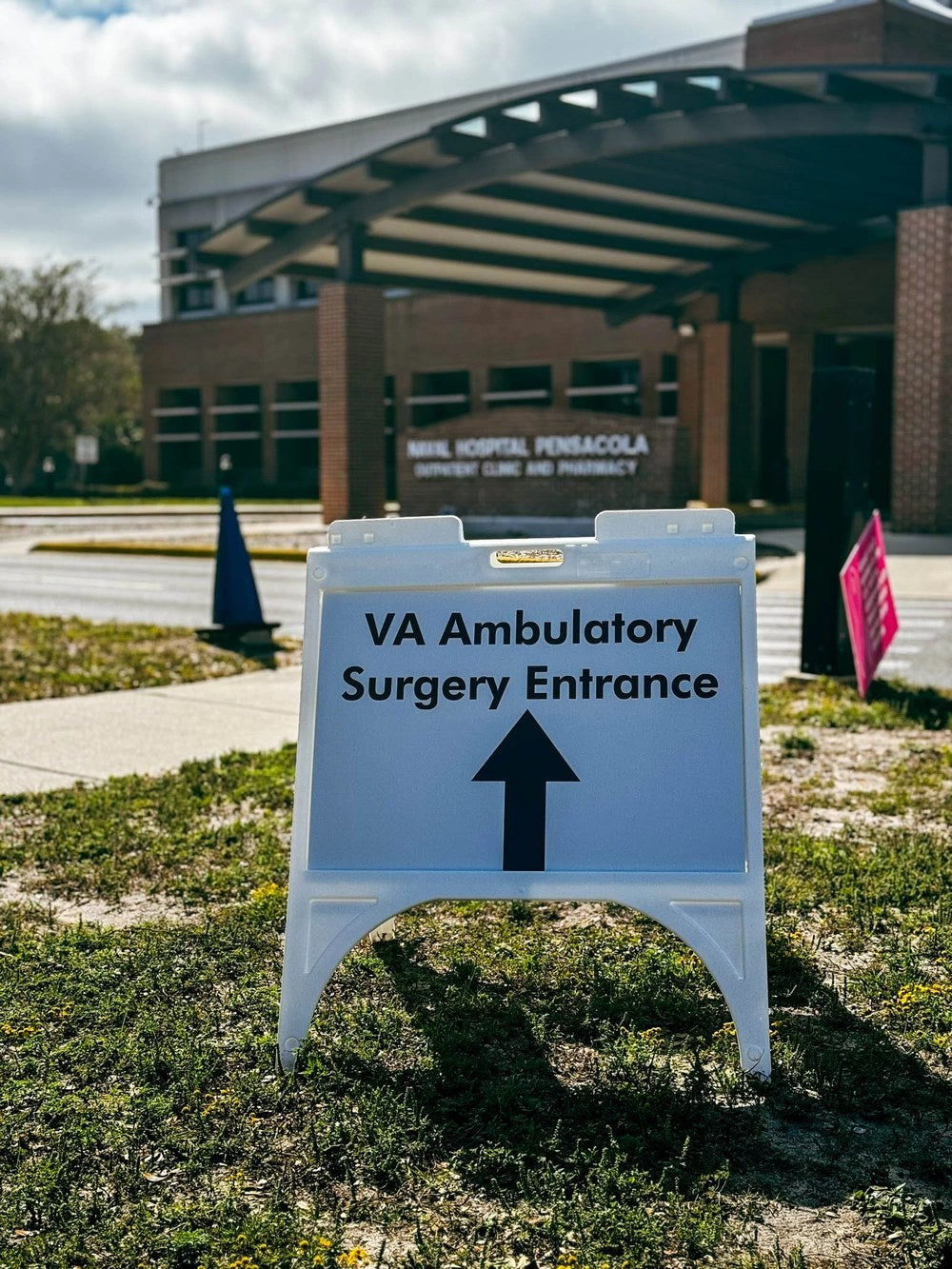
PHOTO CAPTION: Illustrative photo: A sign directs veterans to a VA ambulatory surgery clinic at Naval Hospital Pensacola, Florida, on Oct. 25, 2023. The image does not depict a specific delayed request examined by the VA inspector general. U.S. Navy photo by Marcus Henry.
The Department of Veterans Affairs failed to meet a required three business day deadline on roughly 1.4 million requests for additional or different medical care for veterans outside the VA system, according to a new inspector general audit.
The VA Office of Inspector General released the findings Sept. 24 after examining nearly 2.6 million requests submitted by community medical providers between Oct. 1, 2024, and Jan. 31, 2026.
Only about 1.2 million of those requests were decided within the required time.
The requests are known as Requests for Services and are used when a veteran is already receiving VA authorized community care but the outside medical provider determines that additional or different treatment is needed.
That can include additional visits after an existing authorization is exhausted, a referral to another specialty, or a procedure that was not included in the original authorization.
VA requires those requests to be reviewed and a decision made within three business days.
The veteran and community provider are also supposed to be notified of the decision.
The inspector general found that VA medical facilities frequently failed to meet that requirement.
On average, notifications took approximately 12 days from the date VA received the request.
That is four times the required period.
The inspector general warned that delays can interfere with veterans' medical treatment.
When an outside provider needs authorization for additional treatment, a delayed decision can cause care to be postponed, interrupted or provided before VA has authorized it.
That last scenario can create additional complications because most nonemergency community care must be approved by VA before treatment occurs.
The audit found problems with both decision making and notification.
Of the nearly 2.6 million requests reviewed, only about 1.2 million received a decision within three business days.
The inspector general also found that only about 1.4 million requests resulted in documented notification to either the veteran or the community provider.
VA's own rules require both parties to be notified.
The inspector general identified several reasons the process was falling behind.
Those included staffing shortages, backlogs, manual work, multiple computer systems and numerous steps required to process individual requests.
Auditors also found inconsistent procedures and problems with how facilities recorded when requests were actually received.
Those data problems made it more difficult for VA officials to determine whether facilities were meeting required deadlines and to hold facilities accountable when they were not.
The scale of the process is significant.
Community care allows eligible veterans to receive treatment from medical providers outside VA when certain conditions are met, including when VA cannot provide the required service, when veterans face excessive travel distances or when appointment wait times exceed applicable standards.
But even after outside care has been approved, treatment needs can change.
A community physician may determine that a veteran needs another procedure, a new specialist or additional treatment beyond what VA originally authorized.
That is when the Request for Services process becomes important.
VA's current guidance says community providers should submit a separate request for each additional service and include supporting medical documentation.
VA says those requests should be processed within three business days.
The inspector general found that VA frequently failed to do that during the period reviewed.
The report did not conclude that all late requests resulted in delayed medical treatment.
But the inspector general warned that slow processing can delay or disrupt care and can result in veterans receiving treatment that has not yet been authorized.
The audit also found that inconsistent oversight made it difficult for VA leadership to fully measure the problem nationally.
The inspector general issued six recommendations to the Veterans Health Administration.
Those include examining additional automation and artificial intelligence tools to reduce manual work, fixing system limitations, updating national procedures, improving how receipt dates are recorded, ensuring veterans and providers receive proper notifications and creating stronger national oversight of the process.
VA is also restructuring parts of its community care operation through a new Office of Veterans Community Care and planned changes to its network contracts.
For veterans using outside providers, however, the basic requirement examined by the inspector general is straightforward.
VA had three business days to decide requests for additional or different care.
Across nearly 2.6 million requests examined by auditors, only about 1.2 million met that deadline.
(Source: OAF Nation)