USS Lincoln Crew Reports Hardships
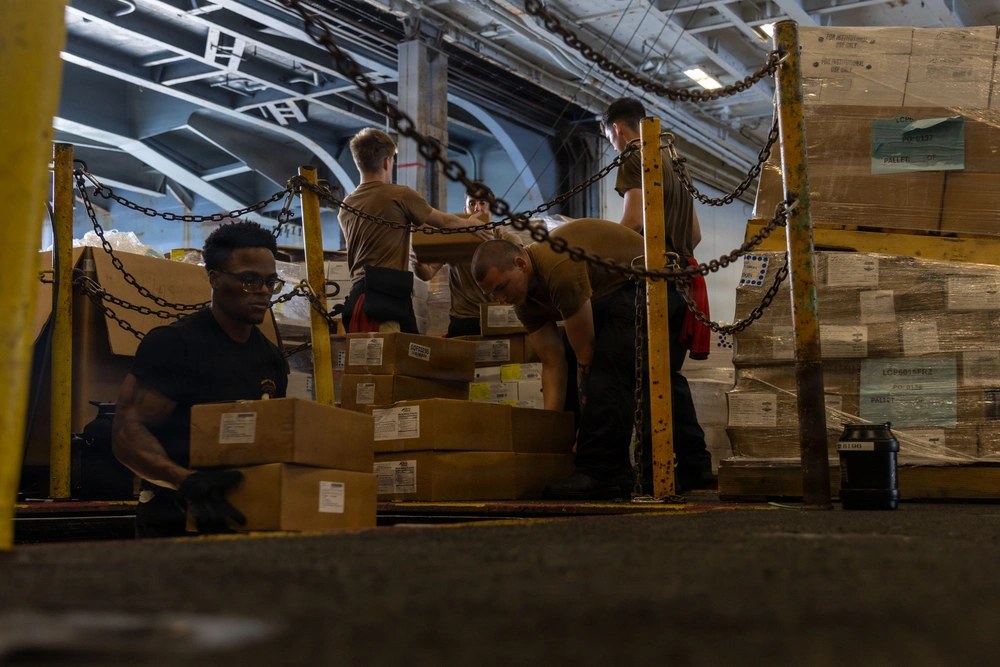
PHOTO CAPTION: U.S. sailors move supplies aboard the USS Abraham Lincoln during a replenishment-at-sea in the U.S. 5th Fleet area in May 2026. The carrier’s extended deployment later drew scrutiny over logistics, supplies and crew living conditions. U.S. Navy photo. File photo from the deployment.
Sailors and Marines aboard the USS Abraham Lincoln told visiting members of Congress they struggled to wash clothes, obtain medicine and health care, and eat enough food during the carrier’s unusually long deployment, according to a lawmaker who met with the crew over the weekend.
Rep. Sara Jacobs of California joined a bipartisan congressional delegation aboard the Lincoln on Sept. 27 as the carrier continued its return toward San Diego.
Jacobs said the lawmakers met with sailors, Marines and the ship’s leadership to discuss conditions during the extended deployment.
She said crew members described problems that went beyond the previously reported delays involving mail and other supplies.
According to Jacobs, sailors and Marines told the delegation about struggles “to wash clothes, get medicine and health care, and eat enough food.”
Jacobs also received a briefing from ship leadership on logistics, supply problems and lessons learned from the deployment.
The accounts add a new layer to weeks of scrutiny over conditions aboard the Lincoln and its carrier strike group, which spent months supporting combat operations in the Middle East.
The Navy has acknowledged that the deployment created significant logistical challenges, but its description of conditions has differed in important ways from some of the accounts being raised by lawmakers and crew members.
Acting Secretary of the Navy Hung Cao said in August that fresh resupply was sometimes unavailable and meal plans had to be adjusted, but that no meals were missed.
In a later response to congressional questions, Cao said the carrier maintained adequate food supplies and provided sufficient calories to sailors, although main entree choices were temporarily reduced from two options to one because of resupply problems.
The Navy has also said medical and mental health resources remained available aboard the carrier, including a psychologist, clinical social worker, behavioral health technicians, chaplains and other support personnel.
The Lincoln’s deployment was extended as the carrier remained involved in Middle East operations. By mid-August, the Navy said the ship had been deployed for 266 days, including 200 days in a combat zone.
The carrier eventually left the Middle East and began the long journey back toward California, making port calls in Thailand and Guam along the way.
The congressional visit is significant because the latest descriptions came directly from sailors and Marines speaking with lawmakers aboard the ship, rather than solely through family members, anonymous reports or official Navy statements.
Jacobs said she plans to continue seeking an inspector general investigation into conditions during the deployment and a House Armed Services Committee field hearing in San Diego.
The Navy, meanwhile, has emphasized that the carrier completed its missions while acknowledging that the prolonged deployment placed substantial demands on its sailors and Marines.
(Source: OAF Nation)