US-Iran deal promises end to war, but specifics remain unclear
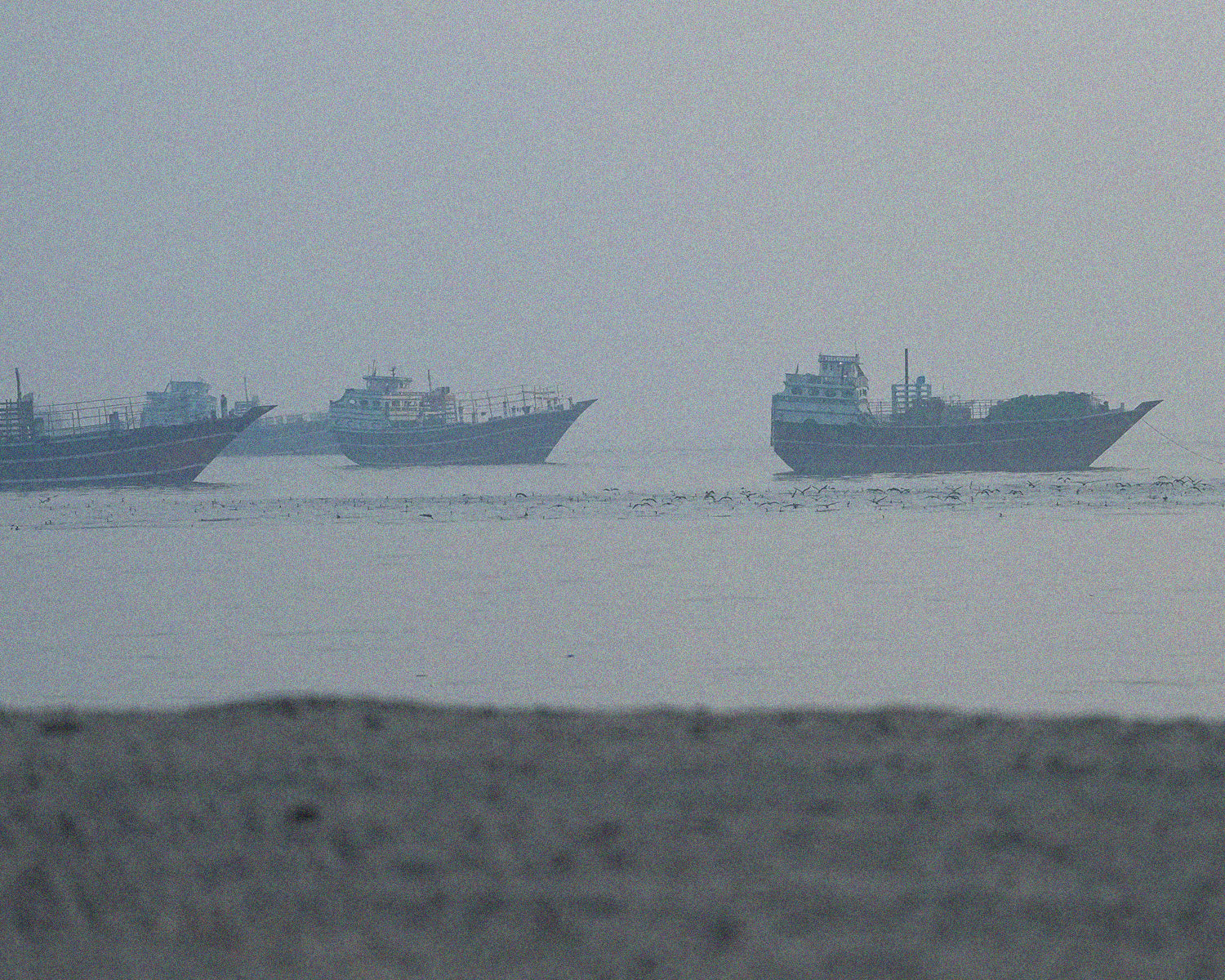
PHOTO CAPTION: Illustrative file photo — Vessels in the Strait of Hormuz, as seen from Musandam, Oman, June 15, 2026. (REUTERS/Stringer)
By Steve Holland and Jana Choukeir (Reuters)
EVIAN-LES-BAINS, France/DUBAI - Doubts swirled around the U.S.-Iran interim deal to end the war in the Middle East on Tuesday, with warnings that shipping traffic and energy exports could take weeks to recover and details of the agreement yet to be made public.
The interim deal would extend a tenuous ceasefire announced in April by another 60 days and reopen the Strait of Hormuz, which Iran has effectively blocked since the U.S. and Israel attacked Iran in February.
Negotiators would address difficult issues like the future of Iran's nuclear programme during the next phase of talks, which Iranian Foreign Minister Abbas Araqchi said would start in Switzerland on Friday after the formal signing of the framework deal.
Two other issues that U.S. President Donald Trump and Israeli Prime Minister Benjamin Netanyahu used to justify the war - ending Iran's support for regional armed proxies and curbing its missile programme - are not thought to be on the agenda for those negotiations.
"We have our deal done with Iran, and it should be successful, it goes to a second stage, which I think would be actually easier," Trump told reporters at a G7 summit. He described the deal as "a wall to a nuclear weapon" for Iran.
Vice President JD Vance and Iran's top negotiator Mohammad Baqer Qalibaf are expected to attend Friday's formal signing in Geneva.

FINAL DEAL YET TO TAKE SHAPE
Oil prices slid more than 2% to new three-month lows on Tuesday, a day after tumbling nearly 5% following news of the deal, though industry officials say Middle East oil and gas output will take months to fully recover.
Iranian President Masoud Pezeshkian wrote on social media Monday that the interim agreement was an "important step" toward stopping the fighting but noted a final deal for a lasting truce "has yet to take shape."
Vance told CNN that the signed memorandum was a "very general document." Details would be released over the next two days, U.S. officials said.
Both sides still face pressures following a conflict that killed at least 7,000 people, mostly in Iran and Lebanon, and upended global energy markets.
The accord exposes Trump to criticism from within his own party, while Iran's leaders could face the risk of renewed protests if they fail to alleviate economic pressures after a destructive war.
U.S. and Iranian officials say the deal could eventually deliver substantial economic benefits to Iran by lifting sanctions and unfreezing foreign assets. It could also set up a $300 billion reconstruction fund, paid for by neighbouring Gulf states that host U.S. military bases and were hit by Iranian attacks during the war.
U.S. officials, speaking on condition of anonymity, said Iran would have to satisfy U.S. demands never to build a nuclear weapon and cut off support for militias like Hezbollah in Lebanon in order to get those benefits.
Iranian officials, who have always denied intending to build a nuclear weapon, say they have given up little by agreeing to resume diplomatic discussions over Iran's uranium enrichment programme that were interrupted by the war.

CAUTION OVER SHIPPING
Both sides say the Strait of Hormuz, which normally carries about one-fifth of the world's trade in oil and liquefied natural gas, will be open from Friday.
On Tuesday, Iranian state television reported operations to lift the maritime blockade, while stressing that vessels must still coordinate with Iran's Revolutionary Guards.
Trump said earlier that tankers were starting to move out of the strait, and Reuters reported that the U.S. military had been overseeing scores of secretive ship-to-ship oil transfers to keep Gulf energy exports flowing.
The U.S. said the strait will be open toll-free for 60 days and it would expect that provision to be part of a final agreement. Iran has suggested it will retain control with Oman over the strait.
Shippers say a return to normal traffic could take weeks.
One concern is the possible presence of mines in the narrow waterway between Iran and Oman. A thorough minesweeping operation would "take weeks to months", an official with Greek maritime security company Diaplous told Reuters on Tuesday.

UNCERTAINTY OVER LEBANON
The conflict between U.S. ally Israel and the Iran-allied Hezbollah militia in Lebanon, which has uprooted 1.2 million people, remains another complication.
Iran has said the deal requires a full cessation of hostilities there, but Netanyahu said Israel would keep its forces in southern Lebanon and retain the right to respond to Hezbollah attacks.
Trump has expressed frustration at Israel's military campaign, saying on Tuesday he was "not happy" with the way Israel had handled itself. Israel has not directly participated in the peace talks with Iran.
A U.S. official said an Israeli withdrawal from Lebanon, which it invaded in March after Hezbollah joined the war, was not a condition of the deal.
Araqchi said Israeli attacks must stop immediately.
(Reporting by Reuters bureaus; Writing by Stephen Coates and Aidan Lewis; Editing by Raju Gopalakrishnan, Alexandra Hudson // REUTERS)