UN Says U.S. Strike Killed 120 Kids
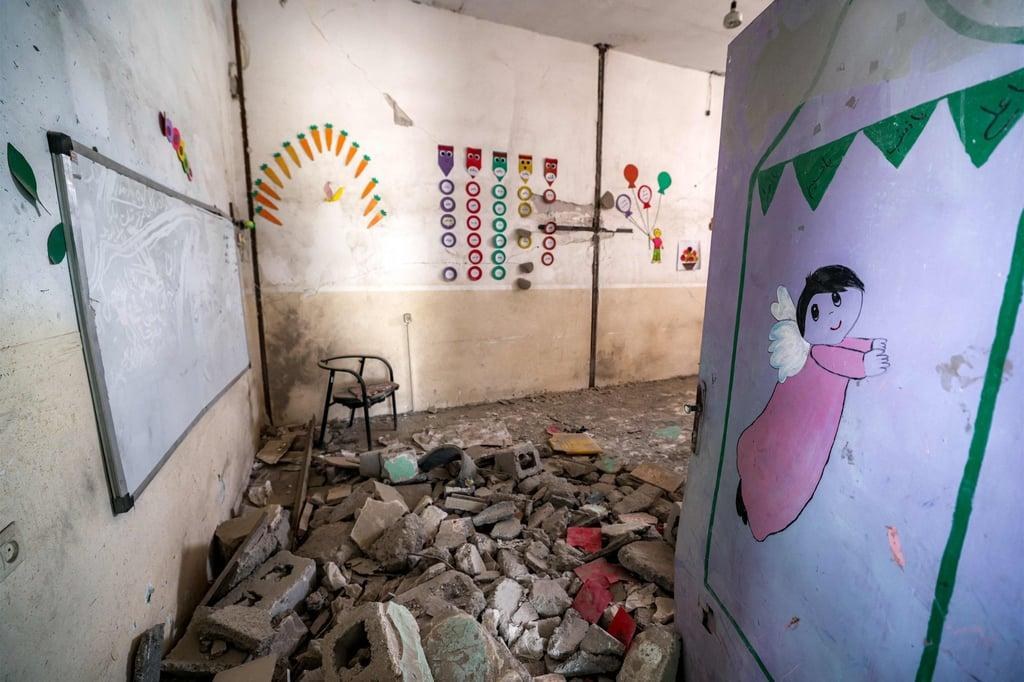
PHOTO CAPTION: The damaged Shajareh Tayyebeh Primary School in Minab, Iran. A U.N. fact-finding mission said Thursday it found reasonable grounds to believe U.S. forces were responsible for the Feb. 28 strike and that failures in the targeting process amounted to a war crime.
A United Nations fact-finding mission says U.S. forces failed to adequately update targeting information and confirm that an Iranian primary school was a military objective before a February strike that killed more than 150 people, including around 120 schoolchildren.
The finding is part of a new report released Thursday by the Independent International Fact-Finding Mission on Iran, which concluded there are “reasonable grounds” to believe the United States committed war crimes in two strikes carried out on Feb. 28, the opening day of the war with Iran. The findings are not a court judgment and are not legally binding.
One of those attacks struck the Shajareh Tayyebeh Primary School in Minab in southern Iran.
Iranian officials cited by the U.N. mission say more than 150 people were killed at the school, including approximately 120 children. Associated Press reporting has cited a separate Iranian state-media count of 168 people killed, most of them children, underscoring that there has still been no universally accepted final accounting of the casualties.
The most significant new finding concerns how the school ended up in the U.S. targeting process.
According to the U.N. investigators, the school sat next to an Islamic Revolutionary Guard Corps naval complex, but investigators found no evidence that the school itself was being used for military purposes. The mission said the United States failed to adequately update information concerning the school in its targeting databases and failed to confirm that the building was a lawful military objective before striking it.
The investigators concluded that the failure amounted to more than negligence, saying U.S. forces struck the school while aware there was a substantial risk that it was a civilian object.
The mission consequently characterized the attack as an indiscriminate strike that caused civilian deaths and damage to civilian infrastructure and said it amounted to a war crime under international law.
That conclusion builds on questions that had already emerged from the Pentagon's own investigation.
Reuters reported in March that two sources familiar with the U.S. inquiry said officials preparing the targeting package appeared to have relied on outdated intelligence. The Pentagon said at the time that the incident remained under investigation.
Members of the U.S. Senate later cited reporting that an analyst had noted as far back as 2019 that the location appeared to have changed from a naval facility into a school, but that observation was entered into an intelligence tool that was not connected to the authoritative database being used to develop strike targets. Senators demanded that the Pentagon release its investigation and explain what safeguards would prevent a similar failure.
The Pentagon has not publicly released the final findings.
President Donald Trump said in June that the school had not been attacked intentionally, saying that mistakes happen during wars and that the incident remained under investigation. U.S. officials have maintained that American military operations are conducted in accordance with the law of armed conflict.
The U.N. mission also examined a Feb. 28 strike on a sports complex and nearby residential area in Lamerd. Investigators attributed that attack to U.S. forces, said 22 civilians were killed or injured, and reached a similar war-crime conclusion.
That finding is directly disputed by U.S. Central Command.
CENTCOM said in March that American forces conducted no strike in Lamerd — or within 30 miles of the city — on Feb. 28. CENTCOM also disputed claims that wreckage shown in reporting came from an American Precision Strike Missile, saying its dimensions appeared more consistent with an Iranian Hoveyzeh cruise missile.
The U.N. report was not limited to U.S. conduct.
The same investigators concluded that Iranian authorities committed crimes against humanity during their crackdown on anti-government protests, citing unlawful killings, torture, arbitrary detention, enforced disappearances and other abuses. The mission said the scale of deaths and injuries was likely higher than Iran's official figures.
For the Minab school strike, however, Thursday's report adds a new outside assessment to an incident that has been under investigation for months: U.N. investigators now say the available evidence supports both U.S. responsibility and a conclusion that failures in the targeting process crossed the threshold from error into a war crime.
(Source: OAF Nation)