U.S. Signs $3B Missile Parts Deal
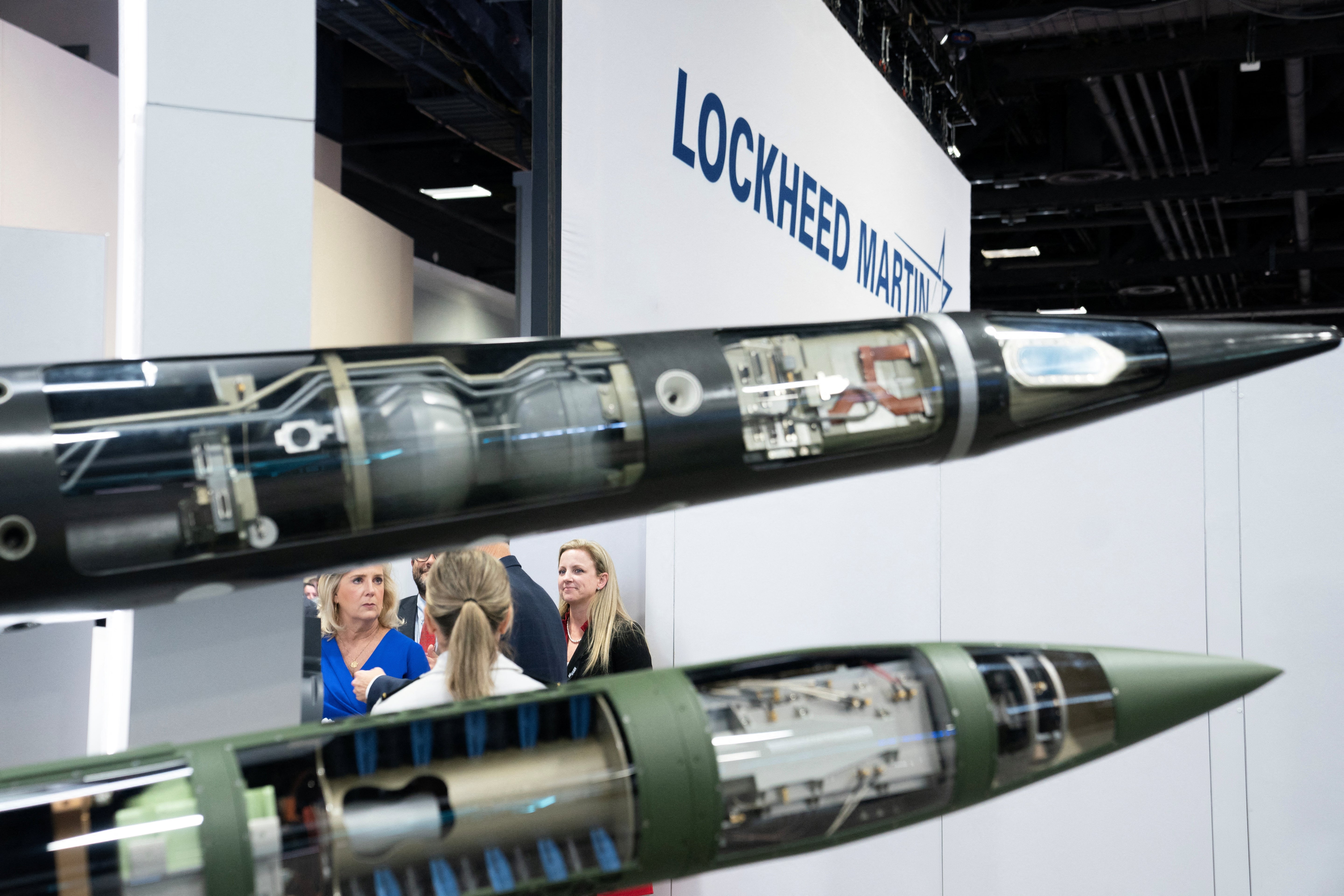
PHOTO CAPTION: FILE PHOTO: U.S. Secretary of the Army Christine Wormuth speaks near a Terminal High Altitude Area Defense (THAAD) missile and the Pac-3 Missile Segment Enhancement during the Association of the United States Army annual meeting and exposition at the Walter E. Washington Convention Center in Washington, U.S., October 14, 2024. REUTERS/Nathan Howard/File Photo
Aug. 3 — The United States signed a deal worth more than $3 billion with Lockheed Martin and Northrop Grumman to increase production of components for Patriot and THAAD interceptor missiles as conflicts involving Iran and Ukraine strain weapons stockpiles.
The Pentagon and Northrop announced the agreement Monday.
It follows last week’s announcement of a separate contract worth up to $58.6 billion for Lockheed to produce Patriot interceptor missiles.
The United States has supplied large quantities of weapons to allies while also using munitions during the conflict with Iran, raising concerns about inventories of air-defense and precision-guided weapons.
The Pentagon said the new framework agreement would allow Patriot production to triple and THAAD production to quadruple.
The Center for Strategic and International Studies recently estimated that the U.S. military had fewer than 1,000 Patriot interceptors and fewer than 250 THAAD interceptors in its inventory.
Both air-defense systems have been heavily used in the Middle East.
Pentagon pushes contractors to increase output
Pentagon negotiators have pressed defense contractors to accelerate production.
Tentative agreements reached earlier this year were intended to increase missile output as demand continued to grow.
Ukraine has faced chronic shortages of Patriot interceptors, which remain the only weapon in its arsenal capable of shooting down ballistic missiles.
The Pentagon said the agreement would establish a second supplier for PAC-3 solid rocket motors and increase production of ignition safety devices.
The United States has reached a similar framework agreement with RTX, the parent company of Raytheon, to increase production of Tomahawk cruise missiles.
That agreement aims to raise annual Tomahawk production for the U.S. from about 60 missiles to an eventual 1,000.
(Source: Reuters)