U.S. Moves Tankers After Threat
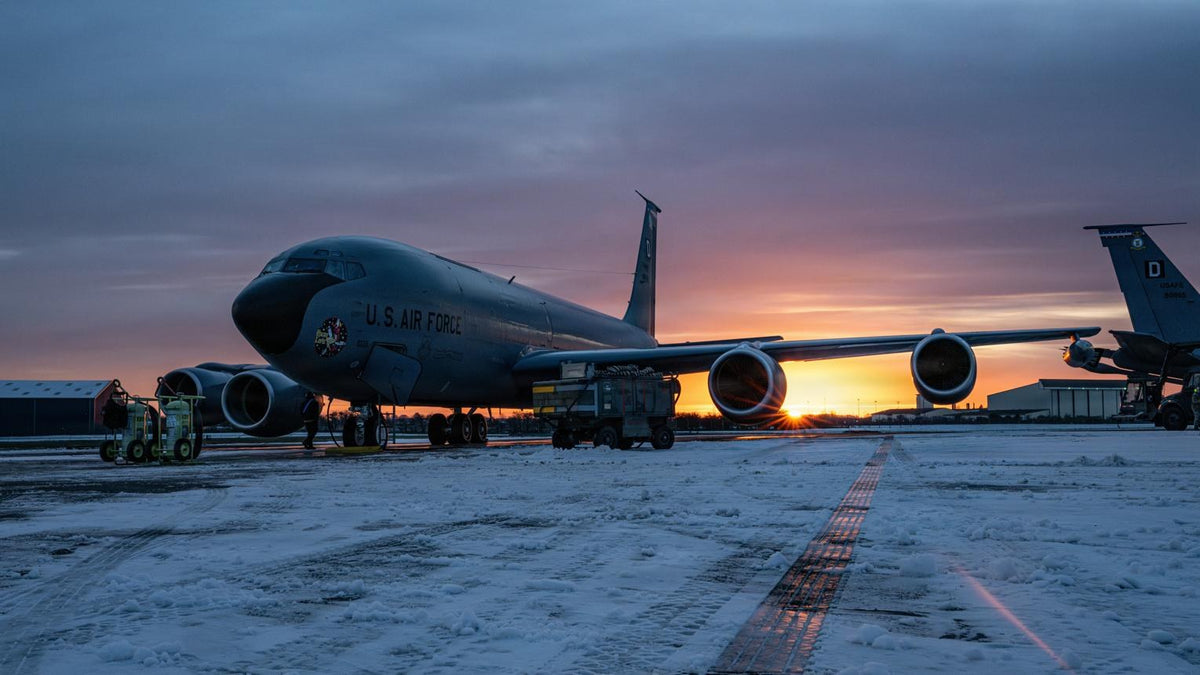
PHOTO CAPTION: A U.S. Air Force KC-135 Stratotanker assigned to the 100th Air Refueling Wing sits on the flightline at RAF Mildenhall, England, on January 6, 2026. At least 10 refueling aircraft departed the base on November 9 following a reported security threat. U.S. officials have not publicly confirmed the nature of the threat, although reporting has linked it to possible Iranian activity. (U.S. Air Force file photo by Airman 1st Class Aidan Martínez Rosiere.)
The U.S. military has moved at least 10 aerial refueling aircraft out of a British air base following a security threat, marking the second significant relocation of American military aircraft from a base in England amid concerns about possible Iranian activity.
The KC-135 Stratotankers departed RAF Mildenhall in eastern England on Monday, November 9, flying to other locations in Europe.
Three CV-22 Osprey aircraft also relocated to nearby RAF Lakenheath.
A U.S. official confirmed to The Associated Press that a threat prompted the movements, although the exact nature of that threat has not been publicly disclosed.
The Wall Street Journal reported that the decision followed intelligence concerning Iran. U.S. officials have not independently confirmed that attribution or established whether the threat was imminent.
The development comes approximately five weeks after American bombers departed RAF Fairford, another British installation used to launch strikes against Iranian targets.
Together, the two incidents raise questions about how the ongoing confrontation with Iran is affecting American military installations far from the Middle East.
At Least 10 Refueling Aircraft Leave RAF Mildenhall
Commercial flight-tracking data examined by Reuters and CBS News showed at least 10 KC-135 Stratotankers leaving RAF Mildenhall on November 9.
CBS identified aircraft landing at Spangdahlem and Ramstein air bases in Germany, Morón Air Base in Spain and Glasgow Prestwick Airport in Scotland.
The movements were unusual enough to draw attention from aviation observers, who tracked the departures as they occurred.
Three CV-22 Ospreys also moved from Mildenhall to RAF Lakenheath, approximately four miles away.
The Associated Press reported that U.S. officials described the relocation as a precautionary response to a threat rather than an attack that had already occurred.
Not all the aircraft had been permanently assigned to Mildenhall. Some were visiting the installation, and officials indicated that aircraft could return.
U.S. European Command declined to discuss specific force protection measures or operational movements, citing security considerations.
The Air Force also emphasized that aircraft routinely relocate between installations for training, deployments and operational requirements.
Officials have not provided a public timeline for the aircraft to return.
Security Reportedly Raised to Second-Highest Alert Level
The aircraft departures coincided with increased security at RAF Mildenhall and RAF Lakenheath.
According to the Wall Street Journal, both installations were placed under Force Protection Condition Charlie, the second-highest level in the U.S. military's force protection system.
FPCON Charlie generally applies when an incident has occurred or intelligence indicates that some form of terrorist action against personnel or facilities is likely.
The highest level, FPCON Delta, is reserved for more immediate or specific circumstances.
A U.S. official confirmed to The War Zone that enhanced protective measures were in place at both installations but did not disclose what prompted the changes.
The military has not publicly identified a particular weapon, attack method, suspect or intended target associated with the Mildenhall threat.
No attack on either installation was reported in connection with Monday's aircraft movements.
British officials said their country's military bases remained safe and that security precautions were continually reassessed.
Another British Base Already Lost Its American Bombers
The developments at Mildenhall follow an earlier security incident at RAF Fairford in Gloucestershire, where American long-range bombers had been operating during the war with Iran.
On September 27, British police arrested five men following reports of suspicious activity near the installation.
The investigation involved allegations of preparations for terrorist acts and possible assistance to Iranian intelligence.
Additional suspects were subsequently investigated, and British authorities later brought charges against two men connected to the inquiry.
British officials described Iranian state involvement as highly likely.
Iran denied involvement in the suspected plot.
The United States responded by withdrawing its deployed bombers from Fairford.
In early October, the Pentagon confirmed that all American bombers temporarily stationed there had returned to their home bases in the United States.
The aircraft included B-1B Lancers, which had participated in operations against Iranian targets.
Fairford had served as an important operating location for long-range American strike aircraft during the conflict.
The withdrawal was significant because the installation had supported actual combat missions, not simply routine training flights.
British investigators have not publicly established every detail of the suspected plot, and the connection between that earlier investigation and the latest threat at Mildenhall remains unconfirmed.
Why KC-135 Tankers Matter to American Military Operations
The KC-135 Stratotanker is one of the aircraft that allows the U.S. Air Force to conduct operations far from its home installations.
Its primary mission is aerial refueling.
By transferring fuel to other military aircraft while airborne, tankers enable fighters, bombers and reconnaissance aircraft to travel greater distances and remain airborne longer.
Without sufficient tanker support, some missions would require more intermediate stops, different routes or shorter operating periods.
RAF Mildenhall is home to the 100th Air Refueling Wing, the only permanently assigned U.S. Air Force aerial refueling wing in Europe.
Its aircraft support American and allied military operations throughout Europe, Africa and other regions when tasked.
That makes the installation an important part of the military's broader operational infrastructure.
Unlike the B-1 bombers withdrawn from Fairford, KC-135 aircraft are not designed to attack targets directly.
They provide the fuel that allows combat aircraft to reach distant locations and sustain extended operations.
Moving tankers does not necessarily mean reducing overall refueling capability. Aircraft can continue flying missions from alternative bases, depending on their assignments, available support and operational requirements.
However, relocating aircraft can require adjustments to maintenance, ground support, crew scheduling and mission planning.
The military has not said whether Monday's movements disrupted any active operations.
What Is Known About the Possible Iran Connection?
The Wall Street Journal reported that U.S. officials were examining a threat associated with Iran.
Reuters and other news organizations independently confirmed the aircraft movements but could not establish the precise nature of the reported threat.
The British government has warned for months about suspected Iranian intelligence and proxy activity inside the United Kingdom.
British security officials have also expressed concern that military installations could become targets as the conflict between Iran and the United States continues.
The suspected Fairford plot is one example of that concern.
But investigators have not demonstrated publicly that the Mildenhall developments involve the same individuals, network or operational plan.
Nor have authorities confirmed that an attack against Mildenhall was imminent.
The distinction is important because heightened security measures may be imposed in response to intelligence that never develops into an attempted attack.
Taking aircraft out of a potentially threatened location can be a precaution intended to preserve personnel and equipment rather than evidence that military defenses have failed.
What Happens Next?
For American personnel stationed in Britain, the immediate effect is heightened security and the temporary redistribution of aircraft.
The U.S. and British governments are continuing to coordinate protective measures around installations hosting American forces.
Officials have not announced how long the additional precautions will remain in place.
The United States also has not disclosed whether the tankers will remain at their new locations or return to Mildenhall.
The larger significance comes from the sequence of events.
In September, British police investigated a suspected plot near a base used by American bombers conducting strikes against Iran.
In October, those bombers returned to the United States.
Now, in November, refueling aircraft have been moved from another British base after officials reported a threat.
Those incidents have not been conclusively linked.
But they demonstrate how security concerns surrounding the Iran conflict extend beyond the battlefield itself, reaching the European installations that help sustain American military operations.
For the crews stationed at those bases, the consequences are no longer limited to missions flown toward the Middle East. Protecting the aircraft and installations they operate from has become an increasingly visible part of the mission.
(Source: OAF Nation)