U.S. Missile Stockpile Depleted in Iran War
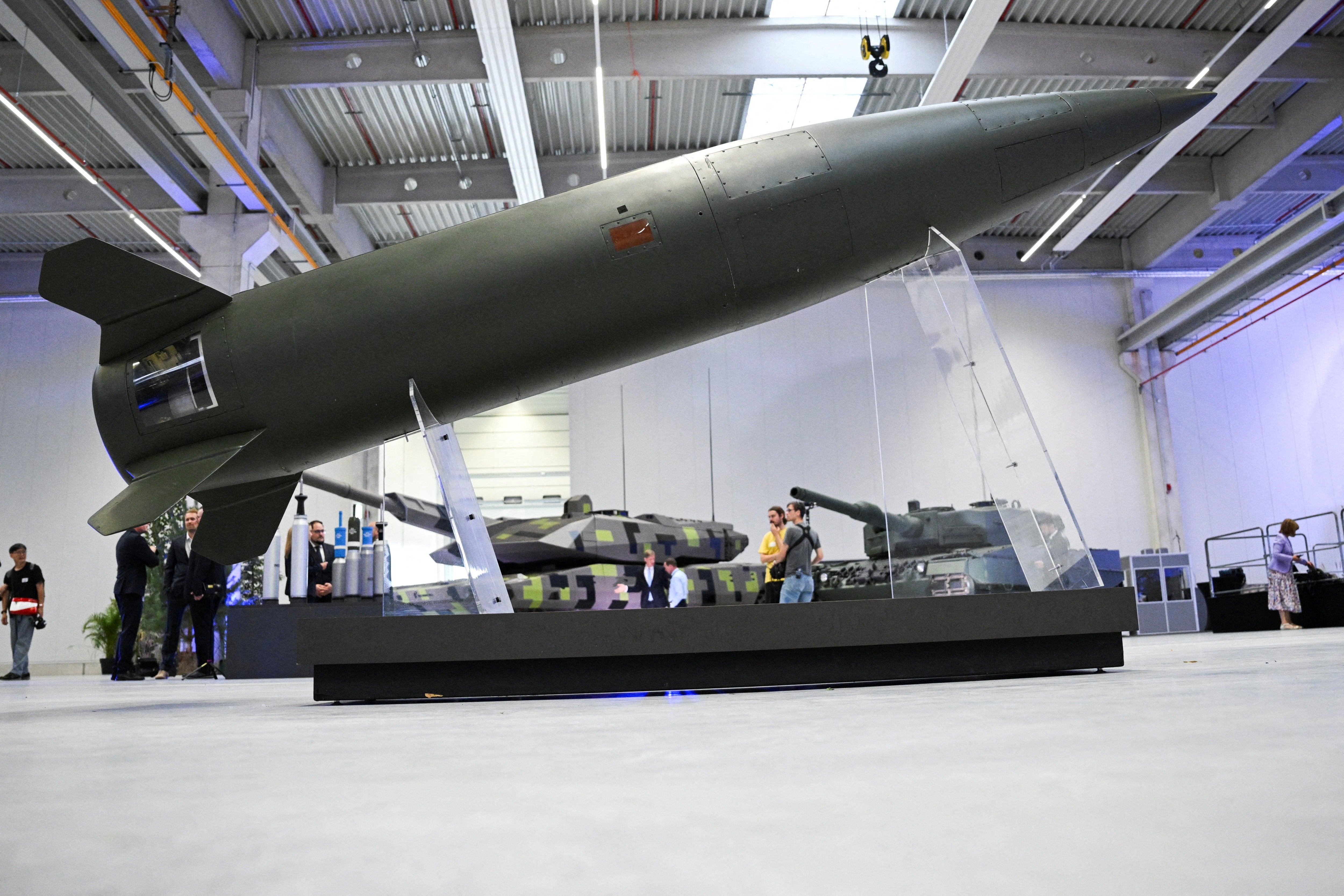
PHOTO CAPTION: FILE PHOTO: An Army Tactical Missile System (ATACMS) is displayed during the inauguration of a new artillery plant of ammunition maker Rheinmetall, in Unterluess, Germany August 27, 2025. REUTERS/Annegret Hilse/File Photo
NEW YORK/WASHINGTON, Aug. 4 — The U.S. Army has expended much of its supply of highly accurate, long-range missiles during the five-month war with Iran, raising concerns about military readiness for future conflicts, according to three people familiar with the stockpile data.
The weapons are primarily the Army Tactical Missile System, known as ATACMS, and the newer Precision Strike Missile, or PrSM.
The United States has used “virtually all” of those weapons, two of the sources said.
The extent of the drawdown in ATACMS and PrSM inventories has not previously been reported.
The surface-to-surface missiles allow U.S. forces to strike targets accurately from long distances, reducing the need to place aircraft and personnel closer to heavily defended areas.
U.S.-supplied ATACMS have also played a major role in Ukraine, allowing Ukrainian forces to strike targets inside Russia.
The PrSM is a newer and more advanced weapon intended to replace the shorter-range ATACMS.
Analysts say the missiles, which cost more than $1 million each, would also be important in a potential conflict with China.
The sources declined to disclose how many of either weapon remain in U.S. inventories.
Stockpile concerns grow as Iran war continues
President Donald Trump launched the war against Iran alongside Israel in February and initially predicted the conflict would be brief.
As the war has continued, the three people familiar with the matter expressed concern that declining missile supplies could weaken the U.S. military’s ability to deter Russia, China and other potential adversaries.
A fourth person familiar with the matter said U.S. Central Command had nearly exhausted the land-based missiles available to it before the war.
CENTCOM, which oversees U.S. forces in the Middle East, has been able to replenish its stocks using weapons transferred from other U.S. military inventories around the world, the person said.
All four sources spoke on condition of anonymity.
Asked about the stockpile data, the White House provided a statement from Trump saying the United States had “far more munitions than anyone in the world” and “far more than we need.”
“Our defense companies are, at this moment, making more munitions than they have ever made before, in addition to expanding their plants and equipment at record levels,” Trump said.
Analysts agree that production of some weapons, including artillery shells and several missile types, has reached record levels.
They caution, however, that production may remain far below what would be required to sustain a prolonged war.
Lockheed Martin, which produces ATACMS, PrSM and the THAAD missile-defense system, did not immediately respond to questions about Trump’s statement or current supply levels.
Raytheon, which produces Tomahawk missiles and Patriot interceptors, also did not immediately respond.
Chief Pentagon spokesperson Sean Parnell said the U.S. military remained capable of carrying out operations while protecting American personnel and interests.
“America’s military is the most powerful in the world and has everything it needs to execute at the time and place of the President’s choosing,” Parnell said.
“We have executed multiple successful operations across combatant commands while ensuring the U.S. military possesses a deep arsenal of capabilities to protect our people and our interests.”
Officials debate how long strikes can continue
The supply figures circulated within the federal government over the past week during tense internal discussions about how long the United States could continue attacking Iran without reducing stockpiles to levels that could limit its response to other crises.
One source said the rapid use of ATACMS and PrSM reflected the Trump administration’s decision to avoid riskier methods of striking Iranian targets, including using crewed aircraft to drop bombs.
Long-range missiles would be especially valuable against adversaries with advanced air defenses, such as China, analysts said.
A March report from the Center for Strategic and International Studies said the missiles had been used against targets inside Iran.
The report said PrSM stocks were already limited because the weapon is relatively new. The U.S. military has placed large orders for delivery in 2027.
The Army has said it is phasing out ATACMS while shifting production to PrSM.
Military leaders have also warned Trump for weeks that inventories of defensive weapons, including Patriot interceptors capable of destroying ballistic missiles, were declining, two sources said.
Several news organizations reported last week that Trump decided against another major attack inside Iran partly because military advisers warned him about U.S. stockpiles.
A U.S. official disputed those reports, saying Trump held off because of pressure from Gulf countries.
The war has also generated debate over Trump’s authority to conduct hostilities against Iran without congressional authorization.
The administration has not submitted a request to Congress for either a declaration of war or an authorization for the use of military force.
Defensive missile stocks also decline
CSIS estimated last week that the United States expended approximately 65% of its Patriot interceptors between February and July.
The think tank also estimated that the U.S. inventory of THAAD ballistic-missile interceptors was at least 38% lower than when the war began.
Patriot and THAAD systems are designed to detect and destroy incoming missiles.
Reuters has not seen the underlying supply figures, but two sources said the CSIS estimates matched internal U.S. data.
The United States has also used slightly less than half of its global Tomahawk cruise-missile inventory since the war began, one source said.
Reuters could not independently verify that figure.
Tomahawks are Navy weapons launched from destroyers, cruisers and submarines. They allow the military to strike heavily defended targets without placing pilots at risk.
Raytheon, a unit of RTX, has reached a tentative multiyear agreement with the Pentagon to increase Tomahawk production as Washington works to rebuild depleted weapons inventories.
(Source: Reuters)