Article: U.S. Military Recruiting Rebounds
U.S. Military Recruiting Rebounds
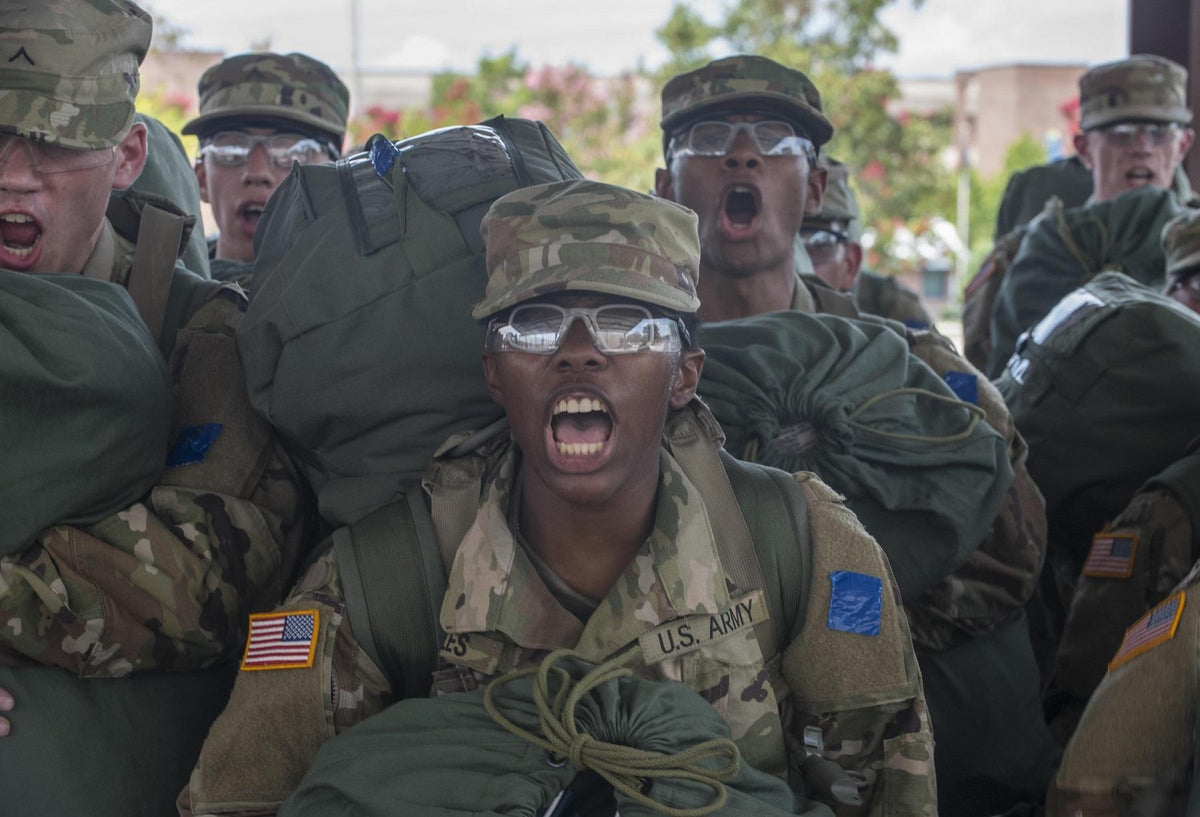
PHOTO CAPTION: U.S. Army Staff Sgt. Darla Flores instructs new recruits during their first day of basic combat training at Fort Jackson, South Carolina, on September 18, 2026. (U.S. Army photo by 2nd Lt. Erin Conway)
Only 29% of young Americans meet the Army's estimated eligibility requirements for military service, yet the U.S. military is experiencing a significant recruiting recovery after years of struggling to fill its ranks.
The Army and Air Force have now met their annual recruiting targets ahead of schedule for two consecutive years, according to a new report published November 1 by Stars and Stripes.
The turnaround presents an unusual contrast: Most young Americans do not qualify for military service, but the services are finding enough recruits to meet their goals.
Researchers say several factors may be contributing, including a difficult civilian job market, increased military compensation, new medical waiver policies, and programs designed to help applicants meet enlistment standards.
Why So Many Young Americans Are Ineligible
The Army estimates that just 29% of American youth meet the requirements to serve.
Common disqualifying factors include obesity, drug use, medical conditions, mental health issues, and other eligibility restrictions.
Not every disqualification is necessarily permanent. Some applicants can receive medical waivers, while others may become eligible after improving their fitness or academic qualifications.
The challenge extends beyond eligibility.
Defense Department survey data showed that only about 10% of Americans ages 16 to 21 planned to serve in the military in 2025.
That means recruiters must find prospective service members within a relatively small eligible population, many of whom never originally intended to enlist.
The military also faces a long-term demographic challenge. The Western Interstate Commission for Higher Education projects the number of annual U.S. high school graduates will decline from approximately 3.9 million in 2025 to 3.4 million by 2041.
Recruiting Numbers Are Recovering
Despite those obstacles, recruiting results have improved across the armed forces.
The Army met its fiscal year 2026 active-duty recruiting goal months ahead of schedule, finishing with 61,530 new soldiers, according to the Army Recruiting Division.
The Air Force also met its target, bringing in 31,950 new airmen during the fiscal year.
The Navy recruited 45,112 sailors, exceeding its annual goal for the third consecutive year.
The Marine Corps reported recruiting 31,250 enlisted Marines and meeting its fiscal year goal as well.
For the Army and Air Force, the improvement follows recruiting difficulties earlier in the decade, when the services faced growing competition for qualified applicants and disruptions caused by the COVID-19 pandemic.
Meeting a recruiting target does not necessarily mean every military occupational specialty is fully staffed or that all personnel shortages have disappeared. It does, however, represent a substantial improvement in the services' ability to attract new recruits.
Is the Civilian Job Market Helping?
One possible explanation is that civilian employment opportunities have become less attractive for some young Americans.
According to federal labor data cited in the November 1 report, unemployment among young workers reached 9.9% in September 2026, more than twice the overall unemployment rate of 4.2%.
Jennifer Heissel, a senior economist at RAND, explained that military service can become more appealing when civilian job opportunities are harder to find.
The Army is also seeing more recruits who have already attempted college.
Approximately 20% of new soldiers in 2025 and 2026 had completed at least one semester of college, compared with about 11% during the previous three years.
That shift suggests more young adults may be considering military service after exploring other education or employment opportunities.
Recruiters have also reported interest from applicants seeking technical training, stable pay, benefits, and career pathways in fields such as electrical work and other skilled trades.
However, the available evidence does not establish that unemployment alone is responsible for the recruiting rebound.
Are Military Standards Changing?
The military has also introduced new approaches to help applicants qualify.
The Army's Future Soldier Preparatory Course allows prospective recruits to improve their physical fitness or academic performance before entering regular basic training.
In fiscal year 2026, 9,134 recruits graduated from preparatory programs before entering the regular Army, Army National Guard, or Army Reserve.
The Defense Department has also revised medical waiver procedures for certain conditions, including some cases involving asthma, food allergies, and attention-deficit/hyperactivity disorder.
These changes can allow applicants who might previously have been rejected to undergo individual reviews.
But revised waiver policies do not automatically mean every recruit receives an exception or that basic training graduation standards have been eliminated.
Interestingly, the Air Force reported granting fewer medical waivers in 2026 than in 2025, declining from 11,661 to 9,683.
That complicates any argument that increased waivers alone explain the recruiting improvement.
Military Leaders Credit a Renewed Focus on Service
Defense Secretary Pete Hegseth has highlighted the recruiting gains as evidence of improving military readiness and renewed interest in service.
During an October visit to the Air Force Academy, Hegseth credited the administration's emphasis on merit-based leadership and its elimination of diversity, equity, and inclusion programs.
But researchers caution against attributing the turnaround to a single policy.
Changes in compensation, civilian employment, recruiting access, military career incentives, medical screening, and applicant preparation may all influence enlistment decisions.
It remains too early to determine the long-term effectiveness of several newer recruiting initiatives because many service members entering through those programs have not completed their initial enlistment contracts.
The Bigger Question Facing the Military
The recruiting rebound is welcome news for military planners, but the underlying challenges remain.
A limited pool of eligible applicants, declining numbers of high school graduates, and relatively low interest in military service could make maintaining recruiting success difficult in the years ahead.
For veterans, the numbers also raise familiar questions about physical fitness, medical standards, training requirements, and whether today's recruits are entering the military for the same reasons previous generations did.
The services are finding enough people willing to enlist.
The longer-term challenge is ensuring those recruits are prepared to serve, complete their training, and remain capable of meeting the military's operational demands.
(Source: OAF Nation)