U.S. Continues Ukraine Missile Talks
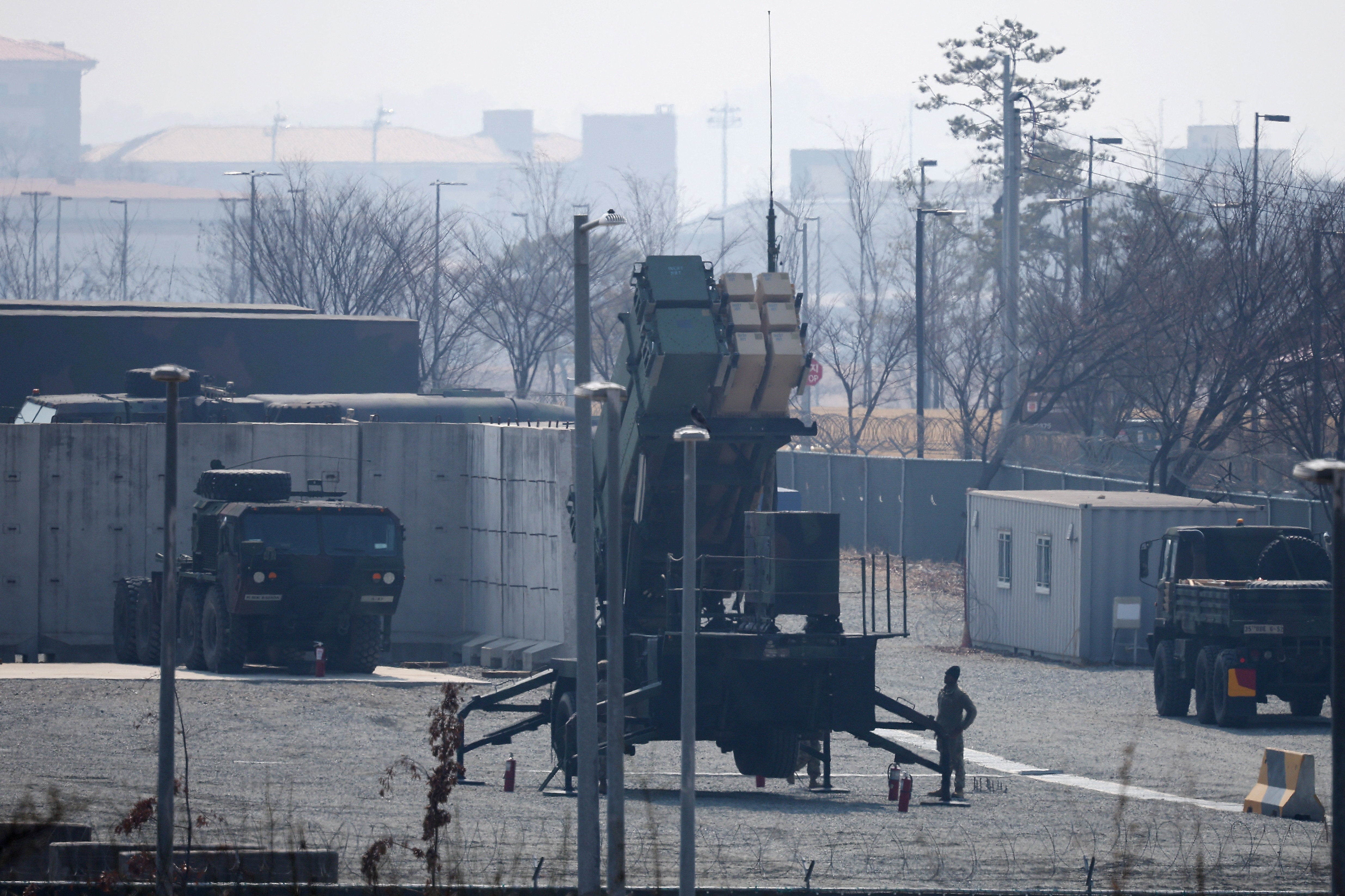
PHOTO CAPTION: U.S. Patriot missile defense systems at a U.S army base in Pyeongtaek, South Korea, March 12, 2026. REUTERS/Kim Hong-Ji
WASHINGTON, Aug. 5 — The United States is continuing discussions that could allow Ukraine to manufacture Patriot interceptor missiles despite President Donald Trump publicly casting doubt on such an agreement, four people familiar with the talks said.
The options include allowing Ukraine to produce some missile components before sending them elsewhere in Europe for final assembly, the sources said.
Ukraine urgently needs additional PAC-3 interceptors, the newest Patriot missile variant and one of the few weapons capable of destroying the ballistic missiles Russia is firing in growing numbers.
Ukrainian President Volodymyr Zelenskiy said Saturday that his country had run out of Patriot interceptors. Ukraine shot down only one of the 27 ballistic missiles Russia launched that day, he said.
During a meeting with Zelenskiy in Ankara last month, Trump said the United States would grant Ukraine a license to manufacture PAC-3 missiles.
Trump appeared to reverse course last week after what two sources described as a difficult meeting with Zelenskiy at the White House.
The president told reporters that Washington had not agreed to let Ukraine manufacture the missiles and that the United States must be “very careful about letting somebody build them.”
Discussions continue despite Trump’s comments
Washington had largely set aside earlier Ukrainian requests to manufacture Patriot interceptors during the war because of security concerns raised by weapons-industry executives and U.S. military officials, three sources said.
U.S. Ambassador to NATO Matthew Whitaker is now leading efforts to reach an agreement.
Whitaker traveled to Kyiv last month to discuss possible arrangements with Ukrainian officials and defense-industry executives, the four sources said.
“No order was given to halt the discussions,” one source said.
Talks have continued with American weapons manufacturers, military officials and other parties, the source added.
The White House declined to comment.
The options under consideration include producing Patriot components in Ukraine and sending them to Germany for final assembly.
Other possibilities include adding Ukraine to an existing U.S.-European Patriot interceptor program or allowing Kyiv to manufacture a less expensive version of the PAC-3.
The four sources spoke on condition of anonymity to discuss internal administration deliberations.
Whitaker’s spokesperson said his Kyiv visit explored cooperation on battlefield technologies, including drones, that could benefit U.S. forces. The spokesperson did not specifically mention the Patriot discussions.
A senior Trump administration official said Washington was examining several potential forms of future defense-industrial cooperation with Ukraine.
Any agreement would have to protect sensitive U.S. technology, the official said.
Ukraine’s embassy in Washington did not respond to a request for comment.
Trump’s change in tone surprised officials
Trump’s skeptical comments appeared to reverse his earlier support for granting Ukraine a production license and surprised several people involved, including Zelenskiy.
Zelenskiy later emphasized Ukraine’s need to defend itself during a phone call with Vice President JD Vance, one source said.
Vance assured him that agreements between presidents would be honored, according to the source.
A U.S. official familiar with the discussions said the most practical option would be producing components in Ukraine and completing assembly in Germany.
An older Patriot missile model is already manufactured in Germany, and production of the more advanced PAC-3 is expected there as well.
Ukraine could also potentially join Lockheed Martin’s new lower-cost Patriot program involving the PAC-3 Adapted Capability Effector, or ACE, missile, the sources said.
Lockheed announced the missile last month.
Production would not solve immediate shortage
Even with an agreement, Ukraine would not begin receiving newly manufactured interceptors for at least a year.
Kyiv would still need other countries to transfer missiles from their existing supplies to meet its immediate defense needs.
Olha Stefanishyna, Ukraine’s former ambassador to the United States, said last week that Kyiv was also considering long-term purchases of PAC-3 interceptors and exchanging future deliveries with other countries to receive missiles sooner.
She said Lockheed Martin was fully involved in the discussions and was working to send a team to Ukraine.
Lockheed Martin did not respond to a request for comment.
U.S. officials said licensing American weapons production in Europe has been under discussion since Russia’s 2022 invasion exposed weaknesses in European arsenals. Some production agreements have already been completed.
Officials cautioned that creating new component-production lines is complex and typically takes three to seven years after a licensing agreement is signed.
Global supplies of Patriot interceptors have declined since the war with Iran began. Missiles previously designated for Ukraine have instead been sent to the U.S. military and American allies in the Gulf.
Ukraine hopes a production agreement would allow it to rebuild its interceptor stockpile over time.
(Source: Reuters)