U.S. Blockade Halts Iran Oil Exports
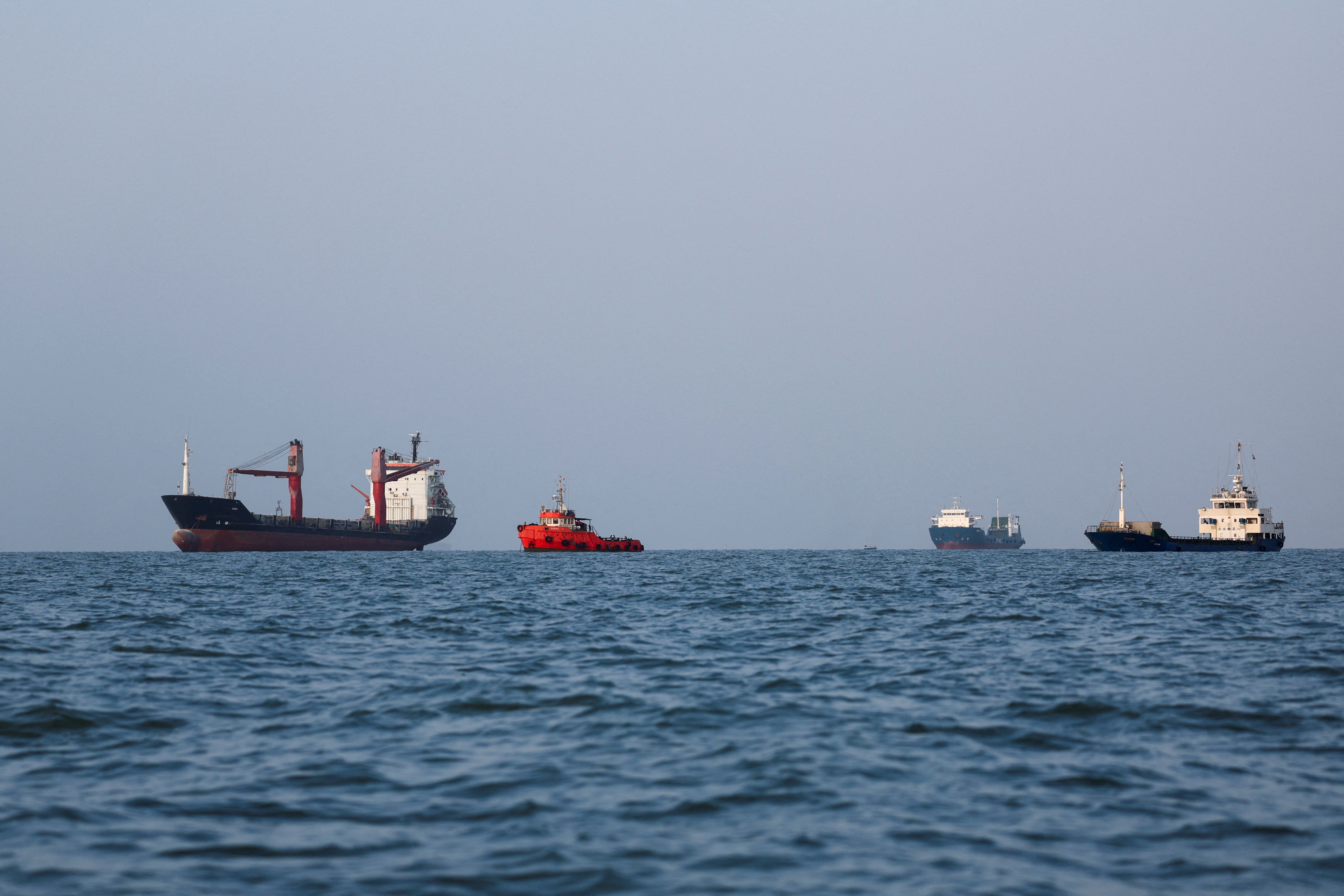
PHOTO CAPTION: Vessels in the Strait of Hormuz are visible near the beach of Bandar Abbas, Iran, August 27, 2026. Majid Asgaripour/WANA (West Asia News Agency) via REUTERS
LONDON, Sept. 1 — Iran has gone roughly seven weeks without shipping meaningful crude exports through the Strait of Hormuz, the longest such stretch on record, as a U.S. naval blockade cuts off one of Tehran’s main sources of foreign-currency income.
Unlike earlier sanctions campaigns, when Iranian oil continued reaching buyers despite U.S. restrictions, the current blockade has prevented fresh crude cargoes from reaching China, Tehran’s only major remaining oil customer.
Since the United States reinstated its blockade on July 14 as part of the six-month conflict, no Iranian crude cargoes have successfully passed through the Strait of Hormuz to China, according to Kpler, Vortexa and TankerTrackers.com.
Iran can still sell crude stored aboard tankers in Asia, but those supplies cannot be replenished while additional oil accumulates aboard ships inside the strait.
“Even at the height of maximum-pressure sanctions in 2019-20, some Iranian crude cleared Hormuz every single month; at no point did outbound flows fall to near-zero for a sustained stretch as they have since mid-July,” Vortexa analyst Claire Jungman said.
Exports collapse from March levels
Iran loaded an estimated 220,000 to 255,000 barrels per day of crude oil and condensate in August, according to Vortexa and Kpler, down from about 740,000 barrels per day in July and roughly 2 million barrels per day in March.
The drop is cutting into one of Iran’s primary sources of foreign currency and could force the government to finance spending by printing additional money, increasing the risk of even higher inflation, Kpler analyst Homayoun Falakshahi said.
The International Monetary Fund estimates Iran’s inflation rate at nearly 70% this year, which would be the third-highest in the world after Venezuela and Sudan.
Washington increased pressure further last week by warning countries that continue doing business with Tehran, although it stopped short of immediately imposing penalties.
The current blockade follows several changes in U.S. policy during the war. After the conflict began Feb. 28, Washington issued a one-month waiver allowing Iranian oil exports in March, announced a blockade on Iran-linked shipping in April and later suspended it after the United States and Iran signed a 60-day memorandum of understanding in June.
The United States reimposed the blockade on July 14. The negotiating period under the memorandum later expired without a broader agreement.
Millions of barrels trapped inside Hormuz
Iran currently has 29 tankers inside the strait carrying 36.11 million barrels of crude, TankerTrackers.com co-founder Samir Madani said.
The U.S. blockade does not cover Iran’s entire coastline. U.S. Navy ships operate farther south between the Gulf of Oman and Arabian Sea, where they vet vessels traveling to and from Iranian ports.
Outside the blockade area, dozens of Iran-linked shadow-fleet tankers remain active.
David Tannenbaum of Blackstone Compliance Services said 51 such vessels were operating in the Gulf of Oman and another 81 were delivering cargoes in Asia or waiting off Malaysia. Reuters could not independently verify those figures.
China still buying from shrinking floating stocks
Iranian crude remains available for sale, with traders saying cargoes for September and October delivery to China are still being offered.
But available volumes have declined from July and August because floating storage outside the Gulf is shrinking without fresh shipments clearing the blockade.
Iranian crude held in floating storage west of the blockade line rose to 41.7 million barrels by Aug. 26 from 35.5 million at the end of July, according to Vortexa. At the same time, total Iranian crude afloat fell to 107 million barrels from 135 million.
“China can grab whatever's floating around in their neck of the woods, but that's about it for now, really,” Madani said.
Once those cargoes are sold, empty tankers cannot return to Iranian ports because of the blockade, leaving ships stranded offshore.
Jungman said 27 sanctioned tankers linked to Iran’s oil trade were waiting off Sri Lanka in ballast and unable to return to Iran.
(Source: Reuters)