TRUMP SCALES BACK S. KOREA DRILLS
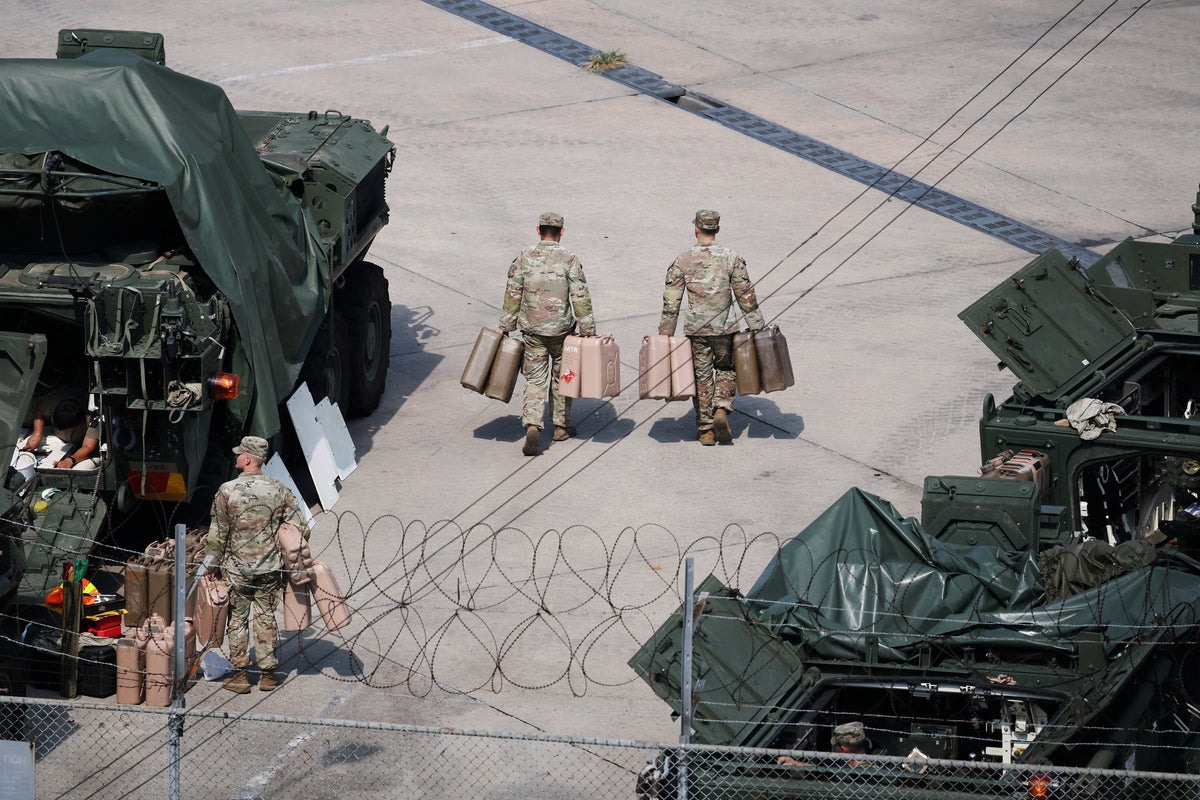
PHOTO CAPTION: U.S. Army soldiers move jerrycans at a U.S. army base near the demilitarized zone separating two Koreas, in Dongducheon, South Korea, August 18, 2026. REUTERS/Kim Hong-Ji
SEOUL, Aug. 18 — President Donald Trump’s order to scale back joint military exercises with South Korea has revived one of the most contentious issues from his first term and highlighted how his deal-focused approach continues to test the more than 70-year-old alliance.
Here is how U.S.-South Korea relations have evolved under Trump.
How has Trump’s North Korea policy shaped the alliance?
Trump moved from threatening North Korea with “fire and fury” in 2017 to meeting leader Kim Jong Un in Singapore in 2018, Hanoi in 2019 and at the Demilitarized Zone later that year.
After the Singapore summit, Trump suspended the August 2018 Ulchi Freedom Guardian joint military exercise with South Korea, calling the drills expensive and provocative. Several later exercises were canceled or redesigned.
The Hanoi talks collapsed without a denuclearization agreement, and North Korea subsequently expanded its missile and nuclear capabilities. The United States and South Korea later restored larger exercises that now include threats such as drones and cyberattacks.
Trump’s latest order to scale back the drills revives his first-term approach under different conditions. North Korea has expanded its weapons arsenal, continues missile testing and has developed close military ties with Russia, although Trump says his relationship with Kim remains good and has described North Korea as “unthreatening and respectful” during his presidency.
Has the U.S. security commitment changed?
Trump has repeatedly questioned the cost of maintaining roughly 28,500 U.S. troops in South Korea while continuing to describe Seoul as an important ally.
His second administration has also pushed to “modernize” the alliance, potentially allowing U.S. forces greater flexibility to respond to challenges beyond the Korean Peninsula, particularly China.
That creates a potential tension for Seoul. South Korea depends on Washington to deter North Korea but is reluctant to become involved in a conflict over Taiwan, the democratically governed island that Beijing claims as its own.
Negotiations with Trump have also advanced some South Korean priorities. Last year, Trump endorsed Seoul’s pursuit of nuclear-powered submarines, while South Korea has also sought greater freedom to enrich uranium and reprocess spent nuclear fuel and a faster transfer of wartime operational control.
South Korean President Lee Jae Myung has increased defense spending and pledged a larger security role while maintaining that Washington’s defense commitment remains firm.
Why does burden-sharing remain contentious?
During his first term, Trump demanded a sharp increase in South Korea’s contribution to the cost of hosting U.S. troops, raising concerns in Seoul that he could reduce forces if the government refused.
The allies now have a cost-sharing agreement covering 2026 through 2030. Under that deal, South Korea will contribute about 1.52 trillion won, or $1.1 billion, this year toward maintaining U.S. forces in the country.
Trump has continued to argue that South Korea pays too little, while Seoul says the existing agreement should be honored.
How have trade ties changed?
Trump’s first administration renegotiated the bilateral free trade agreement and imposed tariffs affecting South Korean steel. His second term has brought broader tariff pressure.
Washington initially threatened tariffs of 25% before agreeing to a 15% rate in exchange for South Korean investment and other commitments. Trump later threatened to raise tariffs again, accusing Seoul of moving too slowly to implement the agreement.
U.S. concerns have also included South Korean regulation of American technology companies. Seoul’s treatment of U.S.-listed e-commerce company Coupang has become another source of friction between the two governments.
Why has investment become so important?
South Korean companies have invested heavily in U.S. semiconductor, battery, electric vehicle and shipbuilding projects.
Seoul also pledged $350 billion for U.S. projects in exchange for tariff relief. A dispute emerged after Trump described the amount as payable upfront, while South Korea said the package would consist of loans, guarantees and equity and warned that paying the entire amount in cash could destabilize its economy.
The detention of hundreds of South Korean workers during a 2025 immigration raid at a Hyundai-LG battery project in Georgia also caused alarm in Seoul and prompted warnings that companies could reconsider U.S. investments.
How has political management changed?
Trump’s two terms have largely overlapped with liberal South Korean governments that favor engagement with North Korea.
Former President Moon Jae-in helped facilitate Trump’s diplomacy with Kim, though differences over sanctions and inter-Korean cooperation periodically strained relations, including with Trump’s first ambassador to Seoul, Harry Harris.
The conservative government of Yoon Suk Yeol later took a harder line toward Pyongyang and strengthened security cooperation with Washington and Tokyo. Trump’s second term has again largely coincided with a liberal administration under Lee, who also favors reducing tensions with North Korea.
Trump’s highly personalized approach to diplomacy has also led Seoul to cultivate less conventional channels into the White House. During tariff negotiations in 2025, South Korean officials dealt directly with White House Chief of Staff Susie Wiles, whom they believed could help clarify Trump’s intentions.
The arrival of Seoul-born former Republican congresswoman Michelle Steel as U.S. ambassador has also given Trump a politically aligned envoy as the two countries navigate disagreements over North Korea, defense costs, tariffs and investment.SEOUL, Aug. 18 — President Donald Trump’s order to scale back joint military exercises with South Korea has revived one of the most contentious issues from his first term and highlighted how his deal-focused approach continues to test the more than 70-year-old alliance.
Here is how U.S.-South Korea relations have evolved under Trump.
How has Trump’s North Korea policy shaped the alliance?
Trump moved from threatening North Korea with “fire and fury” in 2017 to meeting leader Kim Jong Un in Singapore in 2018, Hanoi in 2019 and at the Demilitarized Zone later that year.
After the Singapore summit, Trump suspended the August 2018 Ulchi Freedom Guardian joint military exercise with South Korea, calling the drills expensive and provocative. Several later exercises were canceled or redesigned.
The Hanoi talks collapsed without a denuclearization agreement, and North Korea subsequently expanded its missile and nuclear capabilities. The United States and South Korea later restored larger exercises that now include threats such as drones and cyberattacks.
Trump’s latest order to scale back the drills revives his first-term approach under different conditions. North Korea has expanded its weapons arsenal, continues missile testing and has developed close military ties with Russia, although Trump says his relationship with Kim remains good and has described North Korea as “unthreatening and respectful” during his presidency.
Has the U.S. security commitment changed?
Trump has repeatedly questioned the cost of maintaining roughly 28,500 U.S. troops in South Korea while continuing to describe Seoul as an important ally.
His second administration has also pushed to “modernize” the alliance, potentially allowing U.S. forces greater flexibility to respond to challenges beyond the Korean Peninsula, particularly China.
That creates a potential tension for Seoul. South Korea depends on Washington to deter North Korea but is reluctant to become involved in a conflict over Taiwan, the democratically governed island that Beijing claims as its own.
Negotiations with Trump have also advanced some South Korean priorities. Last year, Trump endorsed Seoul’s pursuit of nuclear-powered submarines, while South Korea has also sought greater freedom to enrich uranium and reprocess spent nuclear fuel and a faster transfer of wartime operational control.
South Korean President Lee Jae Myung has increased defense spending and pledged a larger security role while maintaining that Washington’s defense commitment remains firm.
Why does burden-sharing remain contentious?
During his first term, Trump demanded a sharp increase in South Korea’s contribution to the cost of hosting U.S. troops, raising concerns in Seoul that he could reduce forces if the government refused.
The allies now have a cost-sharing agreement covering 2026 through 2030. Under that deal, South Korea will contribute about 1.52 trillion won, or $1.1 billion, this year toward maintaining U.S. forces in the country.
Trump has continued to argue that South Korea pays too little, while Seoul says the existing agreement should be honored.
How have trade ties changed?
Trump’s first administration renegotiated the bilateral free trade agreement and imposed tariffs affecting South Korean steel. His second term has brought broader tariff pressure.
Washington initially threatened tariffs of 25% before agreeing to a 15% rate in exchange for South Korean investment and other commitments. Trump later threatened to raise tariffs again, accusing Seoul of moving too slowly to implement the agreement.
U.S. concerns have also included South Korean regulation of American technology companies. Seoul’s treatment of U.S.-listed e-commerce company Coupang has become another source of friction between the two governments.
Why has investment become so important?
South Korean companies have invested heavily in U.S. semiconductor, battery, electric vehicle and shipbuilding projects.
Seoul also pledged $350 billion for U.S. projects in exchange for tariff relief. A dispute emerged after Trump described the amount as payable upfront, while South Korea said the package would consist of loans, guarantees and equity and warned that paying the entire amount in cash could destabilize its economy.
The detention of hundreds of South Korean workers during a 2025 immigration raid at a Hyundai-LG battery project in Georgia also caused alarm in Seoul and prompted warnings that companies could reconsider U.S. investments.
How has political management changed?
Trump’s two terms have largely overlapped with liberal South Korean governments that favor engagement with North Korea.
Former President Moon Jae-in helped facilitate Trump’s diplomacy with Kim, though differences over sanctions and inter-Korean cooperation periodically strained relations, including with Trump’s first ambassador to Seoul, Harry Harris.
The conservative government of Yoon Suk Yeol later took a harder line toward Pyongyang and strengthened security cooperation with Washington and Tokyo. Trump’s second term has again largely coincided with a liberal administration under Lee, who also favors reducing tensions with North Korea.
Trump’s highly personalized approach to diplomacy has also led Seoul to cultivate less conventional channels into the White House. During tariff negotiations in 2025, South Korean officials dealt directly with White House Chief of Staff Susie Wiles, whom they believed could help clarify Trump’s intentions.
The arrival of Seoul-born former Republican congresswoman Michelle Steel as U.S. ambassador has also given Trump a politically aligned envoy as the two countries navigate disagreements over North Korea, defense costs, tariffs and investment.
(Source: Reuters)