Trump Plans to End Israel Aid
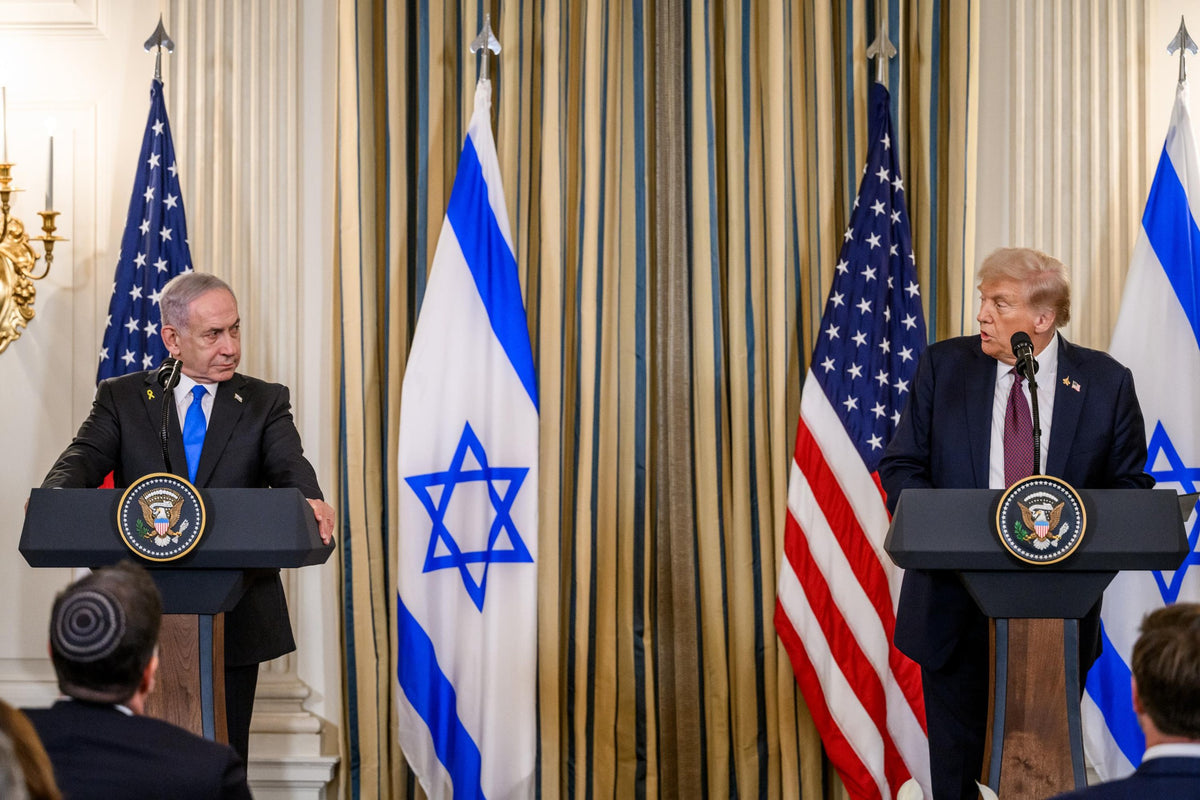
PHOTO CAPTION: President Donald Trump and Israeli Prime Minister Benjamin Netanyahu attend a joint press conference at the White House on September 29, 2025. Trump announced November 3, 2026, that the United States plans to end roughly $4 billion in annual military assistance to Israel after this year. (Official White House photo by Daniel Torok. File photo.)
President Donald Trump announced Tuesday that the United States will stop providing approximately $4 billion in annual military assistance to Israel after 2026, a major proposed shift in American foreign policy that could end billions of dollars in taxpayer-funded weapons support for one of Washington's closest allies.
Trump said he had reached an agreement with Israeli Prime Minister Benjamin Netanyahu to end the payments, arguing that Israel is financially capable of purchasing its own military equipment.
The president emphasized that the United States would continue selling weapons to Israel and could provide assistance if needed.
The announcement comes as both countries remain involved in the conflict with Iran and as Americans vote in Tuesday's midterm elections.
Trump Says Israel No Longer Needs the Money
Speaking by phone with Fox News on November 3, Trump said he and Netanyahu had discussed ending the assistance months earlier.
According to Trump, Israel has become sufficiently prosperous that it no longer needs the United States to subsidize its military purchases.
The president said the financial support would stop after the end of 2026.
He also acknowledged that U.S. aid to Israel had become a political issue in American elections.
Trump specifically referenced criticism from Michigan Senate candidate Abdul El-Sayed, who has opposed unconditional military assistance to Israel.
The president argued that continuing to provide billions of dollars when Israel no longer needed the assistance had become increasingly difficult to justify.
Netanyahu's office had not immediately confirmed the reported agreement when the announcement was made.
What Does the $4 Billion Actually Pay For?
American military assistance to Israel is governed by a 10-year agreement negotiated in 2016 under President Barack Obama.
The agreement provides for $38 billion in assistance from fiscal years 2019 through 2028.
That averages approximately $3.8 billion annually, including $3.3 billion in Foreign Military Financing and $500 million for cooperative missile-defense programs.
Much of the money is used to purchase American-made military equipment and services.
That includes advanced aircraft, weapons, munitions and other defense technology manufactured by U.S. companies.
The missile-defense portion supports cooperative programs such as Iron Dome, David's Sling and Arrow.
Consequently, ending the assistance could have implications beyond Israel's defense budget.
American defense contractors could also be affected if Israeli weapons purchases change, although Israel would remain able to buy U.S. equipment with its own funds.
The Existing Agreement Runs Through 2028
One of the biggest unanswered questions concerns how the administration intends to carry out the announcement.
The current U.S.-Israel military assistance agreement covers funding through fiscal year 2028, meaning Trump's proposed end date would come roughly two years before the agreement expires.
However, the agreement is a memorandum of understanding rather than a treaty requiring Congress to appropriate the entire amount automatically.
Congress retains authority over federal spending and must approve annual appropriations.
That means Trump's announcement does not, by itself, terminate previously appropriated assistance or establish exactly how future congressional funding decisions will be handled.
It also remains unclear whether the administration intends to end every category of assistance covered by the agreement or primarily the direct military financing used for weapons purchases.
The White House has not released a detailed implementation plan explaining how existing commitments, pending weapons deliveries or cooperative defense programs would be affected.
U.S. Weapons Sales Would Continue
Trump made clear that ending annual assistance would not mean ending military cooperation with Israel.
Instead, Israel would be expected to purchase American weapons using its own funding.
That distinction matters because the United States is a major supplier of advanced military technology to the Israeli military.
Israel operates American-made fighter aircraft, missile-defense equipment and other systems that require continued maintenance, upgrades, spare parts and weapons.
Existing defense agreements and weapons orders could also continue for years, depending on their funding arrangements.
The president's announcement therefore signals a potential change in who pays for military equipment, not necessarily an end to American weapons sales or defense cooperation.
The exact financial impact will depend on how the policy is implemented.
Announcement Comes During the Iran War
The timing is particularly significant because American and Israeli forces remain engaged in the broader conflict involving Iran.
Both governments have been discussing future military options while diplomatic negotiations continue.
Israel's military relies heavily on American technology, including advanced fighter aircraft and missile-defense systems used to protect its territory from aerial attacks.
The proposed aid reduction raises questions about how Israel would finance future purchases while managing the costs of ongoing military operations.
However, Trump has not announced an immediate suspension of weapons deliveries or military cooperation related to the Iran conflict.
The administration has also indicated that the United States would continue helping Israel when necessary.
A Major Change, But Not Yet a Completed Cut
Trump's announcement marks a potentially significant departure from decades of American policy toward Israel.
The annual assistance arrangement has long been supported by lawmakers from both major political parties, although debates over its cost, conditions and strategic value have intensified in recent years.
Supporters have argued that the aid strengthens a key U.S. regional ally, supports American defense manufacturing and advances shared security objectives.
Critics have questioned the use of billions in American taxpayer funds for a country capable of financing more of its own defense, particularly during periods of costly overseas military involvement.
For now, the administration has announced its intention to end the annual funding beginning in 2027.
Whether Congress supports that change, how the existing agreement will be addressed, and which defense programs could be affected remain unresolved.
The immediate distinction is that Trump has announced a change in policy. The United States has not yet completed the process of ending the aid.
(Source: OAF Nation)