RUSSIAN SATELLITES LINKED TO IRAN ATTACKS
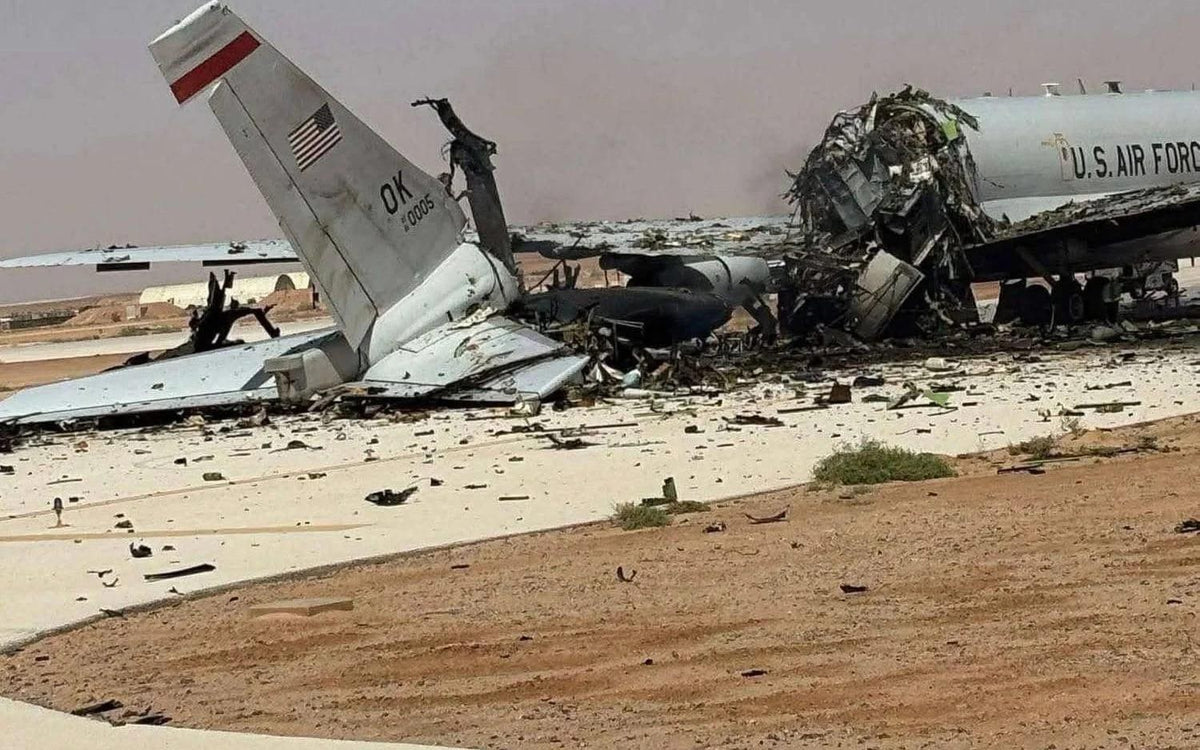
PHOTO CAPTION: A U.S. Air Force E-3 Sentry airborne warning aircraft lies severely damaged at Prince Sultan Air Base in Saudi Arabia following an Iranian attack on March 27, 2026. A new Associated Press investigation reports allegations that Russian satellite intelligence assisted Iranian strikes against U.S. military facilities in the region. (Archival photograph, original photographer unverified)
Russian military reconnaissance satellites appear to have supported Iranian and Iran-backed attacks across the Middle East, including strikes that damaged a U.S. Air Force surveillance aircraft and hit a CIA facility inside the American Embassy complex in Saudi Arabia, according to a new Associated Press investigation.
The October 27 report examined satellite activity surrounding 40 missile and drone attacks between July 1 and October 19, finding a recurring pattern of Russian government and military spacecraft operating over targeted areas before and after the strikes.
The findings came from Geneva-based AURORAH Geosignal Intelligence, which analyzed satellite movements alongside attacks carried out by Iranian-backed Houthi forces in Yemen and militias in Iraq.
Saudi officials, a senior Houthi representative and intelligence analysts also described Russian intelligence being passed through Iranian intermediaries to armed groups operating throughout the region.
However, the satellite researchers did not intercept direct transmissions of intelligence from Russia to the attackers.
The investigation therefore provides evidence of coordinated reconnaissance activity and source-based allegations of intelligence sharing, rather than conclusive proof that Moscow directed individual strikes.
Russian Intelligence Linked to Attack on American AWACS Aircraft
Among the most significant allegations involves an Iranian attack on Prince Sultan Air Base in Saudi Arabia on March 27.
The strike damaged multiple American aircraft and wounded 12 U.S. personnel, according to earlier reporting from U.S. officials.
One of the aircraft was an E-3 Sentry, an airborne warning and control system aircraft commonly known as AWACS.
The E-3 provides long-range radar surveillance, tracks airborne threats and helps commanders coordinate military aircraft and missile defenses.
Photographs verified by the BBC showed an E-3 severely damaged at Prince Sultan Air Base, with extensive destruction to its fuselage.
A Saudi official familiar with investigations into regional attacks told AP that Russian satellite intelligence assisted Iranian strikes on the installation.
The allegation reinforces earlier reporting by CNN, which found that 14 Russian intelligence-gathering satellites passed over the base shortly before the March attack.
CNN reported in September that American and international intelligence sources believed Russian reconnaissance data had helped Iran conduct precision strikes against U.S. military assets.
The latest AP investigation adds additional Saudi-source allegations and connects the earlier American military attack to a wider pattern of reconnaissance associated with strikes across the region.
CIA Facility Inside U.S. Embassy Was Also Hit
The AP investigation also links Russian satellite assistance to an Iranian drone attack on the American Embassy complex in Riyadh.
The incident occurred in early March, when suspected Iranian drones struck the compound.
Reuters reported at the time that a CIA station inside the embassy complex had been hit, citing a source familiar with the incident.
However, that source said there was no indication the CIA station itself had been intentionally selected as the target.
The CIA declined to comment on the incident.
A Saudi official subsequently told AP that Russian satellite intelligence had assisted Iranian attacks involving the embassy's CIA unit.
The reporting does not establish what particular intelligence was provided, who received it or whether Russian officials knew the exact target of the strike.
Satellite Tracking Reveals Pattern Across 40 Attacks
AURORAH's investigation examined Russian reconnaissance satellite movements around attacks against Saudi Arabia from July through October.
The company identified 72 Russian reconnaissance satellites and compared their flight paths and activity with the locations and timing of missile and drone strikes.
In all 40 attacks examined, researchers reported Russian military and government satellites operating near the target areas before and after the incidents.
The company's founder, Nawaf Obaid, described the correlation as a complete match between the observed satellite activity and the strikes.
The researchers also reported increased reconnaissance around particularly sensitive targets in September.
Still, the company acknowledged that it had not intercepted intelligence transmissions showing exactly how satellite information reached Iran or the armed groups carrying out attacks.
That limitation matters because observing a satellite over a location does not independently establish that its operator supplied targeting information for a particular strike.
The investigation's conclusions are strengthened by accounts from officials and intelligence sources describing how the information was allegedly transferred.
Saudi Oil Pipeline and Italian Fighter Jet Hit
Two September attacks illustrate the broader implications of the investigation.
On September 10, drones launched from Iraq struck three pumping stations along Saudi Arabia's East-West Pipeline.
The 746-mile pipeline transports crude oil from the kingdom's eastern production areas to facilities near the Red Sea.
It has become particularly important as Iranian attacks and threats have disrupted shipping routes around the Strait of Hormuz.
The strikes interrupted oil transportation through the pipeline.
A week later, Houthi forces attacked King Fahd Air Base in Taif, Saudi Arabia, damaging military hangars and an Italian Air Force Eurofighter Typhoon.
The Italian Defense Ministry confirmed damage to the aircraft, according to AP.
AURORAH reported that Russian satellite activity around those targets increased approximately 50% during the surrounding 72-hour periods compared with July.
Obaid said the precision of the attack on the Italian aircraft suggested that the attackers had access to unusually detailed intelligence.
However, the investigation did not independently establish that Russian personnel selected the Italian aircraft as a target.
Houthi Official Describes Intelligence Passing Through Iran
A senior Houthi official told AP that Iranian advisers operating in Yemen supplied the group with targeting information derived from Russian satellite intelligence.
The official spoke anonymously to discuss the intelligence relationship.
According to the account, Iranian advisers helped turn reconnaissance information into targeting data that could be used by armed groups conducting missile and drone operations.
The official also described access to more advanced equipment for operating drones and overcoming air defenses.
Some technology was developed in Iran, while other systems were acquired commercially or supplied by Russia and China, according to the official.
The source said it was not always clear whether the original suppliers knew how the equipment would ultimately be used.
Separately, Saudi Foreign Ministry official Rayed Krimly said Iran and the Houthis had received intelligence from elements operating in Russia and China, including commercial sources.
The allegations describe an intelligence-sharing network in which advanced surveillance capabilities could support armed groups without Russian forces directly participating in attacks.
Russia Has Not Confirmed the Allegations
Russia did not immediately comment on AP's latest questions concerning the satellite findings.
Moscow and Tehran have developed extensive military cooperation in recent years, including Iranian drone technology transferred to Russia for its war in Ukraine.
American and European officials have previously accused Russia of sharing intelligence with Iran during the Middle East conflict.
The October investigation adds new information about the possible scale of that cooperation, particularly the use of satellite reconnaissance around repeated attacks.
But the exact operational relationship between Russian satellite operators, Iranian intelligence personnel and Iran-backed militias remains unclear.
What the Findings Mean for U.S. Forces
The allegations raise important questions about how American military installations and regional allies are being monitored during ongoing hostilities.
Military satellites can provide imagery and other information that helps identify aircraft, defenses, infrastructure and potential vulnerabilities.
That information may allow an attacking force to refine its targeting even when it lacks comparable reconnaissance capabilities of its own.
The March attack on Prince Sultan Air Base demonstrated the potential consequences for American personnel and high-value military aircraft.
The newer September attacks suggest that similar intelligence-sharing concerns extend to Saudi energy infrastructure and allied military equipment.
For now, the investigation establishes a broader reported pattern of Russian reconnaissance activity associated with Iranian-backed attacks.
Whether additional evidence will clarify the extent of direct Russian involvement remains an unanswered national-security question.
(Source: OAF Nation)