Russia Escalates Drone Attacks in Zaporizhzhia
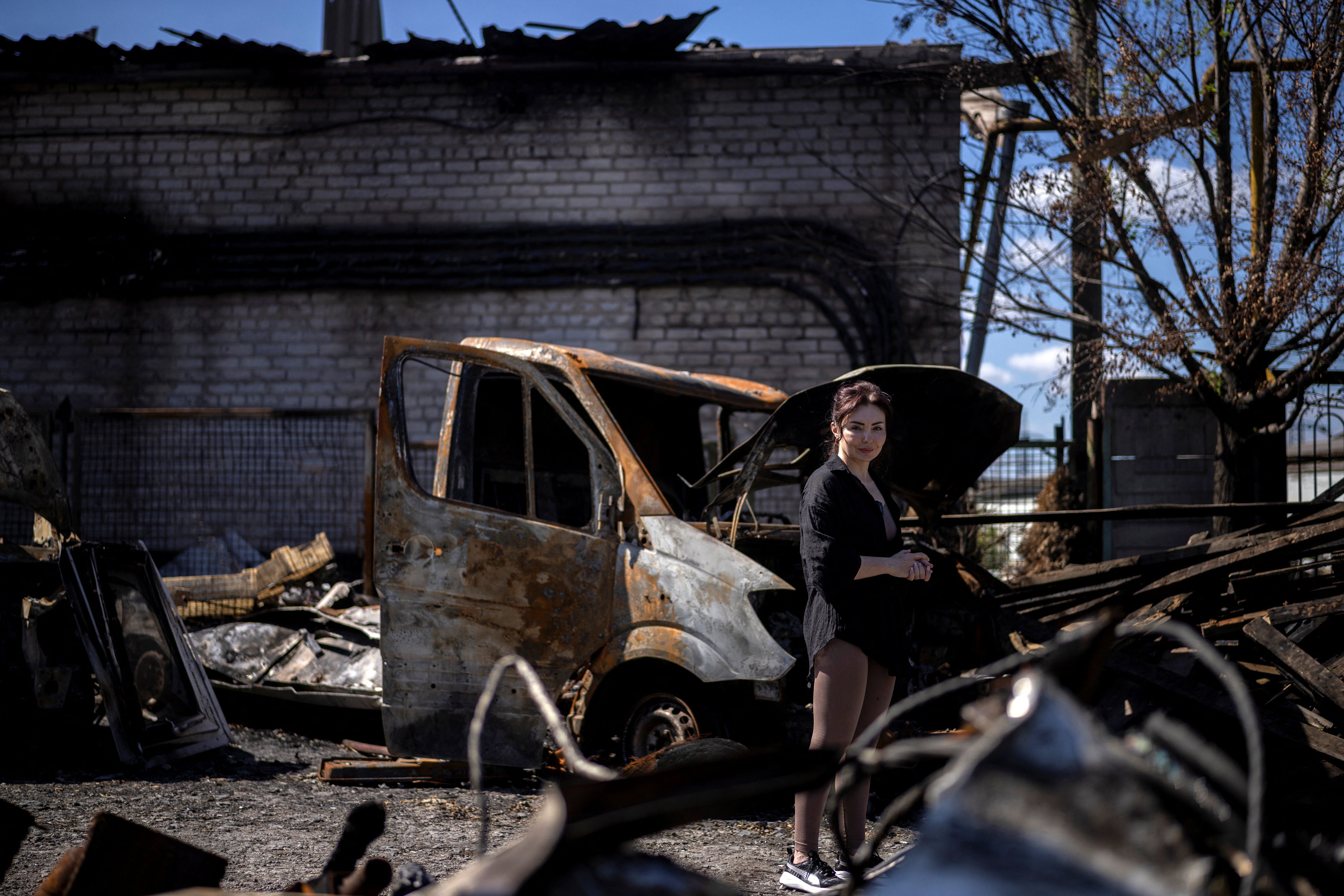
PHOTO CAPTION: Kateryna Lahuta stands in the courtyard of her seafood business that went up in flames during a recent Russian strike, amid Russia’s attack on Ukraine, in Zaporizhzhia, Ukraine, July 30, 2026. REUTERS/Thomas Peter
ZAPORIZHZHIA, Ukraine, Aug. 6 — When two Russian bombs struck Kateryna Lahuta’s seafood business in Ukraine’s southeastern city of Zaporizhzhia last month, they destroyed what remained of the 41-year-old entrepreneur’s sense of security.
Russian forces have been positioned just south of Zaporizhzhia since the first weeks of Moscow’s 2022 invasion, repeatedly striking the manufacturing city of about 700,000 people with missiles and drones. Residents say a new wave of attacks has made daily life increasingly dangerous as Russia escalates its air campaign against Ukrainian cities while making only grinding progress along the front lines.
“Even half a year ago it was still scary, of course, and there were strikes. But it wasn’t like this,” Lahuta said. “Now it’s just a ‘safari’.”
Ukrainians have adopted the term “safari” to describe drones appearing to hunt civilians or vehicles in the street, a danger residents of the smaller frontline city of Kherson have faced for years.
Reuters reporters visiting Lahuta’s business were forced to seek cover after hearing the buzzing of a first-person-view drone. FPV drones are small, agile aircraft loaded with explosives and controlled by pilots using live video feeds, and they have helped turn parts of Ukraine’s front line into what soldiers describe as a “kill zone.”
Pressure on civilians
Russia denies targeting civilians in the war, which began with its full-scale invasion of Ukraine in 2022. Russia’s Defence Ministry did not immediately respond to a request for comment about the attacks described in Zaporizhzhia.
Standing among the charred remains of the processing facility that supplied her stores, Lahuta said Russian strikes had driven away customers and made long-term planning nearly impossible. She also faces a labour shortage as Ukraine’s military requires more soldiers.
“Every day is like some kind of battle,” she said.
Ukrainian officials say Russia is trying to spread panic as well as damage infrastructure by striking the city more frequently. They say Russian forces are using FPV drones there for the first time and deploying larger, more destructive glide bombs with increasing regularity.
Zaporizhzhia is the capital of one of four Ukrainian regions Russia has claimed as its own, despite controlling only about three-quarters of the region. Russian ground troops have failed to advance through a narrow corridor south of the city, where Ukrainian forces have mounted stiff resistance in recent months.
From positions south of Zaporizhzhia, Russian FPV drones have attacked groups of civilians, vehicles and public transportation, particularly in the southern part of the city, regional governor Ivan Fedorov said.
“The enemy is making it a priority to create maximum pressure on the civilian population,” Fedorov said during an interview inside an underground school designed to double as a bomb shelter.
FPV drones have been modified to fly farther, while air-launched glide bombs such as those that struck Lahuta’s business cannot be intercepted without more advanced air defences, according to Ukrainian officials.
Buses and commuters under threat
Cafes and streams of commuters still create a sense of normality in central Zaporizhzhia despite frequent air-raid alerts. Even on Friday evenings, however, the city feels subdued, and many office and residential buildings near the Motor Sich engine-manufacturing complex bear the scars of repeated bombardment.
In the southern Kosmos district, authorities are installing canopies of anti-drone netting over roads after FPV drones struck vehicle windshields and roofs in recent weeks.
Two private bus drivers serving the district said the increase in attacks had frightened both drivers and passengers. The netting “won’t save you from the big ones,” said one driver, who declined to give his name.
Fewer than 5% of enemy FPV drones penetrate Ukrainian air defences overall, Fedorov said. On the worst days, which he said occur several times a month, that can still mean as many as 10 drones causing injuries or damage.
The city transit authority has begun testing drone monitors for bus drivers and experimenting with new shatterproof glass, director Volodymyr Sukhachov said.
Twelve city-operated buses or tramcars have been damaged this year by FPV drones or explosions from larger munitions, Sukhachov said. The city has no plans to reduce transit services.
Ania Syvova, a 34-year-old seamstress whose husband is fighting in the war, saw an FPV drone strike a nearby bus last month as she returned home to the southern part of the city.
“Maybe I have a good guardian angel,” she said with a smile.
Residents adapt to daily danger
Syvova sends her 6-year-old daughter to an underground kindergarten. She said both of them have learned to adjust to the dangers of everyday life.
“It sounds awful, but we’ve got used to this life,” Syvova said. “For now, unfortunately, we don’t have another one.”
Russia is using similar tactics in other frontline cities, including Kharkiv in northeastern Ukraine, where FPV drone attacks have become “one of the main instruments of terror,” Mayor Ihor Terekhov said Sunday. He said the city recorded 45 such strikes last month.
Fedorov said Russia has also been attacking Zaporizhzhia four to six times a day with glide bombs, which he described as flying unpredictably.
One person was killed and 31 were wounded Sunday when Russia dropped eight bombs on residential areas within 90 minutes, Fedorov told Ukrainian television.
Residents said recent strikes have occurred around noon and in the early evening, creating a chilling new routine. Outside her heavily damaged apartment building, Tetiana, a 38-year-old government employee, said Russian forces had “got crazy” last month and bombed her neighbourhood six times within one week.
Tetiana said she was torn between leaving and remaining in Zaporizhzhia because people depend on her work to keep public services operating.
“Honestly, I’m already totally empty,” she said while looking toward the burned shells of cars scattered across her courtyard. “No emotions.”
Facebook Caption
(Source: Reuters)