Pentagon Plans Fertility Reimbursement
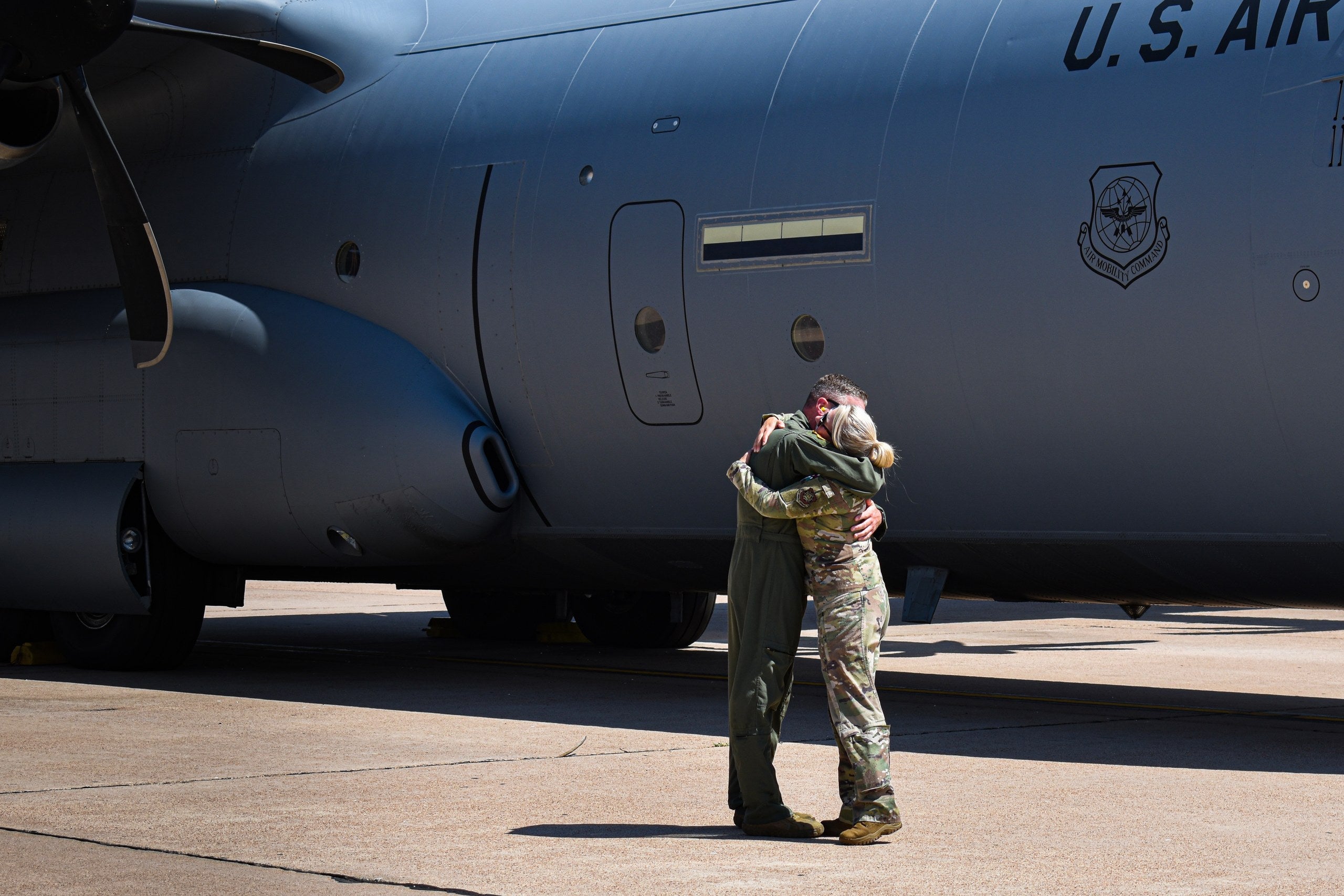
PHOTO CAPTION: A military couple with the 317th Airlift Wing embraces before a deployment to U.S. Central Command in August 2022. Illustrative file photo. (U.S. Air Force photo by 1st Lt. Kaitlin Cashin)
The Pentagon will begin a new three-year program in September 2026 reimbursing some active-duty service members for the cost of freezing and storing sperm or eggs when military orders put them in hazardous-duty assignments or separate them from their partners for extended periods.
The Defense Health Agency announced the program in a Federal Register notice published Aug. 13, 2026. The demonstration begins Sept. 14, 2026, and will be available to eligible active-duty members of the Army, Navy, Marine Corps, Air Force and Space Force.
Eligible service members include those who have received orders for duty that may qualify for hazardous-duty pay, those expected to receive such orders within 120 days, and troops who will be separated under military orders from a spouse, domestic partner or dating partner for at least 180 days. Sea duty can also qualify under the long-separation category.
Under the program, reimbursement is capped at $500 per year for sperm cryopreservation services and $10,000 per year for egg cryopreservation services.
Covered expenses can include retrieval procedures, medications, laboratory work and imaging associated with retrieval, required medical testing, freezing, shipping and storage. Participation is voluntary.
Service members may use participating military medical facilities or a civilian fertility clinic of their choosing. Civilian providers do not have to be TRICARE-authorized, although troops must meet the program’s eligibility and documentation requirements to receive reimbursement.
Commanders or their designees will verify a service member’s eligibility using DHA Form 459. Members generally must submit reimbursement requests within 120 days of receiving the covered service and provide itemized invoices and proof of payment.
The benefit has significant limits.
The demonstration does not reimburse embryo creation, in-vitro fertilization or other elective reproductive procedures. It covers preservation of the eligible service member’s own reproductive cells, and participants remain responsible for decisions about future storage and use after the demonstration ends.
Participants must also attest that they have an advance medical directive specifying what should happen to their stored reproductive material in the event of their death.
Congress required the demonstration program in the fiscal 2025 National Defense Authorization Act. Over its three-year run, the Pentagon plans to examine participation, costs, administrative feasibility and potential effects on military readiness and retention.
The program creates a military-specific benefit around a problem that can be difficult to plan around in uniform: deployments, hazardous assignments and months-long separations can intersect directly with decisions about when to start or expand a family.
(Source: OAF Nation)