Pentagon Expands Health Coverage for Reserves
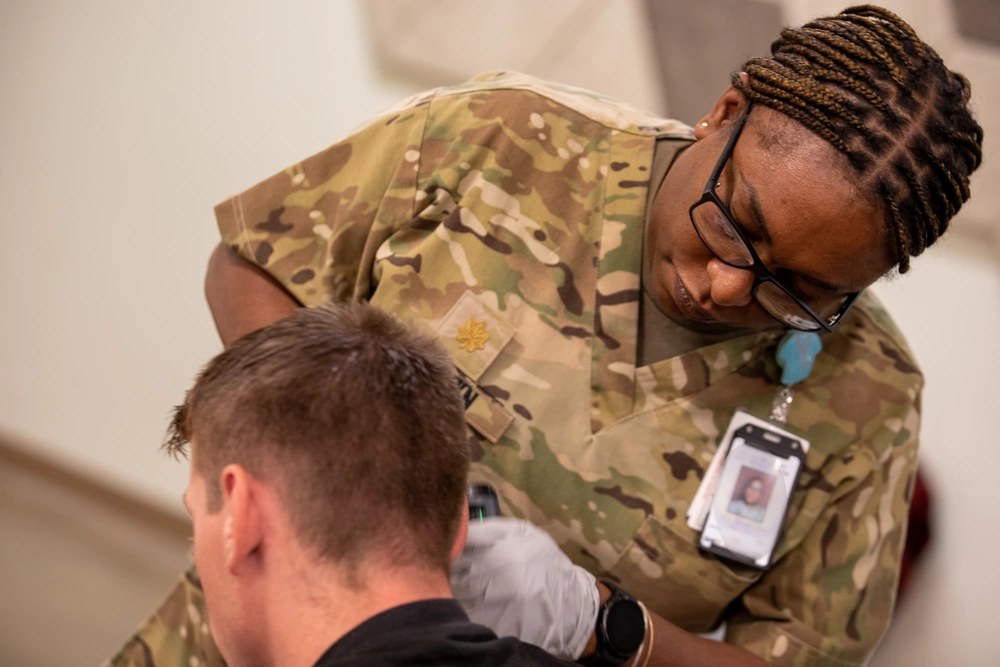
PHOTO CAPTION: Illustrative file photo — A Soldier demobilizing from an overseas tour receives a medical screening at Fort Bliss, Texas, July 27, 2023. U.S. Army Reserve photo by Staff Sgt. Christopher Hernandez
The Pentagon has expanded eligibility for a program providing 180 days of transitional health coverage to certain National Guard and Reserve members after they leave active duty, changing a policy that had denied some troops coverage based on how their orders were coded.
Under an Aug. 10 policy memo, eligible Reserve Component members will no longer have to show that their period of active-duty service was substantively connected to a particular war, contingency operation or national emergency to qualify for the Transitional Assistance Management Program, or TAMP. The Pentagon also directed that Defense Enrollment Eligibility Reporting System, or DEERS, coding be adjusted to implement the change.
TAMP provides eligible service members and their dependents with 180 days of transitional medical and dental coverage after qualifying active service ends. Federal law includes Reserve Component members separating from certain active-duty orders lasting more than 30 days among those who can qualify.
The change could also provide financial relief to some troops who were previously denied the benefit. According to the Pentagon memo, service members denied TAMP eligibility on or after April 24, 2020, under the previous interpretation can seek reimbursement through the Defense Health Agency for qualifying health insurance premiums and out-of-pocket medical expenses they incurred because they did not receive the coverage.
The policy shift follows a class-action lawsuit filed in April by Navy Reserve Lt. Cmdr. Anthony Gontarz and attorneys representing similarly situated Reserve Component members.
Gontarz served continuously on Active Duty for Operational Support orders from November 2021 through September 2025 — more than 1,400 days of active-duty service. After his orders ended, the Defense Health Agency notified him that he was no longer eligible for TRICARE based on information in DEERS, according to the lawsuit. Navy Reserve officials later told him his ADOS orders did not qualify for TAMP under the existing criteria.
The lawsuit argued that the Pentagon was improperly requiring reservists' orders to be coded as supporting a contingency operation even when federal law did not impose that requirement.
The plaintiffs relied in part on the Supreme Court's 2025 decision in Feliciano v. Department of Transportation. In that case, involving a separate benefit for reservists, the court held that active-duty service occurring during a declared national emergency did not have to be substantively connected to that particular emergency when applying the same statutory definition of a contingency operation.
The Pentagon's new policy appears to address the central issue raised in the TAMP lawsuit. Attorneys for the plaintiffs have agreed to pause the case for 60 days while they evaluate the change, but they have not agreed to dismiss it.
The expansion does not mean every National Guard or Reserve member automatically receives six months of TRICARE. Eligibility still depends on the member's service and applicable statutory requirements. But the Pentagon's change removes an administrative hurdle that attorneys argued had improperly excluded potentially thousands of current and former Reserve Component members and their families.
(Source: OAF Nation)