Article: Navy Discharges Sailor After Crisis
Navy Discharges Sailor After Crisis
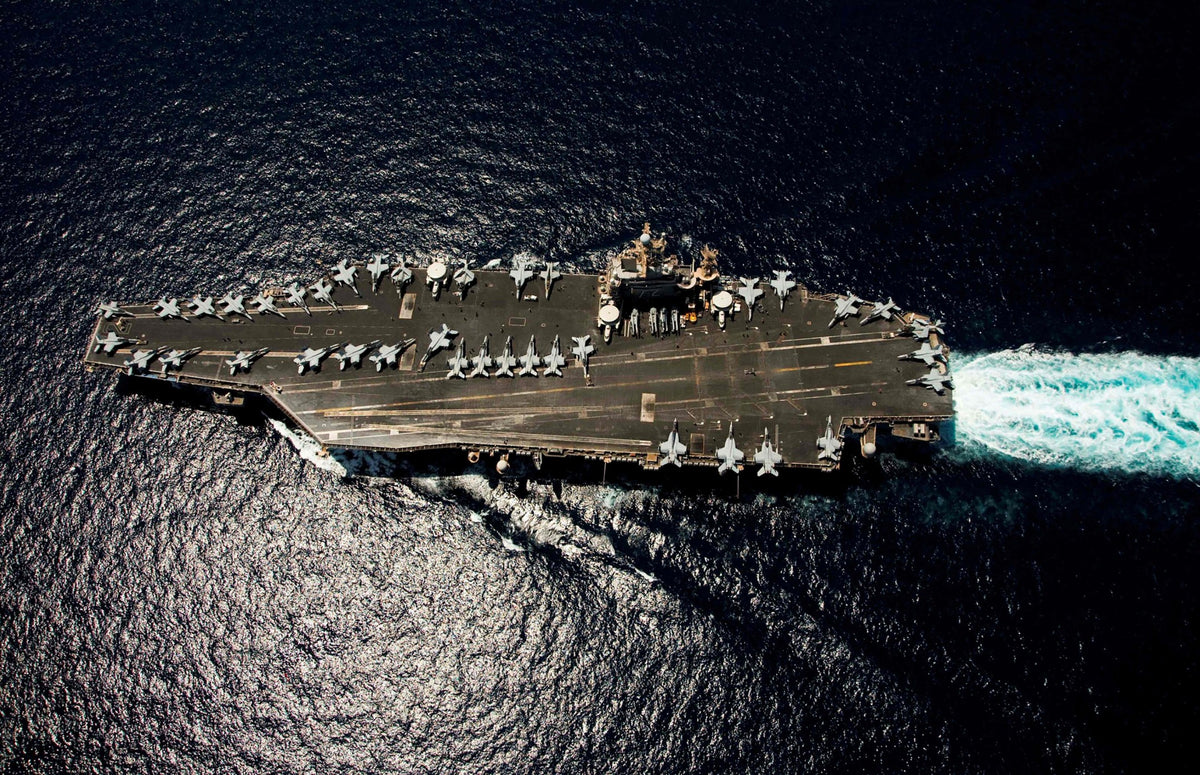
PHOTO CAPTION: The aircraft carrier USS Abraham Lincoln operates in the Arabian Sea on May 8, 2026. A 19-year-old sailor assigned to the carrier has received a general discharge following an August mental health crisis and subsequent disciplinary proceedings. His family has questioned the Navy's response, while the service maintains that suicide attempts themselves are not punishable misconduct. (Archival U.S. Navy photo / NAVCENT Public Affairs)
A 19-year-old Navy sailor who was rescued after going overboard during an apparent suicide attempt aboard USS Abraham Lincoln has received a general discharge under honorable conditions, leaving him ineligible for GI Bill education benefits following a deployment marked by serious concerns about crew mental health.
Navy Airman Nicholas McKelvey received the discharge on October 29 after disciplinary proceedings stemming from the August 3 incident, according to reporting by The New York Times.
McKelvey and his wife say he had been struggling with the demands of the carrier's extended deployment, exhausting work schedules, separation from his family and inadequate mental health support.
Navy officials have defended their procedures, maintaining that suicidal behavior is not itself punishable misconduct but that separate violations of military law can be addressed through disciplinary proceedings.
The case has raised questions about how the Navy distinguishes a mental health emergency from misconduct and what consequences struggling sailors may face when seeking help.
Young Sailor Struggled During Extended Combat Deployment
McKelvey was an aviation mechanic assigned to a helicopter squadron aboard USS Abraham Lincoln during its lengthy deployment supporting American military operations in the Middle East.
By August 3, the carrier had been deployed for approximately 255 days.
The 19-year-old described working long shifts on the flight deck in intense heat while dealing with the pressures of an extended wartime mission.
He had also missed the birth of his daughter, while members of his family were dealing with serious medical problems.
According to interviews and messages reviewed in earlier reporting by MS NOW, McKelvey had expressed increasing emotional distress to his wife before the incident.
He said he was struggling to continue with the deployment and felt overwhelmed by the conditions aboard the ship.
His family also alleged that he had sought additional support and raised concerns with military personnel before the crisis.
The Navy has not publicly released his complete medical records or an independent assessment establishing every circumstance surrounding his mental health care.
Rescue Followed by Disciplinary Proceedings
On August 3, McKelvey went overboard from the aircraft carrier while it was operating in the Middle East.
A Navy helicopter crew rescued him, and he subsequently received medical attention and was evacuated from the ship.
His wife described the incident as a suicide attempt.
Rather than treating the event solely as a medical matter, Navy officials also initiated disciplinary proceedings.
Earlier charging documents reviewed by MS NOW identified allegations involving malingering and unauthorized absence.
Malingering under military law concerns intentionally feigning illness or impairment, or inflicting injury on oneself, to avoid military duties.
Subsequent reporting indicated that the unauthorized absence allegation was replaced by a charge concerning leaving the vessel.
At a disciplinary hearing, a commanding officer found McKelvey responsible for misconduct and concluded that his actions endangered others aboard the carrier.
McKelvey disputes the suggestion that his distress was fabricated.
The disciplinary finding is separate from any independent medical determination about whether he was experiencing a mental health crisis.
General Discharge Leaves Sailor Without GI Bill Eligibility
McKelvey's separation became the central new development on October 29.
He received a general discharge under honorable conditions, a classification less severe than an other-than-honorable or dishonorable discharge but distinct from a fully honorable discharge.
That distinction matters for veterans' education benefits.
The Department of Veterans Affairs generally requires an honorable discharge for eligibility under the Post-9/11 GI Bill and Montgomery GI Bill programs.
As a result, McKelvey's general discharge leaves him without the education benefits he and his family had expected to use after his military service.
His wife, Samantha Larry, told The New York Times that the loss could force the family to take on student debt.
A general discharge does not automatically disqualify a former service member from every VA benefit. Other programs have different eligibility requirements, and discharge upgrades may be pursued through established military review procedures.
Nevertheless, the loss of GI Bill eligibility is a substantial consequence for a young sailor beginning his civilian life.
Family Questions Navy's Response
McKelvey's wife has criticized the way Navy leaders responded to her husband's deteriorating mental health and subsequent disciplinary case.
She argues that the service focused on his conduct rather than sufficiently examining the circumstances that led to his crisis.
The family's allegations include concerns about work schedules, available medical support, communication with loved ones and the treatment of sailors during the prolonged deployment.
Earlier reporting documented complaints from other military families about exhausting operational demands, food availability and uncertainty surrounding the carrier's return date.
Navy officials disputed some accounts of conditions aboard Abraham Lincoln, while acknowledging that combat operations and disrupted supply schedules created challenges.
Acting Navy Secretary Hung Cao defended the service's approach to balancing mission requirements with sailors' welfare.
The Navy has also said it provided medical and behavioral health personnel aboard the carrier and additional assistance when needed.
Those statements do not resolve the specific disagreements between McKelvey's family and Navy officials about the care he received.
Eight Suicide Attempts Confirmed Across Strike Group
The case became part of a broader controversy surrounding the Abraham Lincoln Carrier Strike Group's deployment.
In September, Cao disclosed in a letter to Sen. Kirsten Gillibrand that eight service members assigned to the strike group had attempted suicide during the deployment.
That figure covered personnel across the carrier strike group, including the carrier, embarked aviation units and escort ships. It was not a count limited to USS Abraham Lincoln itself.
No deaths resulted from the eight attempts, according to the Navy.
The disclosure followed weeks of questions from military families, journalists and lawmakers about the psychological strain of extended combat operations.
Some families described sailors struggling with fatigue, communication limitations and uncertainty over when they would return home.
Navy officials maintained that mental health resources were available and that operational demands had not prevented commanders from providing necessary care.
However, the number of documented attempts prompted demands for greater scrutiny of conditions throughout the deployment.
USS Abraham Lincoln ultimately returned to San Diego on October 8 after approximately 322 days away from home.
Navy Says Suicide Attempts Are Not Punishable Misconduct
The Navy has emphasized that suicidal thoughts and suicide attempts do not, by themselves, constitute punishable misconduct.
In response to questions about McKelvey's case, a Navy official said such behavior requires a safety-focused response involving medical care and command support.
The service also maintained that separate misconduct allegations must be evaluated on their individual facts.
That distinction is central to the dispute.
The Navy says commanders retain responsibility for safety, discipline and lawful conduct aboard military vessels.
McKelvey and his family argue that the disciplinary process failed to adequately account for his mental health crisis and the conditions under which it occurred.
The available public reporting does not establish that Navy policy treats suicide attempts themselves as disciplinary offenses.
It does establish that McKelvey faced disciplinary action following the incident and that his eventual separation carries substantial consequences for his education benefits.
Questions Remain About Command Accountability
The October 29 discharge brings an immediate consequence to a case that began during one of the Navy's longest modern aircraft carrier deployments.
For McKelvey, the Navy career he began as a teenager has ended with a discharge classification that limits his access to education benefits.
For his family, the decision adds financial uncertainty to an already difficult transition.
The case also leaves unresolved questions about the adequacy of mental health support during lengthy deployments, how commanders evaluate conduct occurring during a reported psychological crisis and whether disciplinary decisions appropriately account for those circumstances.
McKelvey may have options to seek review of his discharge classification, but no successful appeal or upgrade has been reported.
The Navy maintains that supporting sailors' mental health and enforcing military standards are separate responsibilities.
His family argues that the handling of his case demonstrates why those responsibilities must be examined together.
(Source: OAF Nation)