Navy Denies Medal Over Missing Evidence
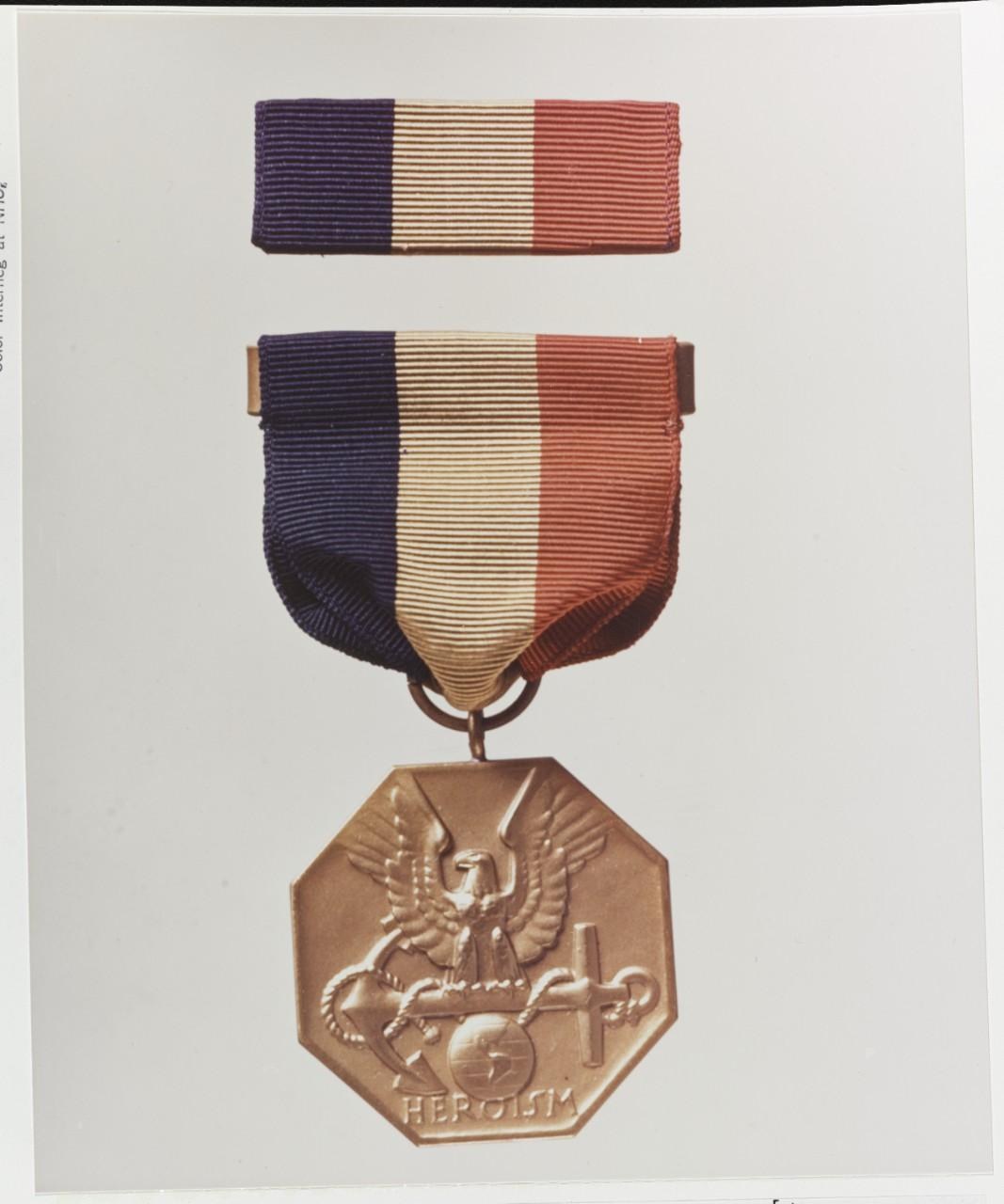
PHOTO CAPTION: The Navy and Marine Corps Medal recognizes extraordinary heroism outside combat. Former Navy Reserve Lt. Nicholas Voegeli sought the decoration for saving a drowning student on Wisconsin's Lake Mendota in 1992, but the Navy denied his nomination because the required eyewitness statements were no longer available. A federal appeals court upheld that decision on November 20, 2026. (U.S. Navy / Naval History and Heritage Command archival photograph. Illustrative image; the medal shown was not awarded to Voegeli.)
A Navy reservist who jumped into rough water to save a drowning college student has lost a years-long legal battle for a military heroism medal because the original eyewitness statements documenting his actions can no longer be found.
The rescue happened in 1992. The missing paperwork became the deciding issue more than three decades later.
On November 20, 2026, the U.S. Court of Appeals for the D.C. Circuit upheld the Navy's decision to deny former Navy Reserve Lt. Nicholas Voegeli the Navy and Marine Corps Medal.
The judges acknowledged that Voegeli saved another man's life. They also recognized that the missing evidence was largely beyond his control.
But under Navy regulations, nominations for the medal require statements from at least two eyewitnesses. The court ruled that the Navy was legally entitled to enforce that requirement.
A Rescue in Rough Water
In the summer of 1992, Voegeli was serving as a lieutenant in the Navy Reserve while attending graduate school and teaching sailing at the University of Wisconsin–Madison.
One day, while he was instructing students from a pier on Lake Mendota, a student's sailboat capsized.
The student was thrown into the lake and began drowning.
Voegeli jumped into the water and swam approximately 200 feet toward him.
Despite turbulent waves, he reached the student and kept him afloat until a motorboat arrived to rescue them.
The incident was documented at the time.
Voegeli's Navy Reserve unit nominated him for the Coast Guard Gold Lifesaving Medal, one of the Coast Guard's highest lifesaving honors.
The nomination included sworn statements from two people who witnessed the rescue: the student whose life he saved and the operator of the rescue boat.
The Coast Guard ultimately awarded Voegeli a Public Service Commendation instead.
The rescue was recognized, but he did not receive the Gold Lifesaving Medal.
A Second Chance at Military Recognition
For years, Voegeli believed the deadline to pursue a Navy decoration for the rescue had already passed.
That changed in 2018 when he read about a Vietnam veteran who had received a military decoration decades after the events that justified it.
Voegeli contacted Sen. Ron Johnson of Wisconsin, who agreed to ask the Navy to reconsider whether the rescue qualified for the Navy and Marine Corps Medal.
The decoration recognizes extraordinary heroism that does not involve combat with an enemy.
But the new nomination encountered a problem.
The original witness statements from 1992 were missing.
Voegeli searched university records and submitted Freedom of Information Act requests to the Coast Guard, but could not recover them.
Instead, he submitted the surviving Coast Guard commendation and a sworn affidavit from Capt. Lipinski, the former executive officer of his reserve unit.
Lipinski confirmed that the original nomination had included sworn statements from two eyewitnesses.
That still wasn't enough.
The Navy Required the Original Witness Accounts
The Navy and Marine Corps Awards Manual requires nominations for the medal to include statements from at least two eyewitnesses.
Those statements must describe what each witness personally observed, with sufficient detail to establish that the nominee's actions met the demanding standard for heroism.
Voegeli's own account could not serve as the basis for the award under those rules.
The Navy also refused to accept Lipinski's affidavit as a substitute.
Although Lipinski confirmed that the original statements once existed, he had not personally witnessed the rescue.
His affidavit established the existence of the documents, not the detailed contents needed to evaluate the nomination.
The Office of the Chief of Naval Operations denied the request.
Voegeli appealed to the Board for Correction of Naval Records, which also rejected his application.
He then challenged the decision in federal court, arguing that the Navy's refusal was arbitrary and capricious.
A district court ruled against him, and Voegeli appealed again.
Federal Judges Recognized the Heroism but Upheld the Denial
On November 20, a three-judge panel of the D.C. Circuit affirmed the lower court's ruling.
The judges explained that courts give military records boards considerable discretion when reviewing awards decisions.
The issue wasn't whether Voegeli had rescued the student. The judges accepted that he had.
The question was whether the Navy acted unlawfully by refusing to treat the surviving documentation as an adequate substitute for the missing witness statements.
The court concluded that it had not.
The judges noted that the original statements could no longer be located and that Lipinski's affidavit did not describe what the witnesses had actually said.
Although the Navy acknowledged that alternative evidence could potentially satisfy the requirement, the court agreed that Voegeli's surviving documentation did not contain enough detail.
The judges also criticized the Navy's explanation of its decision, saying the service could have communicated its reasoning more clearly.
Still, the court found no legal basis to overturn the denial.
A Rescue Nobody Disputes
The ruling leaves Voegeli with the Coast Guard Public Service Commendation he received following the original rescue, but without the Navy and Marine Corps Medal he later sought.
The Navy has not denied that he entered the water or saved the student's life.
Nor did the appeals court conclude that his actions were undeserving of recognition.
Instead, the decision turned on what evidence the Navy could require before granting a particular decoration.
The original witnesses provided statements in 1992. A former commanding officer later confirmed those statements had existed. But the records themselves were no longer available when Voegeli sought the Navy medal.
The result is an unusual distinction between an act of heroism that federal judges accept as genuine and a military decoration they ruled the Navy was entitled to withhold.
Thirty-four years after he pulled a drowning student from Lake Mendota, the rescue remains documented and recognized.
The medal he sought remains out of reach.
(Source: OAF Nation)