Military Tests ECG for Recruits
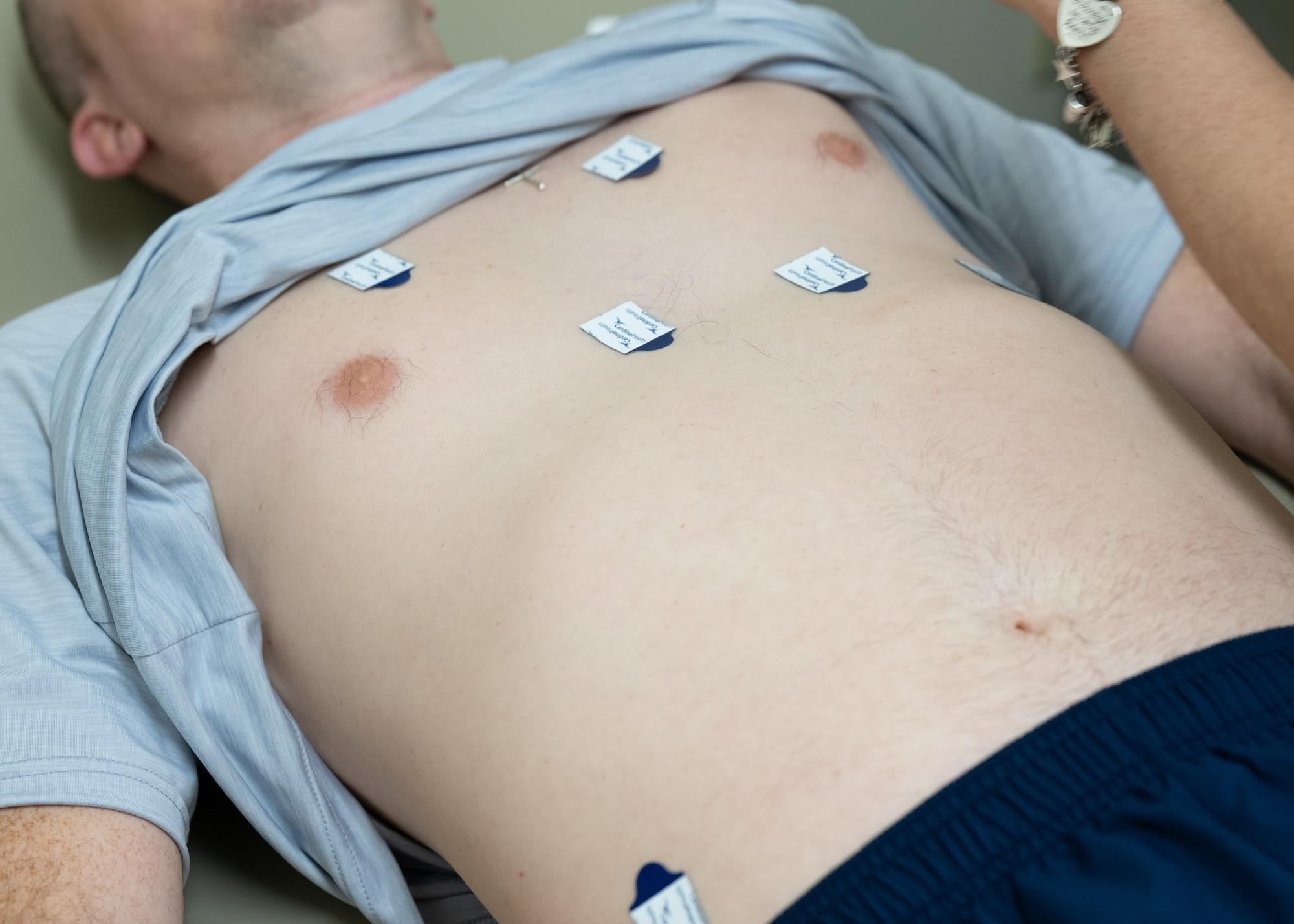
PHOTO CAPTION: An Air Force basic trainee undergoes electrocardiogram preparation during an ERASE cardiac screening at Joint Base San Antonio-Lackland, Texas, March 22, 2025. U.S. Air Force photo by Senior Airman Matthew-John Braman.
Military researchers are testing whether electrocardiogram screening can be added to entry-level training to identify potentially dangerous heart conditions in recruits before intense physical activity exposes a problem.
The latest work was presented at the 2026 Military Health System Research Symposium, which concluded Aug. 6 in Kissimmee, Florida. Researchers with the Uniformed Services University examined whether ECG screening could be performed quickly enough at busy military training sites and integrated into the military’s electronic health-record system.
The effort is part of a program called ERASE, short for Electrocardiogram Risk Assessment to reduce Sudden cardiac Events.
An ECG measures the electrical activity of the heart and can identify abnormalities associated with several conditions that can cause sudden cardiac arrest or sudden cardiac death.
The concern is rare but serious. Uniformed Services University researchers reported that sudden cardiac death occurs at about 11 deaths per 100,000 military recruits, compared with fewer than two per 100,000 NCAA athletes. The risk is especially concerning during demanding military training, where recruits may be exercising far from advanced medical care.
Some recruits who appear healthy and pass routine medical screening can still have an undiagnosed electrical or structural heart condition. In some cases, strenuous exercise may be the first time the condition becomes apparent.
The ERASE program is intended to determine whether modern ECG screening can identify those hidden risks without causing large numbers of healthy recruits to be unnecessarily removed from training.
The military has already been testing the approach at Joint Base San Antonio-Lackland.
In 2025, the Air Force reported that ERASE began by screening about 200 basic trainees per week before expanding to as many as 500 per day. The screening process includes a personal and family history, blood-pressure measurement and a resting ECG. Trainees with abnormal findings may receive additional evaluation, including an echocardiogram.
Air Force officials said most trainees return to duty immediately after screening and that disqualification has been rare. The program has also identified serious cardiac conditions in people who had no symptoms and did not know they were at risk.
The new research presented at MHSRS focuses on whether that type of screening can be performed at the scale and speed required during entry-level training while ensuring abnormal results are reviewed appropriately and incorporated into MHS GENESIS, the military’s electronic health record.
The research is part of a broader military effort to better understand sudden cardiac deaths.
In separate work presented during the same MHSRS session, researchers with the Military Cardiac Arrest Program and Armed Forces Medical Examiner System performed genetic testing in 56 sudden deaths among adults in the Military Health System.
About 18% of those cases had an identifiable genetic cause, according to Uniformed Services University. Identifying an inherited condition can also alert surviving relatives who may carry the same genetic risk.
Congress previously directed the Defense Department to pilot ECG screening for military recruits, helping move the concept from research at the service academies toward broader testing at accession and training locations.
ECG screening is not capable of detecting every condition that can cause sudden cardiac arrest, and an abnormal result does not automatically mean a recruit has a dangerous heart problem. Additional testing may be needed to distinguish a true cardiac abnormality from a false-positive result.
The military’s current research is focused on whether modern screening can identify serious hidden conditions early while minimizing unnecessary disruption to training.
The findings presented at MHSRS add new data to that effort as military researchers evaluate whether ECG screening should eventually become a larger part of how recruits are medically assessed before entering demanding training.
Source: Uniformed Services University; 2026 Military Health System Research Symposium; 59th Medical Wing.