Lebanon, Israel Agree on Troop List
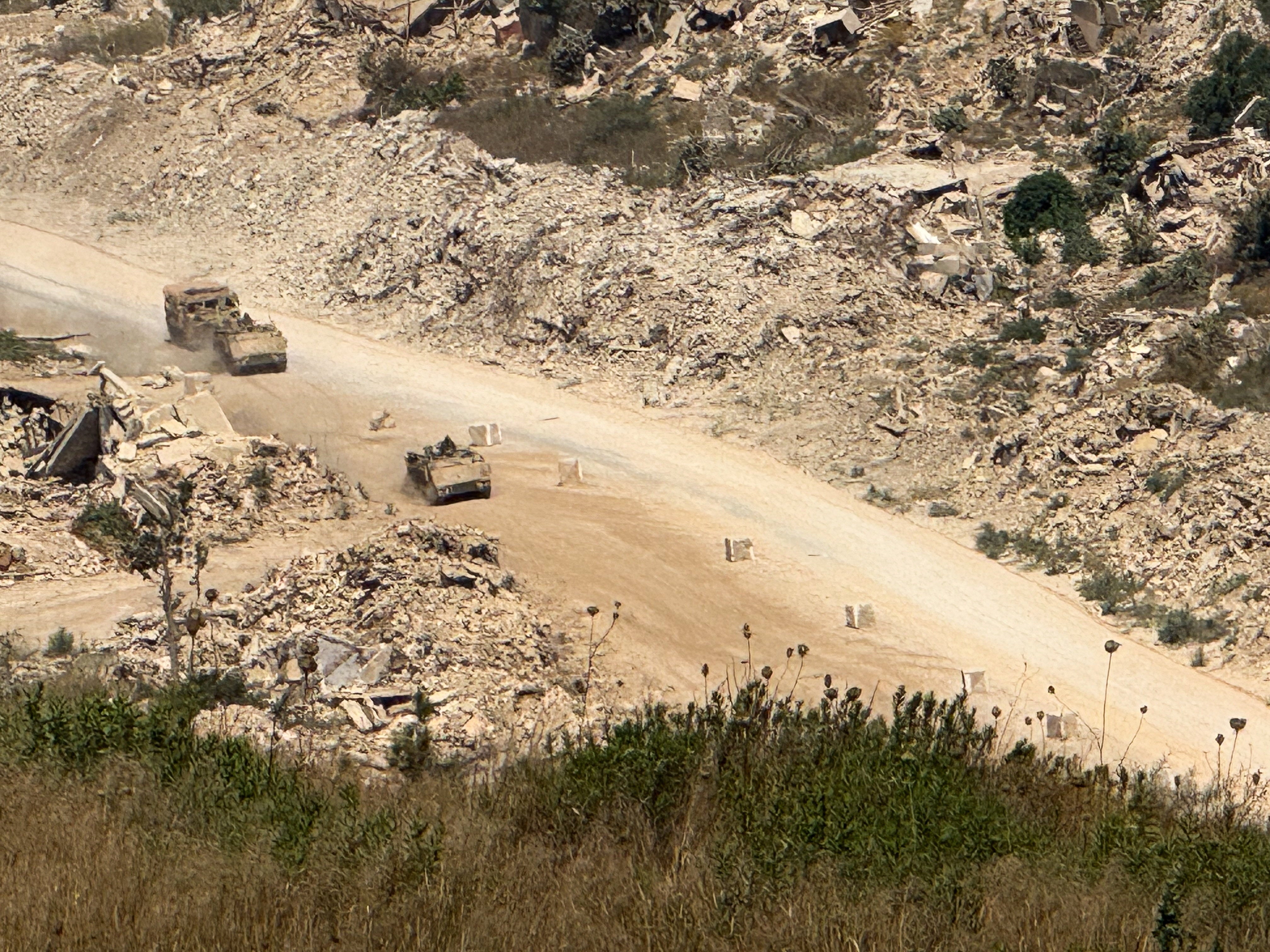
PHOTO CAPTION: Israeli vehicles drive on a road in southern Lebanon, as seen from the Israeli side of the Israel-Lebanon border, in northern Israel, August 6, 2026. Picture taken with a mobile phone. REUTERS/Avi Ohayon
BEIRUT, Aug. 7 — Lebanon and Israel have agreed on a shortlist of countries that could send troops to verify Hezbollah’s disarmament under a U.S.-brokered agreement, a Lebanese official said Friday. The United States is expected to select countries from the list.
The official declined to identify the countries or say how many were under consideration. Another Lebanese official and two foreign diplomats previously told Reuters that Israel and the United States had vetoed France.
The shortlist emerged from meetings between Lebanon and Israel at the U.S. Embassy in Rome this week, the latest round of talks on implementing a June 26 agreement linking Israel’s gradual withdrawal from Lebanon to the disarmament of Hezbollah. Under the deal, a third party would verify that disarmament, though Hezbollah is not a party to the agreement and has refused to give up its weapons.
“We have reached a short list of countries. We decided which parties were impossible for each and set the potential actors,” the Lebanese official said. “The Americans will now decide, and could pick more than one country.”
Israel’s Foreign Ministry did not immediately respond to Reuters questions about the shortlist. A State Department spokesperson said the talks had been “productive on the technical and expert levels” but provided no further details.
Lebanon rejects private security option
The United States has been trying to broker an end to fighting between Israel and the Iran-backed Hezbollah, which has continued since March alongside the wider U.S.-Israeli war against Iran. Two days after the U.S. and Israel attacked Iran on Feb. 28, Hezbollah fired at Israel in solidarity with Tehran, prompting Israeli airstrikes and a ground assault that seized a strip of southern Lebanon extending about 10 km, or 6 miles, from the border.
More than one million Lebanese civilians were forced from their homes.
The Lebanese official said Beirut had rejected an earlier proposal to use private security companies to verify Hezbollah’s disarmament. “All of the actors proposed are countries. We still need to discuss exactly how this would work, how many forces would be deployed and how they would work with the Lebanese army,” the official said.
A legal and operational framework for foreign troops in Lebanon would still need to be negotiated. One option would place them under the U.N. peacekeeping mission in Lebanon, UNIFIL, whose mandate expires at the end of this year.
The Lebanese official said that approach would require a new U.N. Security Council resolution, which the United States and Israel were now willing to consider, describing that shift as a breakthrough. Other possibilities include placing the troops under a separate U.N. agency or establishing their presence through a memorandum of understanding with Lebanon.
The Rome talks did not produce an agreement on the next area from which Israeli troops would withdraw so Lebanese forces could take control. Beirut proposed Bint Jbeil and Khiam, two large towns that have been heavily hit by airstrikes and where Israeli troops have razed entire neighborhoods.
The next round of talks is expected in early September, the Lebanese official said.
(Source: Reuters)