Iran Warns of 'Devastating' Response
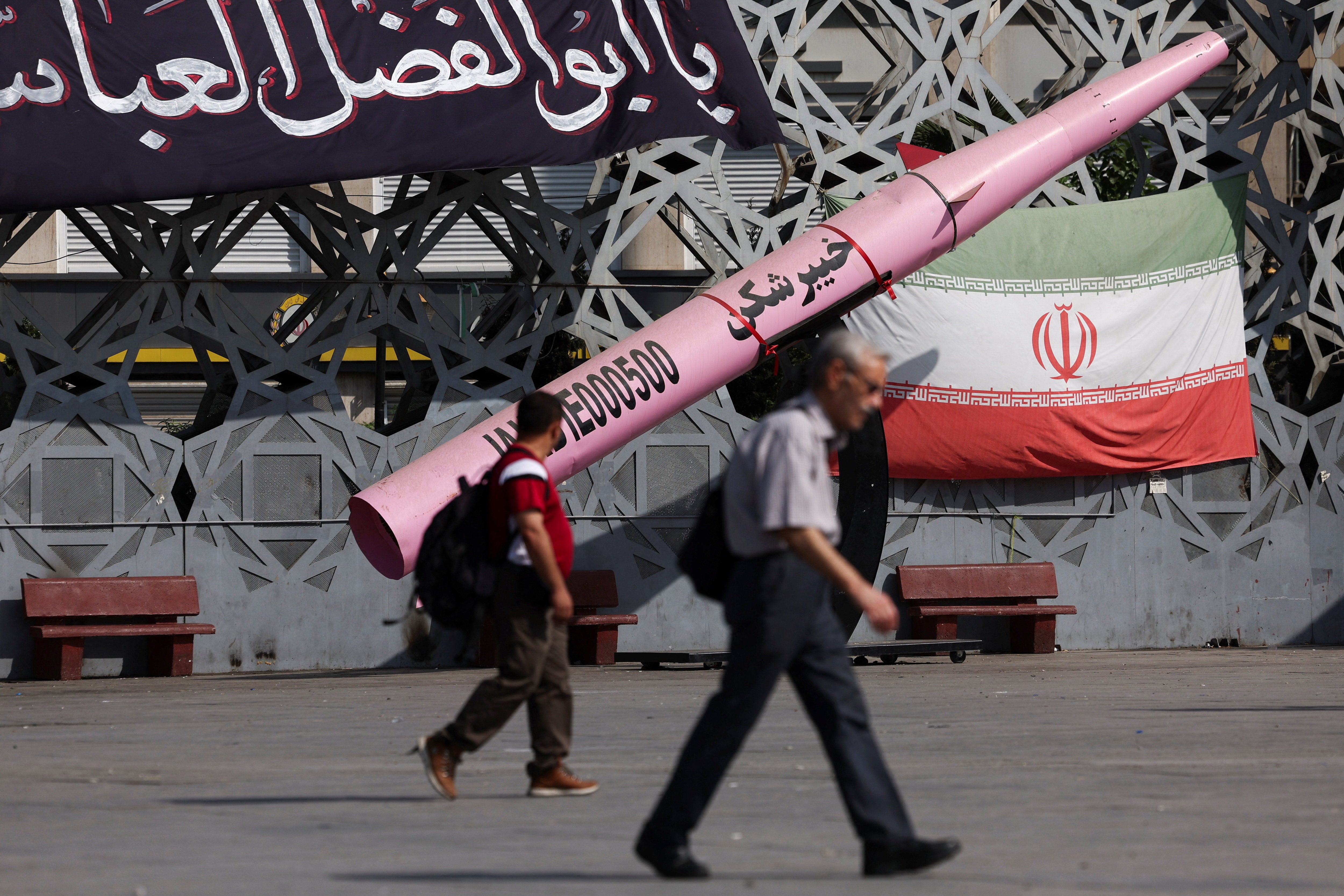
PHOTO CAPTION: People walk next to a symbolic mockup of an Iranian missile and an Iranian flag at Imam Hussein Square in Tehran, Iran, July 12, 2026. Majid Asgaripour/WANA (West Asia News Agency) via REUTERS
DUBAI/WASHINGTON, Aug. 21 — Iran warned Friday that its response to new U.S. threats would be “devastating” after Washington pledged what Treasury Secretary Scott Bessent called the toughest financial penalties in history, part of an effort he said was aimed at collapsing Iran’s leadership.
Bessent said he would provide details of the new measures Monday. President Donald Trump had earlier warned of economic consequences for any country providing “any type of lifeline to Iran.”
Major General Ali Abdollahi, chief of staff of Iran’s Armed Forces, said Tehran was prepared to respond across multiple domains.
“With preparedness across land, sea, air, air defence and cyberspace, Iran's armed forces will respond to the enemy's new threats with crushing, punishing and devastating responses,” Abdollahi was quoted as saying by Iranian media.
Iranian parliament speaker Mohammad Baqer Qalibaf, the country’s chief negotiator in mediated talks with Washington, said the United States appeared to have concluded it could not prevail through direct military confrontation.
“We must make plans to deal with the unjust sanctions so that we can overcome them,” Qalibaf said during a visit to Iraq, accusing the United States and Israel of turning to economic and what he called “cognitive” warfare.
U.S. prepares new economic pressure
Oil prices edged lower Friday but remained on track for a second weekly gain after rising Thursday following the new U.S. sanctions threat.
Bessent said the new economic pressure was not necessarily a sign that a major military escalation was coming.
“I'm not sure why oil has popped up on this,” Bessent told CNBC. “If we are doing the maximum economic pressure, then that means that likely there will not be a large-scale kinetic restart.”
Thousands of people have been killed during the nearly six-month war, which has drawn in Gulf states and pushed global fuel prices higher as Iran targeted shipping through the Strait of Hormuz. Before the conflict began in February, the waterway carried about one-fifth of globally traded oil.
Only seven commodity vessels traveled through the Strait of Hormuz on Thursday, according to ship-tracking firm Kpler, half the previous day’s total and far below the more than 130 vessels per day before the war.
The United States and Iran announced ceasefire agreements in April and June aimed at restoring shipping through Hormuz and creating a path toward ending the conflict, but both deals quickly collapsed.
Bessent said he would explain the next U.S. steps at a Monday press conference.
“We are going to collapse this regime. It is time for our allies and the rest of the world to make a decision,” he told CNBC, describing the naval blockade reimposed on Iran in July and the planned sanctions as a “one-two punch.”
Iran has faced near-continuous economic sanctions since the 1979 Islamic Revolution, but its population is now dealing with high inflation, a weakening currency, energy shortages and damaged infrastructure.
Some Iranians interviewed by Reuters have said additional economic pressure could deepen hardship, weaken the clerical establishment and potentially fuel unrest, although there has been no sign of renewed upheaval since a deadly crackdown on protests in January.
Iran’s Foreign Ministry said before Bessent’s remarks that new U.S. sanctions would not “create even the slightest hesitation in Iranians’ determination to safeguard Iran’s independence, dignity and national sovereignty.”
Iranian President Masoud Pezeshkian, a relative moderate who has expressed concern about the economy, said Iran’s response to any attack would be “crushing” but reiterated that the war should end now that, in his view, the United States is internationally isolated.
Pressure builds around Iranian oil exports
Trump is facing pressure to bring the war to an end as high fuel prices weigh on his approval ratings and could threaten Republican control of Congress in November’s midterm elections.
Bessent said China receives half of its energy from the Gulf and argued that Beijing should “get with the program.”
China purchased more than 80% of Iran’s shipped oil in 2025, according to Kpler data. But additional U.S. economic pressure on Beijing could carry risks of retaliation, particularly after China eased earlier restrictions on exports of critical rare-earth minerals.
Offers of Iranian crude to Chinese buyers have already declined since the United States reimposed its blockade on Iranian ports in mid-July, trade sources told Reuters.
China’s embassy in Washington said “sanctions and pressure do not help resolve the problem” and called for diplomacy instead.
Further tightening of sanctions could also pose risks to U.S. allies in the Gulf, where energy facilities and desalination plants that provide drinking water have previously come under Iranian attack.
(Source: Reuters)