Iran, Oman Plan Hormuz Corridor
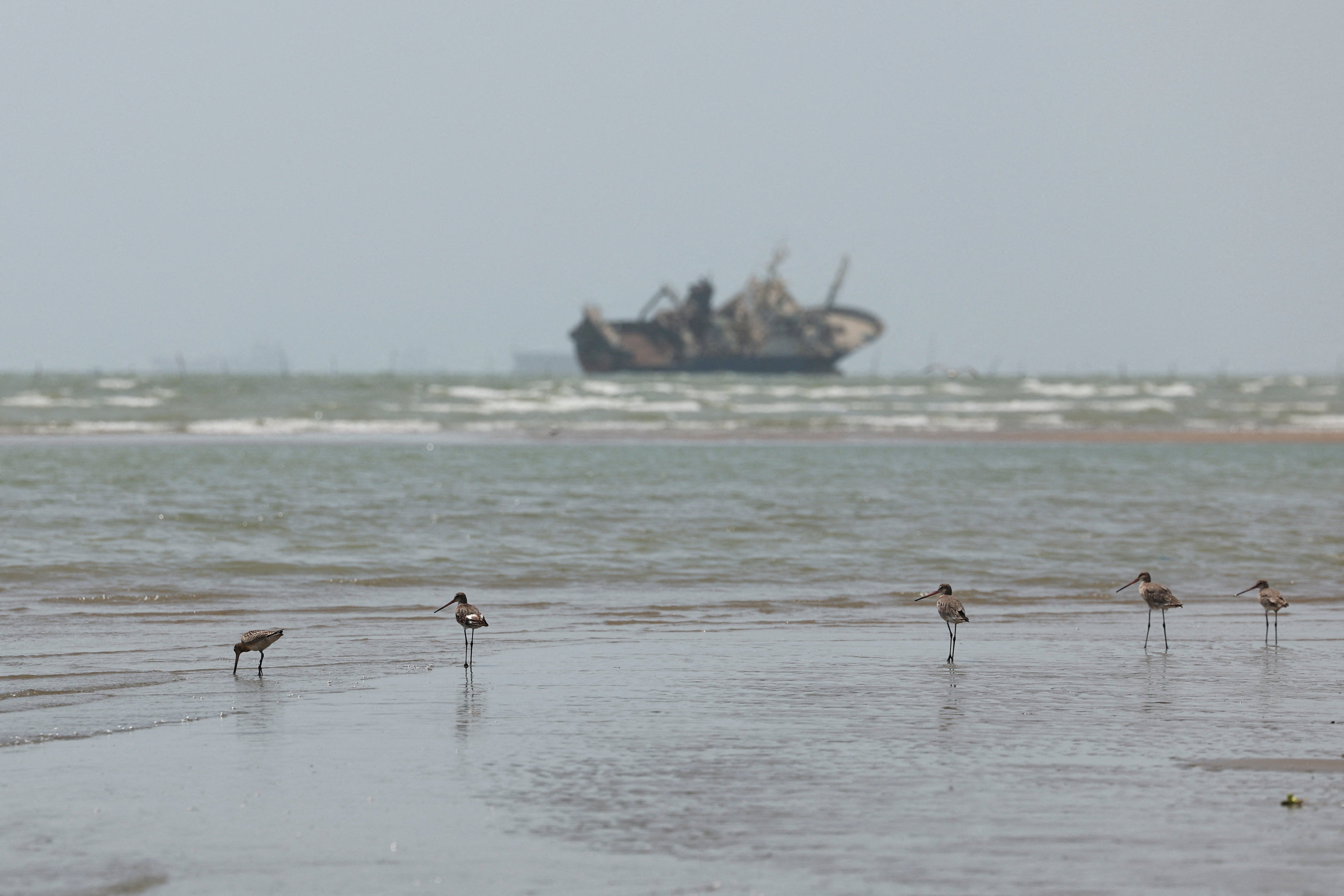
PHOTO CAPTION: Birds on the beach, with vessels in the Strait of Hormuz visible near the beach of Bandar Abbas, Iran, August 25, 2026. Majid Asgaripour/WANA (West Asia News Agency) via REUTERS
CAIRO/DUBAI, Aug. 26 — Iran has held new talks with neighboring Oman over management of the Strait of Hormuz, with Oman’s foreign minister saying he hopes a temporary shipping corridor through the heavily disrupted waterway can be announced soon.
Iran and Oman have held intermittent talks for weeks over traffic through the strait, which carried about one-fifth of global oil and liquefied natural gas shipments before the war began in February. Most shipping has since been disrupted as Iran and the United States have sought to assert control over the strategic passage and imposed separate blockades.
Iran and Oman said Tuesday they discussed establishing “a joint temporary navigational corridor” through the strait and agreed to clear it of mines.
“I am hopeful we will soon announce a temporary corridor for the Strait of Hormuz and practical arrangements to restore safe navigation,” Omani Foreign Minister Badr Albusaidi wrote on X after talks with his Iranian counterpart.
President Donald Trump, who has threatened to bomb Oman, repeated an earlier assertion that all mines in the strait had already been cleared and warned Iran against laying more.
Diplomatic impasse continues
Although active fighting between the United States and Iran has largely subsided, efforts to reach a peace agreement remain stalled and continuing attacks on shipping have kept passage through Hormuz dangerous.
Iran on Sunday announced a blacklist of 45 vessels in what appeared to be an effort to prevent ship-to-ship transfers used by Gulf energy producers to circumvent its blockade. Industry sources said some companies planned to stop using ships that had been added to the list.
The United States also moved this week to increase economic pressure on Tehran, threatening penalties against countries that continue doing business with Iran, although Washington said the measures would not take effect immediately.
The sanctions did not include Chinese financial institutions suspected of helping facilitate Iranian oil exports that have already been reduced by the U.S. blockade.
Iran denounced the U.S. campaign to isolate its economy as “gross lawlessness” and said it expected many countries would refuse to participate.
Iranian Foreign Minister Abbas Araqchi on Wednesday emphasized the need to expand cooperation with China during a meeting with Iran’s ambassador to Beijing, according to Iranian state media.
Oil prices fell for a third consecutive day, dropping more than $2 a barrel to a two-week low as renewed diplomatic activity raised hopes for a mediated end to the conflict, which began Feb. 28 with U.S. and Israeli strikes on Iran.
U.S. signals lower near-term risk
Despite continued tensions, the United States has begun returning personnel to some diplomatic missions in the Middle East that had previously been evacuated or reduced because of the conflict, two people familiar with the matter told Reuters.
The move suggests Washington sees a lower risk of immediate escalation, although some embassies are expected to initially operate below full staffing levels.
Secretary of State Marco Rubio has also told allies that the United States does not expect to launch new strikes against Iran for now and will instead focus on other forms of pressure, Axios reported.
Separately, the U.S. Secret Service said Tuesday it was aware of an Iranian state television video discussing a potential plot to assassinate Trump’s youngest son, Barron.
Public support in the United States for the war has fallen to its lowest level since the conflict’s early stages, while Trump’s popularity has also reached a record low ahead of November congressional elections, according to Reuters/Ipsos polling.
Thousands of people have been killed in the conflict, most of them in Iran and Lebanon. The United States and Israel have also damaged much of Iran’s conventional military capability, while the exact status of Tehran’s nuclear program remains unclear.
Iranian army spokesman Brigadier General Mohammad Akrami-Nia said Wednesday that new equipment had been delivered to combat units and that fighting against two technologically advanced militaries had given Iranian forces significant battlefield experience, according to remarks carried by Iran’s Mehr News.
(Source: Reuters)