Iran Claims Hormuz Ship Blockade
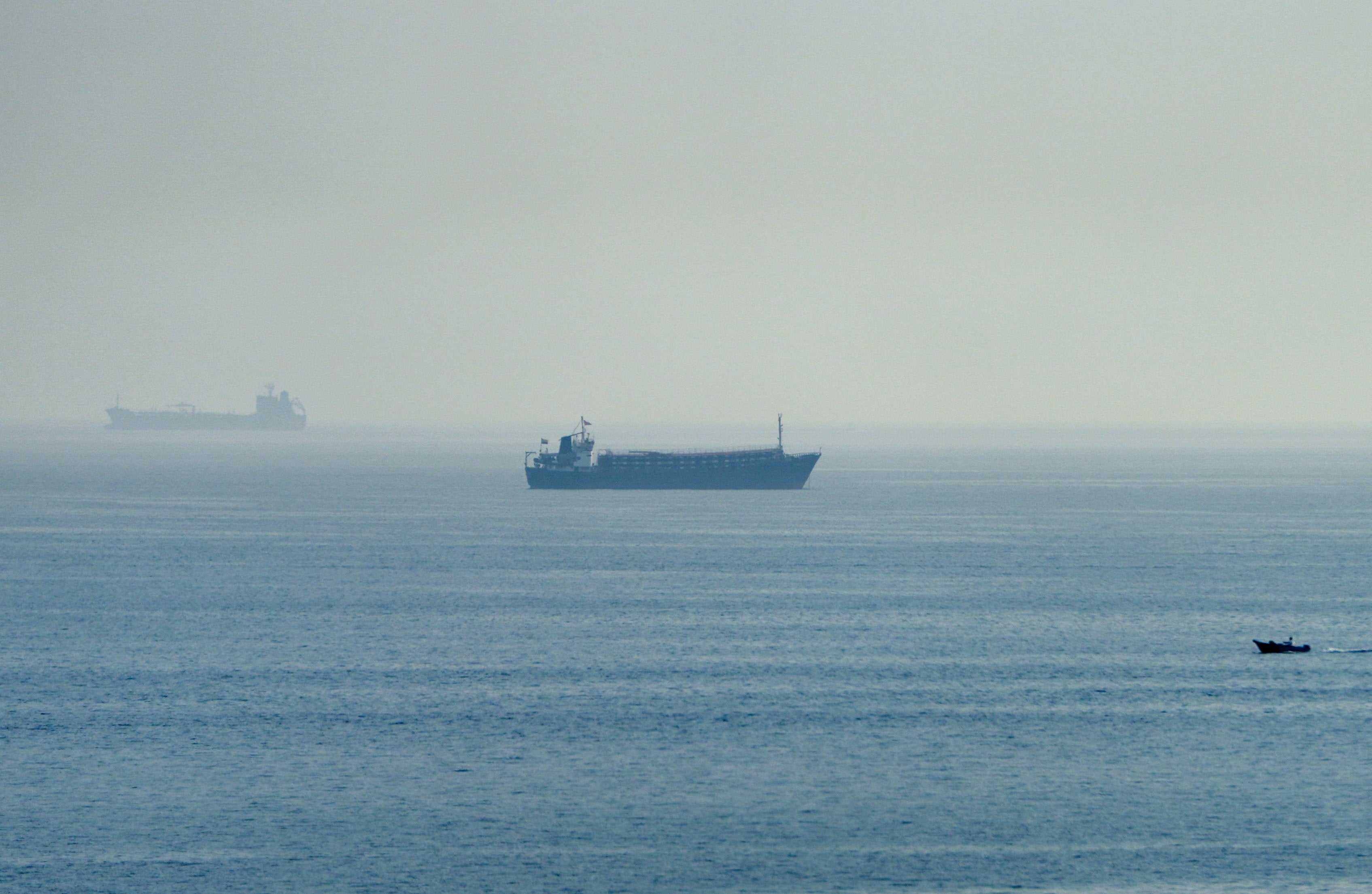
PHOTO CAPTION: Vessels in the Strait of Hormuz, as seen from Musandam, Oman, July 31, 2026. REUTERS/Stringer
CAIRO/DUBAI, July 31 — Oil prices rose Friday after Iran said it stopped two vessels seeking to leave the Strait of Hormuz, renewing concerns about global energy supplies.
Iran also said four other tankers turned back after its forces intervened. Reuters could not independently confirm the Iranian reports.
Shipping data showed that two large tankers carrying oil loaded in the Gulf passed through the strait. Two other vessels carrying commodities also transited, according to Kpler.
The data does not include vessels traveling with their transponders switched off.
The Strait of Hormuz, a narrow waterway between Iran and Oman, normally carries about one-fifth of the world’s energy shipments.
Iran has blocked most shipping through the strait since the five-month-old conflict began.
Iran-aligned Houthi forces in Yemen have also threatened shipping through the Bab el-Mandeb strait at the southern end of the Red Sea, another important route for Saudi oil exports.
Oil prices rose more than 1% Friday as traders responded to the Iranian reports. A similar Iranian claim earlier this week was not corroborated.
Brent crude futures were on course to rise 23% in July. Economists and analysts surveyed by Reuters expect oil prices to increase further this year.
There were no reports of new U.S. attacks on Iran overnight from Thursday into Friday following a sharp escalation earlier in the week, including joint U.S.-Saudi strikes on Iran-aligned forces in Iraq.
President Donald Trump told Fox News on Friday that the war was going well.
“All you can do is keep winning, then eventually something will happen,” Trump said without providing details.
Iran says crossings remain restricted
A body established by Iran to manage the Strait of Hormuz said Friday that crossings remained impossible because of what it called continued aggressive actions by U.S. military forces in the region, Iranian media reported.
Some vessels have negotiated passage with Tehran, a practice that has angered Washington.
The Persian Gulf Strait Authority said it would begin reviewing requests and gradually issuing transit permits once stability and calm were restored.
U.S. Central Command said Thursday that American forces continued to blockade Iranian oil exports through the Gulf and had completed a major wave of strikes.
Iran’s military said it targeted U.S. military facilities in Kuwait and Bahrain on Friday in response to the American attacks.
Iran cited an attack on a house on Qeshm, an island near the Strait of Hormuz where Iran began targeting shipping.
Kuwait’s military said it destroyed attacking drones. Falling debris caused some damage, but no casualties were reported.
Bahrain did not immediately comment.
Damietta attack adds to shipping concerns
The Suez Canal and SUMED pipeline continued to provide safe northbound routes for Saudi energy exports through the Red Sea, even as Iran and the Houthis targeted vessels near Hormuz and Bab el-Mandeb.
Egypt’s cabinet said Thursday that an unidentified drone caused a fire aboard two vessels one day earlier at the Mediterranean port of Damietta.
No group has claimed responsibility for the attack.
Damietta is more than 160 kilometers, or 100 miles, west of the Suez Canal by road.
Iran denied involvement in the attack.
“Egypt is an important friend and partner in the region, and its security is of utmost importance to us,” Iranian Foreign Minister Abbas Araqchi wrote on social media.
“We must all be vigilant against Israeli plots and false-flag operations designed to undermine regional peace,” he added.
Israeli Prime Minister Benjamin Netanyahu’s office did not immediately respond to Reuters’ request for comment on Araqchi’s allegation.
Saudi Arabia proposes maritime coalition
The Iran-aligned Houthis declared a maritime embargo against Saudi Arabia on July 20, expanding their role in the war involving Iran, the United States and its allies.
Recent Houthi attacks led London’s marine insurance market to widen its designated high-risk zone in the Red Sea on Thursday to include more coastline near Saudi ports.
Saudi Arabia announced plans Thursday for a multinational maritime defense coalition intended to protect international shipping and energy routes in the Red Sea region.
A growing amount of Saudi oil and other shipping has been diverted north through the Red Sea toward the Suez Canal and the SUMED pipeline, according to Kpler.
For customers in Asia, that route requires a longer journey around Africa rather than traveling south through the Gulf of Aden.
Oman has presented Iran with a Gulf-backed proposal for managing the Strait of Hormuz, including voluntary fees for vessels using it, people familiar with the matter told Reuters.
Iran has publicly rejected the proposal. However, the semi-official ILNA news agency quoted Foreign Ministry spokesperson Esmaeil Baghaei as saying talks with Oman over the strait were continuing.
(Source: Reuters)