ICE Stops Showing Detainee Locations
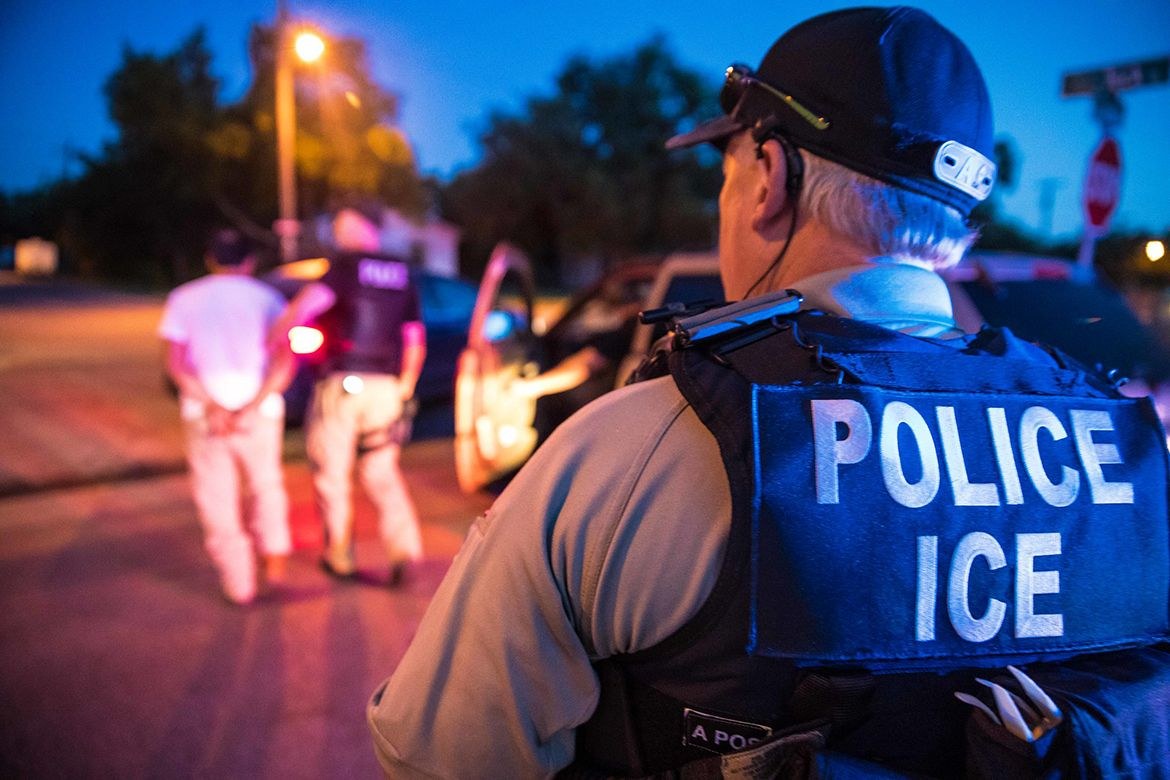
PHOTO CAPTION: Illustrative file photo. U.S. Immigration and Customs Enforcement officers conduct an enforcement operation. ICE stopped displaying the detention locations of people with final removal orders in its public detainee locator beginning Sept. 15, 2026. The change became public Sept. 21. (U.S. Immigration and Customs Enforcement photo)
U.S. Immigration and Customs Enforcement has stopped publicly showing where it is holding thousands of detainees who already have final orders of removal, a policy change that was implemented without a public announcement and has left attorneys and relatives struggling to locate people in federal custody.
The change took effect Sept. 15, according to three current and former ICE officials who spoke with The Associated Press.
Several immigration attorneys separately confirmed that clients with final removal orders abruptly disappeared from ICE’s Online Detainee Locator System.
The public locator was created so attorneys, relatives and members of the public could determine where someone in ICE custody was being held.
ICE’s own website describes the system as a tool for locating people currently in ICE custody or people who have remained in Customs and Border Protection custody for more than 48 hours.
Under the new policy, people with final removal orders generally no longer appear in that public search system.
The Associated Press reported that the change affects thousands of detainees nationwide.
Nearly 16,000 people booked into ICE detention in July had final removal orders, according to ICE data obtained by researchers at the Deportation Data Project.
That figure represents the number booked during that month who were already subject to final removal orders. It should not be interpreted as proof that exactly 16,000 people disappeared from the locator on Sept. 15.
A final removal order generally means an immigration judge has ordered someone removed from the United States and the decision was either affirmed on appeal or was not appealed.
But a final order does not necessarily eliminate every remaining legal option.
Attorneys can still seek to reopen cases, challenge detention through habeas corpus proceedings, pursue emergency court action or raise claims involving protection from removal to a country where someone could face persecution or torture.
That is why knowing where someone is being held can matter legally.
Habeas petitions normally must be filed in the federal judicial district where the detainee is being held.
ICE also regularly transfers people between detention facilities, sometimes across state lines.
Attorneys told The Washington Post that losing access to location information can make it harder to determine where to file a case, communicate with a client and seek emergency relief before a removal occurs.
The change goes beyond the online database, according to former Homeland Security officials who spoke with The Washington Post.
Those officials said immigration officers were also instructed not to provide detainee locations to attorneys or relatives by telephone.
ICE did not confirm or deny that element of the policy when contacted by the Post. The agency said detainees with final orders are being prioritized for removal and that people in custody have access to telephones.
ICE also did not confirm or deny the broader locator change in its response to AP.
The agency said people with final removal orders are being prioritized for deportation while ICE deals with what it described as a historic number of court injunctions blocking individual removals.
Immigration attorneys and advocacy organizations have criticized the policy.
The American Immigration Lawyers Association warned members about the change after attorneys began reporting that clients were disappearing from the locator.
One legal organization told AP that all 17 of its clients with final removal orders had vanished from the public system by Monday.
An attorney representing eight Somali men detained at Guantanamo Bay also said those clients had disappeared from the locator.
Some facilities are exempt from the new practice because of existing federal court orders.
AP reported that detainees at the Adelanto facility in California and temporary holding facilities in Minneapolis, New York City and suburban Chicago must still be listed because judges have ordered ICE to make their locations publicly available.
The change comes as ICE detention numbers remain historically high.
More than 65,000 people were being held in ICE detention as of early July, according to the most recent data cited by AP.
ICE created the public detainee locator in 2010 after years in which relatives and attorneys often had to contact individual field offices or detention centers one by one to determine where someone was being held.
For supporters of faster immigration enforcement, a final removal order means the government has already completed the primary immigration court process and should be able to carry out the order.
ICE has emphasized that those cases are being prioritized for removal.
Attorneys challenging the new policy argue that the existence of a final removal order does not eliminate access to federal courts or other remaining legal protections.
Their concern is that those rights become much harder to exercise when neither an attorney nor a family member knows where the person is being held.
The policy is already in effect.
What remains unclear is how many detainees have been removed from the public locator since Sept. 15 and whether ICE will eventually publish formal guidance explaining the change.
(Source: OAF Nation)