DOJ Won't Appeal NFA Ruling
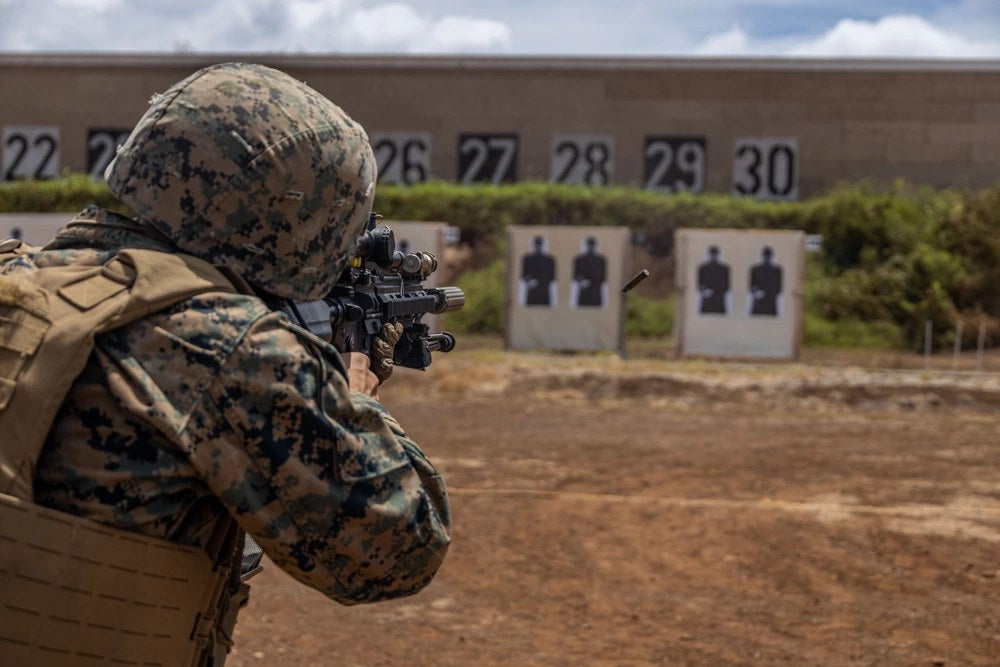
PHOTO CAPTION: Illustrative photo: A U.S. Marine fires a suppressed M27 Infantry Automatic Rifle during an acoustic test at Marine Corps Base Hawaii on Sept. 19, 2023. U.S. Marine Corps photo by Lance Cpl. Hunter J. Jones.
The Justice Department does not plan to appeal a federal court ruling that blocks enforcement of major National Firearms Act registration and approval requirements involving suppressors, short barreled rifles and short barreled shotguns for people and businesses covered by the court order.
Sen. Cynthia Lummis of Wyoming publicly confirmed the decision this week after CBS News previously reported that President Donald Trump had directed the Justice Department not to appeal.
The decision leaves in place an Aug. 5 ruling by U.S. District Judge James Wesley Hendrix in the Northern District of Texas.
Hendrix ruled that several National Firearms Act requirements could no longer be supported by Congress's taxing power after Congress reduced the federal making and transfer taxes on suppressors, short barreled rifles, short barreled shotguns and certain other weapons to zero.
Those tax changes took effect Jan. 1, 2026.
For decades, the federal government required people seeking to make or obtain covered firearms to complete special applications, receive approval from the Bureau of Alcohol, Tobacco, Firearms and Explosives, register the firearm and comply with other requirements tied to the National Firearms Act.
The Texas court concluded that the challenged requirements could not continue to rest on Congress's constitutional authority to tax when the relevant tax produced no revenue.
The court did not decide the case under the Second Amendment.
Instead, Hendrix concluded that the challenged provisions exceeded Congress's Article I powers as applied to the firearms whose making and transfer taxes had been reduced to zero.
The ruling does not eliminate the National Firearms Act nationwide.
The permanent injunction protects the plaintiffs in the consolidated cases and, where applicable, their members, customers, agencies and political subdivisions, including current and future members and customers.
The plaintiffs include national gun rights organizations, firearms companies, individuals and 15 states.
That makes the practical reach of the ruling significant, but it does not mean every gun owner in the country is automatically exempt from every NFA requirement.
The ruling also does not eliminate ordinary federal background check requirements for firearms purchased from licensed dealers.
Other federal gun laws remain in effect as well.
Short barreled rifles and short barreled shotguns are subject to separate provisions of federal law that were not struck down in the Texas case. Those provisions can still require federal authorization for certain sales, transfers and interstate transportation.
State laws also remain important. Some states independently restrict suppressors or short barreled firearms, while others require compliance with federal NFA procedures as part of their own laws.
Machine guns and destructive devices are also outside the main tax change at issue in the ruling because Congress did not reduce their NFA making and transfer taxes to zero.
The underlying dispute followed legislation signed in July 2025 that changed the NFA tax structure.
Beginning Jan. 1, the transfer and making taxes on suppressors, short barreled rifles, short barreled shotguns and certain other weapons became zero dollars. Congress left much of the existing registration and approval structure intact.
Gun rights organizations and other plaintiffs then sued, arguing that if the government was no longer collecting the tax, the regulatory system that had historically been justified as helping collect that tax had lost its constitutional basis.
Hendrix agreed with that argument on Aug. 5.
The judge initially paused the effect of his ruling for seven days to allow the federal government to seek appellate relief.
The government did not ask for an extended stay, and the injunction took effect Aug. 13.
The Justice Department still had an ordinary appeal period after that point.
CBS News reported Sept. 17 that Trump had directed DOJ not to appeal the case. A Justice Department official told CBS the department intended to inform Congress that it would not appeal, while an agency spokesperson said ATF planned to issue guidance explaining how the court order would be implemented.
Lummis publicly highlighted the decision again this week.
The result is that the Aug. 5 injunction remains in force while dealers, gun owners and federal regulators work through exactly how the ruling interacts with other federal and state requirements.
For gun owners covered by the injunction, the decision removes major NFA registration and approval requirements involving the affected firearms.
For everyone else, the legal picture is more complicated.
The ruling is broad because some of the plaintiffs have national memberships and customer networks, but it is not a blanket nationwide order eliminating NFA registration for every American.
(Source: OAF Nation)