Congress Plans VA Loan Fee Hike
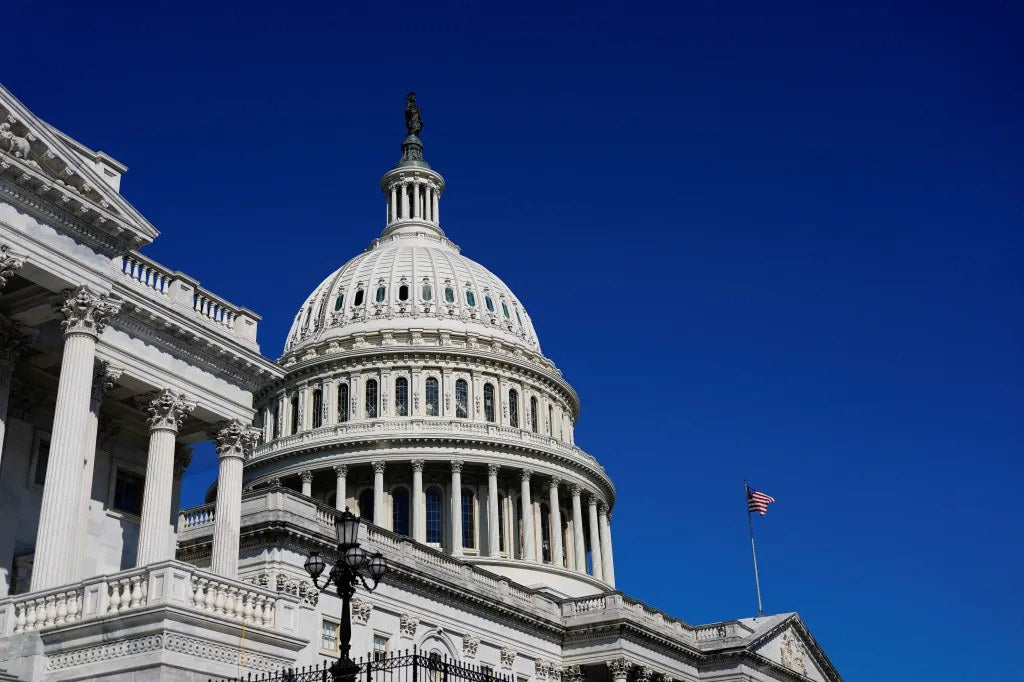
PHOTO CAPTION: The U.S. Capitol in Washington, D.C. A congressional proposal would raise the VA funding fee on certain streamline refinance loans from 0.50% to 1.42%, potentially increasing the fee on a $400,000 refinance from $2,000 to $5,680.
Veterans who use a VA loan to refinance their mortgage could face a much bigger bill under a congressional proposal that would nearly triple one of the program’s key fees.
A provision in the proposed Take Care of America’s Veterans Act, also known as H.R. 9237, would increase the VA funding fee on Interest Rate Reduction Refinance Loans, or IRRRLs, from 0.50% to 1.42%.
That may sound like a small policy tweak until you translate it into dollars.
For a veteran refinancing a $400,000 VA-backed mortgage, the current fee would be $2,000. Under the proposal, that fee would jump to $5,680 — an increase of $3,680 just to refinance the same loan into a lower rate or lower monthly payment.
And if that funding fee gets rolled into the mortgage instead of paid upfront at closing, the borrower could also end up paying interest on that higher amount over time.
The same proposal would also raise the fee for assuming an existing VA-backed mortgage from 0.50% to 1.00%.
The bigger source of frustration for many veterans is likely to be why the fee is being increased.
Rather than being a standalone housing-policy change, the higher home-loan fees are being used as a budgetary offset to help cover the cost of a much larger package containing dozens of veterans measures.
That creates a simple and likely controversial argument: some veterans would be asked to pay more for one VA benefit in order to help finance other veterans benefits.
To be clear, this has not become law.
The House proposal has been under consideration for months, but the bill has not been enacted, and veterans are not currently paying the higher refinance fee. That distinction matters because the proposal is easy to describe in a way that sounds like an immediate change when it is not.
It’s also important to note that not every veteran pays a VA funding fee in the first place.
The Department of Veterans Affairs says many borrowers are exempt, including many veterans receiving VA compensation for a service-connected disability, certain surviving spouses, and some other qualifying groups. In other words, while this proposal could hit many borrowers, it would not affect every veteran equally.
Still, for those who are not exempt, the proposed increase could become a real issue if mortgage rates fall enough to make refinancing attractive again.
That’s why this story has the potential to hit a nerve.
Most people do not need to understand the technical details of an Interest Rate Reduction Refinance Loan to understand the basic complaint. A fee going from $2,000 to $5,680 is easy to grasp. For veterans already dealing with high housing costs and interest-rate pressure, that kind of increase is likely to land as one more example of Washington making something more expensive under the banner of helping people.
For Congress, this may be a budget mechanism. For veterans looking to lower a monthly payment, it looks a lot more personal.
(Source: OAF Nation)