Blast Exposure Linked to Aneurysms
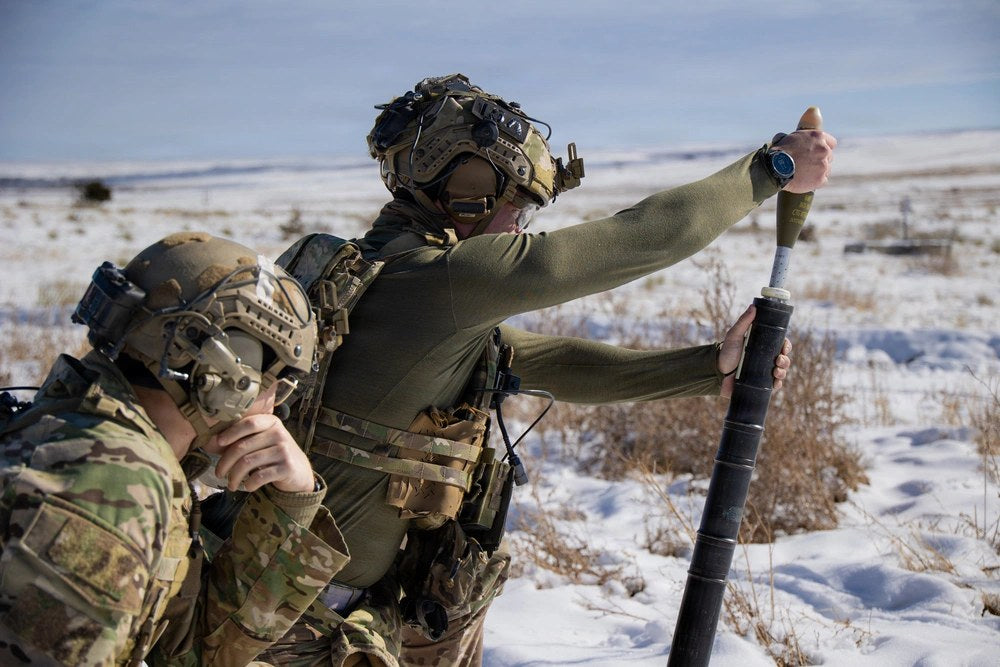
PHOTO CAPTION: A Green Beret assigned to 3rd Battalion, 10th Special Forces Group (Airborne), hangs a 60mm mortar round during live-fire training in Colorado Springs, Colorado, Dec. 16, 2025. U.S. Army photo by Staff Sgt. David Cordova.
Brain aneurysms were about three times more common among U.S. special operations personnel with higher cumulative blast exposure than among those with lower exposure, according to a military brain-imaging study.
Researchers examined 564 U.S. Special Operations Forces personnel who received brain MRI scans through the Comprehensive Brain Health and Trauma Program.
The participants had an average age of 43, and all but one were men. They included personnel from special operations communities that routinely encounter repeated low-level blasts during weapons training, breaching exercises and combat operations.
Researchers found intracranial aneurysms in 33 of the 564 participants, or 5.9%.
Detailed blast-exposure information was available for 440 participants. Researchers divided them into two equal groups based on their estimated cumulative exposure.
Among the 220 personnel in the higher-exposure group, 21 had brain aneurysms, representing 9.5% of the group.
Six of the 220 personnel in the lower-exposure group had aneurysms, representing 2.7%.
The association between greater blast exposure and aneurysms remained significant after researchers accounted for factors including age and high blood pressure.
An intracranial aneurysm is a weakened or thinned section of an artery in the brain that bulges outward and fills with blood. Many aneurysms do not cause symptoms, but a rupture can release blood into or around the brain and cause a potentially life-threatening hemorrhage.
The researchers also examined participants’ MRI scans for other structural abnormalities.
White-matter hyperintensities were the most common finding, appearing in 215 participants, or 38.1%. However, those abnormalities were not associated with cumulative blast exposure in the study.
Of the structural findings evaluated, intracranial aneurysms were the only ones independently associated with higher blast exposure.
Blast exposure was measured using a numerical estimate intended to represent the cumulative effects of repeated low-intensity explosions, including those encountered during military training.
Unlike a single severe explosion that causes an immediately recognizable traumatic brain injury, repeated low-level blast exposure may occur over years without producing an obvious external injury.
The study’s authors said the findings suggest repeated blasts may leave a detectable effect on blood vessels inside the brain. They also said the results support further research into whether certain highly exposed military personnel could benefit from targeted magnetic resonance angiography screening.
The findings do not prove that repeated blast exposure caused the aneurysms.
The study was retrospective, and researchers observed an association rather than testing cause and effect. The participants were also drawn from a specialized military population and were almost entirely male, meaning the findings may not apply to all service members or veterans.
The researchers said larger studies will be needed to confirm the association, determine how blast exposure might affect blood vessels and establish whether screening would improve health outcomes.
The study was published in the journal Radiology and involved researchers affiliated with Massachusetts General Hospital and other medical institutions.
Source: “Brain MRI Analysis of Cumulative Blast Exposure and Intracranial Aneurysms in Special Operations Forces,” Radiology, 2026.
(Source: Manual)