Article: Air Force Restores Mandatory Flu Shots
Air Force Restores Mandatory Flu Shots
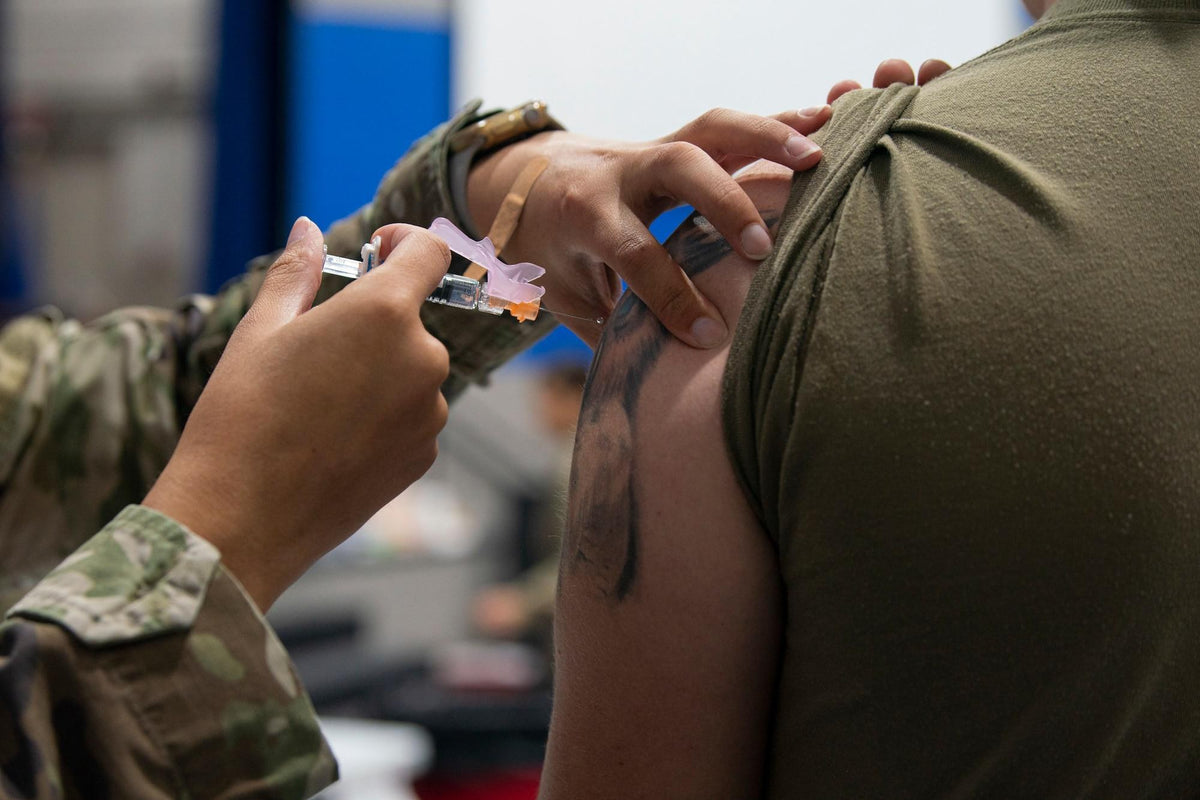
PHOTO CAPTION: An Air Force medical professional administers an influenza vaccine to an airman at Moody Air Force Base, Georgia, on November 16, 2022. New Air Force guidance dated October 20, 2026, restores mandatory flu shots for designated personnel, including recruits, deployed forces and healthcare workers, despite the Pentagon's broader voluntary vaccination policy. (Illustrative file photo by Airman 1st Class Whitney Gillespie / U.S. Air Force)
The Air Force is again requiring annual influenza vaccinations for several categories of military and civilian personnel, despite Defense Secretary Pete Hegseth's announcement six months ago that flu shots would become voluntary across the armed forces.
An October 20 Air Force memorandum identifies recruits, deploying personnel, healthcare workers, certain aircrews and other designated groups who must receive the seasonal vaccine.
Service members covered by the policy who refuse vaccination without an approved exemption could face administrative or disciplinary action under the Uniform Code of Military Justice.
The guidance, signed by Assistant Secretary of the Air Force for Manpower and Reserve Affairs Richard Anderson, was circulated publicly Monday and reported by Stars and Stripes on October 27.
The new requirements do not apply to every airman. They implement exceptions to the Pentagon's broader voluntary vaccination policy, which remains in effect for personnel outside the mandatory categories.
Hegseth Announced Voluntary Vaccination in April
On April 21, Hegseth announced that the military would end its longstanding universal annual flu vaccination requirement.
In a video released alongside the policy change, Hegseth argued that forcing every service member to receive a flu shot was unnecessarily broad and inconsistent with personal medical choice.
The secretary said troops who believed the vaccine was in their best interest should be free to receive it, but that the Pentagon would no longer impose a universal requirement.
His April 20 memorandum made the vaccine voluntary for active-duty and reserve personnel, as well as Defense Department civilian employees.
However, the same memorandum established a process allowing military departments and defense agencies to request exceptions for populations with particular operational or health risks.
Those exceptions have since become a significant part of the policy.
Air Force Identifies Groups Required to Receive Flu Shots
The October 20 memorandum outlines several categories of personnel for whom annual vaccination is mandatory.
They include recruits, trainees and certain personnel living in shared accommodations, where respiratory illnesses can spread quickly.
Deployed and deploying forces are also included, along with personnel assigned to rapid deployment forces and designated critical missions.
Military healthcare workers must receive the vaccine when covered by the department's requirements.
Civilian employees working in child development and youth services programs are subject to the mandate as a condition of employment.
The guidance also covers specified Air Mobility Command aircrews supporting U.S. Transportation Command missions, en route medical care personnel and executive airlift personnel.
Commanders may request additional mandatory vaccination requirements based on local missions, operating conditions and the needs of their units.
Some exemptions apply within the listed categories. For example, trainees living in single-occupancy dormitory rooms may qualify for an exception.
The memorandum does not establish that every Air Force member must be vaccinated.
Refusal Could Lead to Military Discipline
For airmen covered by the mandate, failure to receive the required vaccine may have consequences beyond medical readiness.
The memorandum states that noncompliance can result in administrative action or discipline under the Uniform Code of Military Justice.
The policy does not establish that every refusal will automatically result in punishment.
Service members can still request medical or religious accommodations through established procedures.
Personnel whose accommodation requests are denied must be given an opportunity to comply with the vaccination requirement.
Civilian employees in covered positions are subject to vaccination as an employment condition.
The memorandum also directs major commands to monitor vaccination compliance, refusals and accommodation requests.
The first quarterly report is due November 15 and must include the number of medical and religious accommodations requested and granted, along with personnel who complied with or refused the requirement.
Flu Outbreak Prompted Earlier Exceptions
The return of mandatory vaccinations for certain personnel began months before the latest memorandum.
In June, the Pentagon approved exceptions to Hegseth's voluntary policy for the military services and several defense agencies.
The changes came as Joint Base San Antonio-Lackland, Texas, experienced an influenza outbreak affecting Air Force basic trainees.
Approximately 275 trainees became ill during the outbreak, according to reporting from CBS News and Stars and Stripes.
The Air Force had submitted a request to restore mandatory vaccination for basic trainees in May, before the full extent of the outbreak became public.
By late June, all military branches had resumed requiring flu shots for recruits.
Pentagon spokesman Sean Parnell said the exceptions reflected assessments intended to protect operational readiness and personnel at increased risk of illness.
The Navy and Marine Corps also established mandatory vaccination requirements for certain healthcare workers, childcare personnel and deploying service members.
The October Air Force memorandum provides more detailed instructions for implementing the department's approved exceptions.
Military Readiness and Personal Choice
Annual influenza vaccination has long been part of the military's medical readiness program.
Military personnel frequently work and live in close quarters, including training facilities, ships, deployed installations and other environments where respiratory illnesses can spread.
Supporters of military vaccination requirements argue that preventing outbreaks helps reduce lost training time and protects missions that depend on healthy personnel.
Hegseth's April announcement emphasized medical autonomy and criticized universal mandates that did not account for individual circumstances or mission requirements.
The Pentagon's subsequent exceptions reflect a narrower approach, allowing vaccination to remain voluntary for some personnel while requiring it for others based on designated operational responsibilities.
The broader debate over military vaccination requirements has also been shaped by the Pentagon's previous COVID-19 mandate, which resulted in thousands of service members being separated before the policy was rescinded.
Unlike the earlier universal flu shot requirement, the current Air Force policy applies through specified exceptions rather than an across-the-board mandate.
What Happens Next?
The Air Force's October guidance establishes how commanders are to implement and monitor the mandatory vaccination categories.
Major commands must begin reporting compliance and accommodation data by November 15.
The reports could provide a clearer picture of how many personnel fall within the mandatory groups and how frequently exemptions are requested or denied.
For now, the distinction is straightforward: Hegseth's voluntary vaccination policy remains in effect, but the Air Force has identified broad exceptions under which thousands of personnel could still be ordered to receive the annual flu shot.
Those who fall within the designated categories may face administrative or disciplinary consequences if they refuse without an approved accommodation.
(Source: OAF Nation)